For beauty brands, buying custom cosmetic bags in bulk can create a costly problem: the factory delivers the order, but some colors, sizes, or designs sell much more slowly than expected. The result is capital tied up in unsold stock, limited storage space, and fewer opportunities to respond to changing customer preferences.
Mix-and-match cosmetic bag orders can help address this problem by allowing brands to combine multiple designs, colors, sizes, materials, or decoration options within a coordinated purchasing plan. Instead of betting the entire budget on one product variation, buyers can distribute inventory across a more deliberate assortment.
The key is to diversify the assortment without creating unnecessary manufacturing complexity. A mix-and-match order is most effective when the variations share compatible materials, components, production methods, or packaging specifications. Simply ordering more designs does not automatically reduce risk; it can increase it if every variation introduces a separate minimum order quantity, expensive setup, or slow-moving stock problem.
Quick Answer: How can mix-and-match cosmetic bag orders reduce inventory risk?
Mix-and-match cosmetic bag orders can reduce inventory risk by spreading purchasing commitments across several product variations instead of concentrating the budget on one design. Brands can test different colors, sizes, prints, and customer segments while limiting exposure to a single slow-selling SKU. The strongest approach uses a shared product structure, realistic demand forecasts, clearly defined minimum quantities, and a staged reorder plan. Confirm whether the manufacturer permits mixed variations within one order and whether each variation has its own MOQ or setup cost.
Quick Summary Table
| Inventory Challenge | How Mix-and-Match Ordering Helps | Recommended Action |
|---|---|---|
| One design sells slowly | Spreads demand across multiple relevant designs | Test a small, purposeful assortment before scaling |
| Uncertain color preferences | Allows several colors to be evaluated in one buying cycle | Keep construction consistent and vary selected colors |
| Changing seasonal demand | Creates room for seasonal and evergreen options | Separate core inventory from limited-edition designs |
| Cash tied up in stock | May reduce overcommitment to a single variation | Compare total order value and cash exposure by SKU |
| Too many SKUs | Can create a controlled assortment around shared components | Limit variations to those with a clear commercial purpose |
| Unproven new product | Supports demand testing before a large single-design commitment | Use an initial test order and track sell-through |
| High customization costs | Shared materials and construction may simplify production | Confirm separate print, embroidery, tooling, and MOQ costs |
Table of Contents
- What Is a Mix-and-Match Cosmetic Bag Order?
- How Mix-and-Match Ordering Works
- 9 Ways Mix-and-Match Cosmetic Bag Orders Can Reduce Inventory Risk
- Mix-and-Match vs. Single-Design Bulk Orders
- Pros and Cons of Mix-and-Match Orders
- Who Should Use This Purchasing Strategy?
- How to Plan a Lower-Risk Cosmetic Bag Assortment
- Choosing a Manufacturer for Mixed Orders
- Cost-Benefit Analysis and Reorder Decisions
- Common Mistakes to Avoid
- How Printembroiderybags Supports Collection Development
- Expert Recommendation
- Frequently Asked Questions
- References
What Is a Mix-and-Match Cosmetic Bag Order?
A mix-and-match cosmetic bag order combines multiple product variations within a purchasing plan. Depending on the manufacturer’s production policy, the variations may include colors, dimensions, exterior fabrics, lining options, printed artwork, embroidery, hardware, or bag styles.
For example, a beauty brand launching a new collection might order a shared cosmetic pouch shape in three colors, with two print treatments. The brand can then evaluate which combinations attract customers before committing to larger repeat orders.
There is an important distinction between a mixed assortment and a mixed production order. A supplier may accept several variations under one commercial order while still requiring separate minimum quantities for each design, material, print, or embroidery setup. Buyers should never assume that a supplier’s general MOQ applies to every variation collectively.
What Can Be Mixed in One Order?
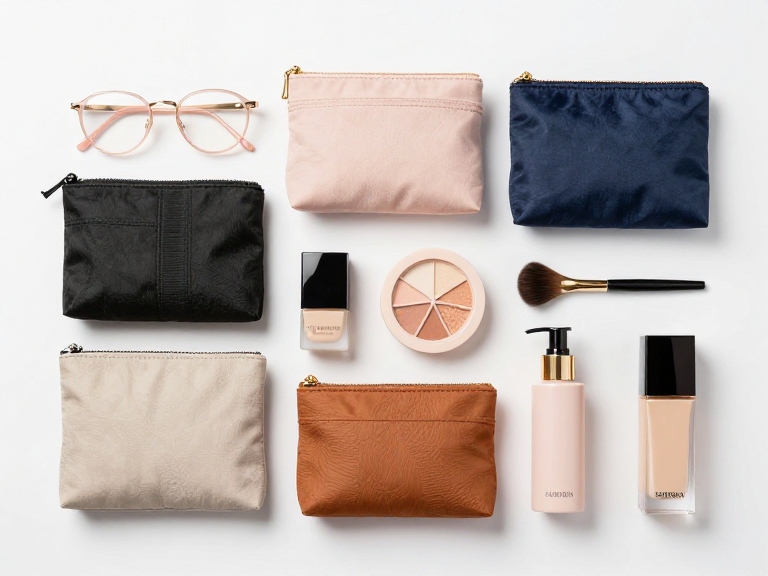
- Colors: several fabric colors using the same bag structure.
- Sizes: small, medium, and large formats for different product combinations.
- Print designs: multiple approved artworks on a common bag style.
- Decoration methods: selected combinations of printing, embroidery, appliqué, or quilting.
- Materials: different exterior fabrics or linings, where the supplier can manage the resulting production requirements.
- Packaging: variations in labels, inserts, or retail packaging for different channels.
From our experience with custom-product planning, the practical starting point is not to maximize the number of options. It is to identify which differences matter to customers and which differences create avoidable production cost.
How Mix-and-Match Cosmetic Bag Ordering Works
A well-planned mixed order follows a structured process. It begins with a defined assortment strategy, not a request to manufacture as many variations as possible.
- Define the target customer. Identify whether the bags are intended for everyday makeup storage, travel, gifting, beauty subscriptions, promotional campaigns, or premium retail.
- Choose a shared base product. Select a practical shape, material, lining, and closure that can support multiple variations.
- Choose limited, meaningful differences. Select colors, prints, sizes, or decoration options based on the brand concept and available demand evidence.
- Confirm the MOQ by variation. Ask whether the minimum applies to the whole order or separately to each color, size, fabric, and decoration design.
- Approve samples and artwork. Check the physical product, construction, print or embroidery quality, dimensions, and packaging before bulk production.
- Allocate the order quantity. Use historical sales, market testing, launch plans, and risk tolerance to determine how much to buy of each variation.
- Measure sell-through and reorder selectively. Replenish strong performers rather than automatically repeating the original assortment.
This approach creates a feedback loop between purchasing and actual demand. It is particularly useful when a brand is entering a new sales channel or launching a collection without reliable SKU-level sales history.
9 Ways Mix-and-Match Cosmetic Bag Orders Can Reduce Inventory Risk
1. They Reduce Dependence on One Design
Ordering a single design in a large quantity creates concentrated exposure. If the color, print, or shape does not appeal to customers, much of the inventory may remain unsold.
A mixed order distributes the initial commitment across several options. A retailer might test neutral colors for everyday use alongside brighter designs for gifting. If one variation underperforms, the entire collection does not necessarily suffer the same result.
This does not eliminate demand risk. If all variations target the same narrow audience or follow the same weak concept, they may all sell slowly. Diversification works best when each variation serves a clear customer preference or purchase occasion.
2. They Help Brands Test Color Preferences
Color can influence how a cosmetic bag fits a brand’s identity and how easily it coordinates with a customer’s existing accessories. Yet internal preferences do not always match actual purchasing behavior.
Instead of committing to one color based on opinion, brands can test a limited palette. For example, a collection could include black or beige for everyday use, plus one seasonal accent color. The shared construction keeps the assortment coherent while providing useful information about customer response.
We recommend starting with a manageable number of colors and tracking sales by SKU. If a particular color consistently sells faster, it can receive a larger allocation in the next order. Avoid interpreting one short promotional spike as proof of long-term demand.
3. They Support Product Testing Before a Major Launch
New cosmetic bag designs often lack reliable sales history. A large first order can therefore be a costly way to find out whether the dimensions, material, closure, or style are right for the market.
A controlled mixed order lets a brand compare a few carefully selected product concepts. One version might prioritize compact storage, while another offers more capacity or a premium exterior finish. Customer feedback and sales data can then guide the next production run.
For beginners, the objective should be to learn which product features affect buying decisions—not to launch a large number of unrelated designs. Keep the test focused enough that the results lead to a clear decision.
4. They Can Improve Cash Allocation Across SKUs
Inventory risk is also a cash-flow problem. Money spent on slow-moving bags cannot be used for proven products, marketing, new designs, or other operating expenses.
A mix-and-match order can help spread the purchasing budget across a planned assortment rather than concentrating it on one unproven variation. However, it reduces cash exposure only if the total commitment, including setup costs and minimum quantities, is appropriate for the business.
Calculate the cost by variation, not just the total purchase price. A mixed order with many expensive print setups may require more cash than a simpler single-design order. The right decision depends on both the allocation of stock and the full cost of producing it.
5. They Make Seasonal Planning More Flexible
Cosmetic bags can serve different commercial occasions: everyday beauty routines, holiday gifting, travel, subscription boxes, promotional events, and seasonal product launches. Demand for a particular print or color may be closely tied to the occasion.
A mixed assortment can separate evergreen designs from seasonal ones. Core neutral styles can support ongoing sales, while limited-edition colors or graphics address a specific campaign. This reduces the need to commit the entire order to a seasonal concept that may lose relevance after the event.
For commercial users, we recommend setting a separate inventory limit for short-lived designs. Seasonal products should have a clear sell-through target and a plan for handling leftover stock before production begins.
6. They Can Simplify Replenishment of Winning Products
A mixed initial order is useful only if the brand acts on what it learns. Once sales data identifies the strongest variations, subsequent orders can prioritize those products and reduce allocations for slower sellers.
For example, a retailer may launch four colors in equal quantities. After a suitable selling period, two colors may show stronger demand. The next order can shift more stock toward those colors while keeping a smaller test quantity for the remaining options if they still serve a distinct customer group.
Do not assume that the first sales ranking will remain permanent. Promotions, pricing, seasonality, and changes in product placement can affect results. Use several relevant indicators, including sell-through rate, gross margin, return rate, and inventory age.
7. They Allow Product Tiers Without Entirely Separate Collections
Some brands serve customers with different budgets or buying motivations. A simple printed pouch may suit a promotional bundle, while an embroidered or upgraded-material bag may work for a premium gift set.
A mix-and-match strategy can create a product ladder around a common concept. Shared design elements help maintain brand consistency, while selected differences support distinct price points or sales channels.
The key is to ensure that the price difference reflects meaningful value. Premium decoration, better materials, improved lining, or more refined construction may justify a higher price. Adding variations that customers cannot distinguish or do not value simply complicates purchasing and inventory management.
8. They Can Reduce Dependence on a Single Customer Segment
A collection designed for one narrowly defined use may struggle if customer preferences shift. A more carefully segmented assortment can address several related needs, such as compact daily storage, travel organization, and gift presentation.
This is not a reason to create a separate SKU for every possible customer. Each variation should have a defined purpose and a plausible demand source. A small brand with limited sales data is often better served by a focused collection of related products than by a broad catalog that divides stock too thinly.
For brands exploring different decoration options, custom embroidery and custom printing can support different visual approaches. Compare the setup requirements, minimum quantities, production lead times, and expected selling price before including both methods in one launch.
9. They Encourage More Disciplined Product Development
When every variation has a defined role, the ordering process forces a useful conversation about the product’s purpose, target customer, price, and expected demand. This can prevent brands from choosing designs solely because they look attractive in a presentation.
It also creates an opportunity to standardize components. Shared linings, zipper types, base patterns, and packaging dimensions may simplify purchasing and quality checks, depending on the manufacturer’s capabilities.
For a new collection, start with the fewest variations that can answer the most important commercial questions. Expand the assortment when sales evidence supports it. More SKUs should be the result of learning, not the starting objective.
Mix-and-Match vs. Single-Design Bulk Orders
Neither purchasing strategy is automatically better. A single-design bulk order may be more efficient when demand is proven and production setup is straightforward. Mix-and-match ordering is more attractive when the brand needs to test demand, serve different customer preferences, or manage uncertainty around a new collection.
| Decision Factor | Mix-and-Match Order | Single-Design Bulk Order |
|---|---|---|
| Demand uncertainty | Can spread initial exposure across selected variations | Concentrates exposure on one design |
| Production simplicity | May require more coordination and approvals | Usually easier when all units share the same specification |
| Unit cost | Can be higher if each variation needs separate setup or small batches | May benefit from production efficiencies at larger quantities |
| Market testing | Useful for comparing selected colors, sizes, and designs | Provides less variation for direct comparison |
| Inventory management | Requires SKU-level tracking and allocation | Simpler stock records, but greater concentration risk |
| Replenishment | Allows later orders to favor proven variations | Works well when demand for the design is stable |
| Best fit | New collections, uncertain demand, and segmented customer groups | Established products with reliable sales history |
Our recommendation is to use mixed orders for learning and assortment flexibility, then use sales data to simplify replenishment. If a product already has strong, stable demand, forcing it into a complicated mixed order may add cost without reducing meaningful risk.
Pros and Cons of Mix-and-Match Cosmetic Bag Orders
| Pros | Cons |
|---|---|
| Reduces dependence on one unproven design | Does not protect against weak demand across the entire collection |
| Helps test color, size, and style preferences | Small quantities may raise unit costs |
| Can support different retail channels and price tiers | More SKUs increase tracking and forecasting work |
| Creates data for future purchasing decisions | Sales results may be misleading if test conditions differ |
| Can use shared components to simplify production | Material or decoration changes may trigger separate MOQs |
| May reduce excess stock of one specific variation | Complex customization can increase lead time and quality-control demands |
The strategy is worthwhile when the value of learning and diversification exceeds the additional cost of producing and managing multiple variations. It is not worthwhile simply because the supplier permits it.
Who Should Use This Purchasing Strategy?
Best Use Cases
- Emerging beauty brands: businesses launching their first custom cosmetic bag collection without reliable sales history.
- Direct-to-consumer brands: sellers testing several designs through online listings and paid campaigns.
- Subscription box companies: buyers needing coordinated bag designs for different box themes or seasonal editions.
- Gift and promotional businesses: companies offering different colorways, logos, or decoration options for campaigns.
- Retailers with several customer segments: stores that need a compact everyday pouch and a larger travel-oriented format.
- Brands refreshing a collection: businesses testing new designs while retaining selected proven products.
Who May Not Need Mix-and-Match Orders?
- Brands with stable demand for one proven SKU: a larger single-design order may be more efficient.
- Buyers with extremely tight launch deadlines: multiple samples and decoration approvals can introduce delays.
- Businesses without SKU-level tracking: additional variations may create confusion rather than useful insights.
- Buyers whose supplier imposes high minimums per variation: the combined order may still produce excessive inventory.
- Brands testing too many variables at once: results can become difficult to interpret when size, material, color, price, and design all change simultaneously.
For beginners, a focused assortment of a few related options is usually more manageable than a large collection. For established brands, mixed ordering is most useful when it answers a specific demand question or supports a planned channel strategy.
How to Plan a Lower-Risk Cosmetic Bag Assortment
Step 1: Separate Core Products From Test Products
Identify the products with established demand and those that still need validation. Core products should receive inventory allocations based on historical sales and replenishment needs. Test products should receive smaller, controlled allocations appropriate to the uncertainty involved.
This distinction prevents an experiment from consuming the budget needed to keep proven products available. It also makes the results easier to interpret because the brand knows which stock is intended to generate reliable sales and which stock is intended to test a hypothesis.
Step 2: Choose Variations That Answer a Clear Question
Do not vary every product feature at once. If the main question is whether customers prefer neutral or bright colors, keep the bag shape, material, price, and decoration as consistent as possible.
If the question is whether a larger size can support a higher price, compare the size options using a clear merchandising and pricing plan. Changing too many factors simultaneously makes it difficult to identify the reason one SKU performs better.
Step 3: Set an Initial Quantity by SKU
Allocate quantities based on evidence, not an assumption that every variation deserves an equal share. Historical sales, customer interviews, preorders, waitlists, market research, and comparable products can help inform the initial split.
Equal quantities may still be appropriate for a controlled test when the brand has little information. However, the decision should be deliberate, with a defined review date and a plan to adjust the next order.
Step 4: Confirm Manufacturing Constraints Before Finalizing the Assortment
Ask the supplier which components can remain shared and which changes create separate production requirements. A different fabric color may be straightforward, while a new pattern, custom zipper pull, embroidered logo, or specialized lining may require additional setup or minimum quantities.
Review the custom cosmetic bag ordering checklist before approving the purchase. A written brief should identify each variation, its quantity, materials, dimensions, decoration, packaging, target price, and delivery deadline.
Step 5: Approve Samples Before Bulk Production
Sample approval is particularly important when the assortment contains multiple designs or decoration methods. A logo that looks correct on one fabric may reproduce differently on another. A size change can affect the bag’s proportions, capacity, and perceived value.
Check each materially different version. Where several SKUs share the same structure, the manufacturer may be able to use a common base sample for construction approval and separate proofs for print or color approval. Confirm the exact approval process with the supplier rather than assuming one sample validates every variation.
Step 6: Track Inventory by Variation
Once products reach the warehouse, record stock and sales separately by SKU. Useful indicators include sell-through rate, gross margin, return rate, days of inventory on hand, and the number of units left after a campaign.
Do not rely only on total collection sales. A collection can appear successful overall while one or two variations remain overstocked. SKU-level reporting reveals which designs deserve replenishment and which should be discontinued, discounted, or bundled.
How to Choose a Cosmetic Bag Manufacturer for Mixed Orders
The manufacturer has a direct influence on whether a mixed order reduces risk or creates extra complexity. The right partner should be able to explain its production constraints clearly and help the buyer understand the cost of each variation.
Compare MOQ Rules Carefully
Ask whether MOQ is calculated by total order, bag style, fabric color, size, print artwork, embroidery design, or packaging configuration. Request a written breakdown showing the quantity and price for every SKU.
A supplier may advertise a low MOQ but apply additional minimums to custom fabric colors or decorative treatments. The commercial value of a mixed order depends on the actual terms, not the headline MOQ.
Assess Sampling and Product Development Capability
For a basic pouch with a standard shape and logo, a straightforward customization process may be enough. For a design-led collection with unusual dimensions, quilting, appliqué, custom lining, or mixed materials, more extensive development support may be needed.
Ask whether the manufacturer can provide technical drawings, print layouts, embroidery files, material recommendations, and a sample review process. These capabilities are especially important when multiple variations must maintain a consistent brand identity.
Compare Production and Quality-Control Processes
Mixed orders need clear identification throughout production. Each variation should have an approved specification and a way to prevent colors, logos, labels, or packaging from being mixed up during manufacturing and packing.
Ask how the factory manages version control, checks decoration placement, inspects finished bags, and separates products by SKU. For larger orders, agree on the inspection criteria before production. A supplier that can explain its process is more useful than one that makes broad promises without describing how quality is maintained.
Evaluate the Full Commercial Offer
Price matters, but it should be evaluated alongside sampling fees, setup charges, MOQ, lead time, defect handling, packaging, freight, and communication. The cheapest quotation may be less attractive if it requires large quantities of every variation or leaves little time for corrective action.
Brands comparing suppliers can use this guide on how to choose a reliable cosmetic bag manufacturer. For a wider supplier shortlist, the cosmetic bag manufacturers USA, Canada, and UK guide can help structure further research, but every candidate should still be evaluated against the specific requirements of the project.
Cost-Benefit Analysis: Is Mix-and-Match Ordering Worth It?
The goal is not simply to reduce the number of unsold bags. It is to improve the relationship between inventory investment, customer demand, production cost, and gross margin.
Consider two purchasing options:
| Cost or Risk Factor | Single-Design Order | Mix-and-Match Order |
|---|---|---|
| Initial production setup | Potentially simpler when all units are identical | May require multiple setup or approval steps |
| Stock concentration | Higher exposure to one design’s demand | Exposure can be distributed across selected designs |
| Inventory tracking | Relatively simple | Requires accurate SKU-level records |
| Market learning | Limited if no alternatives are tested | Can provide comparative demand data |
| Cost per unit | May benefit from longer runs | Can rise if variation quantities are small |
| Future purchasing | Simple when demand remains stable | Can prioritize proven designs after the test |
Use a Simple Inventory-Risk Model
For each variation, estimate the quantity you expect to sell during the relevant period. Then compare that estimate with the quantity you intend to buy. The difference helps reveal how much stock may remain at the end of the period.
Estimated ending inventory = opening inventory + units received − units sold.
Inventory coverage = available inventory ÷ average sales per period, using a consistent time unit.
Gross margin contribution = net sales revenue − the relevant cost of goods sold.
For example, imagine a brand planning to buy 1,200 cosmetic bags. It could order all 1,200 in one new design or allocate the order across three related designs. If the brand is uncertain which design customers prefer, the mixed option may limit exposure to a single slow-selling style. But if the supplier charges significant setup fees for each design or imposes high minimum quantities, the cost advantage may disappear.
Compare both scenarios using the same total budget and expected selling period. Include setup, freight, storage, discounting, and potential obsolete stock. Use conservative, expected, and optimistic sales scenarios rather than relying on one forecast.
When Should You Upgrade the Order Strategy?
- Move from a single design to a mixed test when entering a new market or launching an unproven collection.
- Increase quantities for selected SKUs when repeated sales data confirms sustained demand.
- Reduce the number of variations when slow-moving inventory and administration costs outweigh the value of choice.
- Standardize components when the same lining, zipper, structure, or packaging can support several designs without compromising quality.
- Consider smaller, more frequent orders if the supplier’s MOQ, production capacity, lead time, and freight economics make them practical.
Do not assume that more frequent purchasing is always cheaper. Smaller batches may increase freight costs, production setup expenses, and the risk of missing a selling window. The best strategy is the one that balances inventory exposure against the actual cost and reliability of replenishment.
Common Mistakes That Increase Inventory Risk
Adding Too Many Variations
Every additional SKU creates another forecasting, listing, storage, and replenishment decision. If the variations are not meaningfully different to customers, they add complexity without creating enough commercial value.
Assuming All Variations Share One MOQ
Different fabrics, colors, print files, embroidery designs, and hardware components may require separate minimums. Confirm these terms before finalizing the assortment and budget.
Testing Several Variables at Once
If every bag differs in material, size, color, price, and decoration, it becomes difficult to know which factor influenced sales. Keep the test focused so that results can guide the next order.
Ignoring Lead Times and Reorder Constraints
A winning design can still sell out if its replenishment time is too long. Before launch, understand how long repeat production takes and whether the same materials and decoration options will remain available.
Using Sales Volume as the Only Success Measure
A product that sells quickly at a deep discount may generate less profit than a slower-selling SKU with a healthier margin. Compare sales, gross margin, returns, inventory age, and promotional spending together.
Changing the Approved Specification Without Control
Substituting materials, changing a zipper, or altering the print placement can create inconsistencies across variations. Keep approved specifications and artwork versions documented, and require approval for material changes.
How Printembroiderybags Supports Cosmetic Bag Collection Development
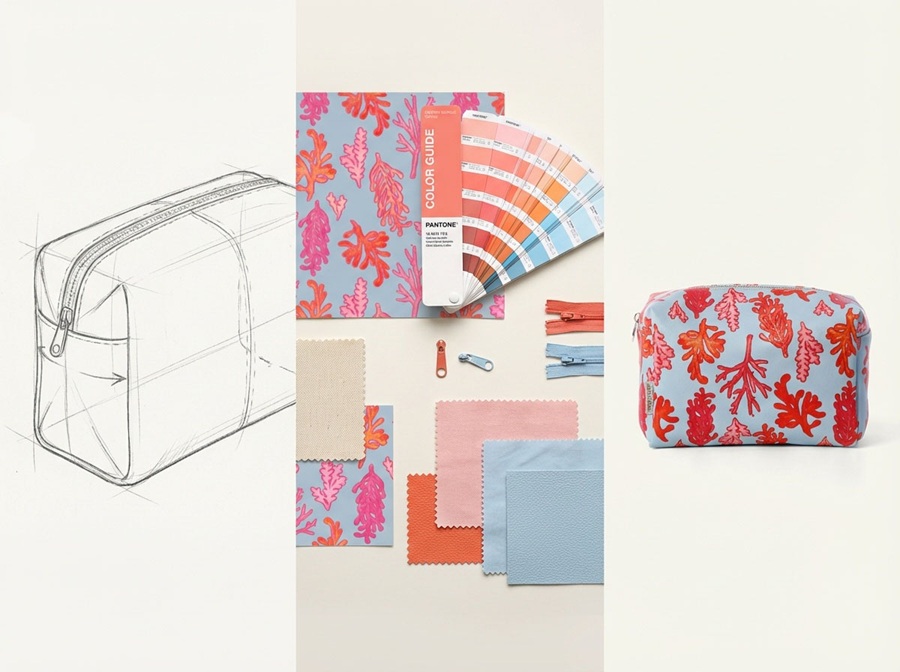
For brands that need more than a standard pouch with a logo, Printembroiderybags offers a full OEM development approach intended to turn creative concepts into production-ready cosmetic bags and accessories. This can be relevant when a mixed assortment requires coordinated designs, multiple decoration techniques, or more detailed product specifications.
Full OEM Development for Custom Cosmetic Bags
Development support can include artwork preparation, print layouts, embroidery files, production drawings, material selection, sample refinement, and coordination of product details.
For design-led brands, the goal is to maintain a coherent collection while adapting selected details across product variations.
Potential customization areas include embroidery, appliqué, quilting, color matching, mixed materials, linings, hardware, labels, and retail packaging, subject to project requirements and supplier confirmation.
Explore full OEM cosmetic bag development
For a mix-and-match project, the most useful development brief identifies which features remain standardized and which are allowed to change. For example, a brand may retain the same base shape and lining while varying the exterior color and embroidery design. This creates visual variety without redesigning every element from scratch.
Brands should still confirm the MOQ and setup requirements for each variation. OEM development can help coordinate complex collections, but it does not automatically remove the cost of different materials, patterns, decoration files, or production runs.
Depending on the intended product and target market, the assortment may also require specific material decisions. Review this guide to choosing sustainable materials for custom cosmetic bags before making environmental claims or selecting materials based on marketing language alone.
For brands that need to control the first order while exploring customization, it may also be useful to review options from a low MOQ cosmetic bag manufacturer. The exact MOQ, customization scope, pricing, and lead time should be verified for the proposed design rather than assumed from a general service description.
Expert Recommendation: Start With a Focused Assortment, Then Follow the Data
Mix-and-match cosmetic bag orders are most valuable when they help a brand learn what customers will buy without making an excessive commitment to one unproven design. They are not a universal way to lower costs, and they do not eliminate the need for accurate forecasting or disciplined inventory control.
Our recommended approach is to begin with a shared base construction, a small number of commercially distinct variations, and clear SKU-level sales targets. Confirm the actual MOQ and setup cost for every variation before approving the order. Review samples, establish written quality criteria, and agree on the production schedule.
After launch, monitor sell-through, margin, returns, and inventory age. Reorder the products that demonstrate sustained demand, reduce the allocation for weak performers, and discontinue variations that add complexity without generating sufficient value.
For beginners, keep the initial assortment small enough to manage. For established brands, use mixed orders to test a specific hypothesis, enter a new channel, or refine an existing collection. For complex design-led projects, work with a manufacturer that can coordinate sampling, artwork, materials, production specifications, and quality control across all variations.
The best mix-and-match order is not the one with the most designs. It is the one that gives the brand useful market information, keeps production manageable, and leaves the business with an inventory mix that customers actually want to buy.
Frequently Asked Questions
1. What are mix-and-match cosmetic bag orders?
They are purchasing arrangements that combine multiple cosmetic bag variations, such as colors, sizes, prints, materials, or decoration methods, within a coordinated order. The permitted combinations and minimum quantities depend on the manufacturer.
2. How can cosmetic bag orders reduce inventory risk?
They can spread an initial purchasing commitment across several selected variations instead of concentrating it on one unproven design. This can make it easier to test customer preferences and allocate future orders to stronger performers, provided the additional production and inventory-management costs remain reasonable.
3. Can I mix different colors in one wholesale cosmetic bag order?
Often, yes, but it depends on the supplier’s production policy. Ask whether the MOQ applies to the entire order or separately to each color. Also confirm whether changing colors affects material availability, pricing, lead time, or sample approval.
4. Can different prints or embroidery designs be included in one order?
They may be possible, but separate artwork preparation, embroidery files, setup steps, or production runs can affect the cost. Ask the manufacturer to itemize these requirements for each variation before placing the order.
5. Is a mix-and-match order always cheaper than a single-design bulk order?
No. A single-design order may achieve better production efficiency and a lower unit price. Mix-and-match ordering can be worthwhile when the value of testing demand and diversifying inventory outweighs the additional setup, administration, and production costs.
6. How many cosmetic bag variations should a new brand order?
There is no universal ideal number. Start with the smallest assortment that can test the key customer preferences or product features you need to understand. Too many variations can fragment stock and make sales results harder to interpret.
7. What should I ask a cosmetic bag manufacturer before ordering?
Confirm the MOQ by variation, unit price, setup charges, materials, dimensions, decoration methods, sample process, lead time, packaging, inspection standards, and repeat-order terms. Request a written breakdown for every SKU and approve representative samples before bulk production.
8. How do I know which cosmetic bag designs to reorder?
Use SKU-level sell-through, gross margin, return rates, inventory age, and demand consistency. Avoid making decisions from one short sales spike or sales volume alone. Reorder designs that demonstrate sustained commercial performance and fit the brand’s target margin.
9. Can OEM development help with mixed cosmetic bag collections?
Yes. OEM development can help coordinate design concepts, material choices, production drawings, artwork, embroidery, sampling, and packaging. It is especially useful for complex collections, but the MOQ and setup cost for each variation still need to be confirmed.
10. When should a brand avoid mix-and-match ordering?
It may be unnecessary when one established SKU has stable demand, when the launch deadline cannot accommodate multiple approvals, or when the supplier’s minimum quantities make the assortment too expensive. A single-design bulk order may be more efficient in those situations.
References
- U.S. Small Business Administration — Manage Your Finances. General guidance on managing business finances and making informed operating decisions relevant to purchasing and cash-flow planning.
- National Institute of Standards and Technology — Manufacturing Extension Partnership. Manufacturing resources and support for improving production processes, supplier performance, and operational decision-making.
- Association for Supply Chain Management. Supply-chain education and professional resources relevant to inventory planning, procurement, and supply-chain operations.