The beauty industry is undergoing a brutal supply chain reckoning. Retailers and consumers are no longer accepting virgin plastics and toxic synthetic leathers as standard packaging. If you are launching a beauty brand or upgrading your retail merchandise, the decision to Choose Sustainable Materials for Custom Cosmetic Bags is no longer just a marketing tactic; it is a fundamental requirement for commercial survival. However, the manufacturing landscape is plagued by greenwashing, where brands unknowingly purchase materials that harm the environment just as much as legacy plastics.
From our experience working with global beauty brands as a Custom Cosmetic Bags Manufacturer, navigating the sourcing of eco-friendly fabrics requires sharp commercial and practical judgment. You cannot simply ask a factory for “eco-friendly fabric” and expect a high-performance retail product. You must specify the exact fiber composition, demand supply chain certifications, and understand the structural limitations of sustainable textiles. In this guide, we break down exactly how professionals source, verify, and select the right materials for their cosmetic bags without sacrificing durability or profit margins.
Quick Answer: The Bottom Line on Sustainable Materials
To successfully Choose Sustainable Materials for Custom Cosmetic Bags, you must align the material’s physical properties with your brand’s specific use case:
- For heavy-duty applications and water resistance: Specify GRS-certified rPET (Recycled Polyester) made from post-consumer plastic bottles.
- For premium, natural aesthetics: Opt for GOTS-certified Organic Cotton or heavyweight Canvas, but ensure you utilize eco-friendly water-resistant linings.
- For clear, TSA-compliant bags: Reject standard PVC. Upgrade to TPU (Thermoplastic Polyurethane), which is biodegradable over time and solvent-free.
- For luxury vegan leather: Avoid cheap PU (Polyurethane). Seek out water-based PU or emerging plant-based leathers (like apple or cactus leather).
In most professional situations, we recommend demanding a valid transaction certificate from the factory before proceeding to bulk production to verify the authenticity of the sustainable claim.
Table of Contents
- What It Means to Choose Sustainable Materials
- How Sustainable Material Manufacturing Works
- The Commercial Benefits of Going Green
- Limitations and Trade-offs
- Who Should Use It & Who Does Not Need It
- Top Material Comparisons (Comparison Table)
- Pros and Cons of Sustainable Sourcing
- Common Mistakes in Cosmetic Bag Production
- Expert Buying Considerations
- Printembroiderybags Expert Recommendation
- Frequently Asked Questions (FAQ)
What It Means to Choose Sustainable Materials for Custom Cosmetic Bags
When you Choose Sustainable Materials for Custom Cosmetic Bags, you are actively selecting textiles and hardware that minimize environmental degradation across their entire lifecycle. True sustainability is not a vague concept; it is measurable. It means the material is either derived from renewable natural resources (like organic cotton), recovered from waste streams (like recycled polyester), or designed to biodegrade safely without leaving toxic microplastics.
In the context of cosmetic packaging, sustainability must also intersect with functionality. Makeup bags endure harsh conditions—they suffer liquid foundation spills, sharp eyeliner pencils, and constant friction inside luggage. A sustainable material is commercially useless if it disintegrates after a month of use.
How Sustainable Material Manufacturing Works
Understanding the supply chain is critical to avoid being scammed. Let us look at rPET (Recycled Polyethylene Terephthalate) as an example. Instead of extracting crude oil to create virgin polyester, facilities collect post-consumer plastic water bottles. These bottles are aggressively washed, shredded into tiny flakes, melted down into pellets, and finally extruded into fine synthetic yarn. This yarn is then woven into the fabric used by your factory.
For organic cotton, the process begins at the agricultural level. Farmers eliminate the use of synthetic pesticides and genetically modified seeds. The crop relies on natural rainfall rather than aggressive irrigation. When evaluating Cosmetic Bags Manufacturing Capabilities, your factory must be able to trace these raw materials back to their certified origins.
The Commercial Benefits of Going Green
Why should a brand absorb the slightly higher cost to Choose Sustainable Materials for Custom Cosmetic Bags? The return on investment is multi-faceted. First, consumer conversion rates increase. Modern beauty buyers actively seek out brands aligned with their ethical values. Second, retail compliance is easier. Major retailers like Sephora and Ulta have strict clean-beauty and sustainable packaging mandates; pitching a bag made of virgin, uncertified PVC will instantly disqualify you from their shelves.
Finally, sustainable materials often yield superior brand storytelling. Being able to state that each makeup bag removed five plastic bottles from the ocean provides a tangible marketing narrative that standard nylon simply cannot match.
Limitations and Trade-offs
We believe in transparent, commercial reality. Sustainable materials come with structural and financial limitations. Organic cotton is highly prone to staining; if a liquid foundation bottle breaks inside a raw cotton bag, the bag is permanently ruined unless it features a synthetic protective lining. Recycled polyester (rPET) can sometimes exhibit slight color lot variations because the source plastics differ slightly from batch to batch.
Financially, genuine sustainable materials cost roughly 15% to 30% more than their virgin counterparts. Furthermore, custom dyeing sustainable fabrics to match your exact brand Pantone often requires higher Minimum Order Quantities (MOQs) at the fabric mill level.
Who Should Use It & Who Does Not Need It
Who Should Use It: We recommend sustainable materials for mid-tier to luxury beauty brands, subscription box companies, and corporate gifting programs. For commercial users launching retail merchandise in North America or Europe, utilizing eco-friendly materials is no longer optional; it is the industry baseline. Brands utilizing Full OEM Custom Cosmetic Bags should always specify sustainable textiles in their technical packs.
Who Does Not Need It: If you are a discount dollar-store distributor operating on razor-thin margins where the retail price of the bag is under $2.00, genuine certified sustainable materials will destroy your profit margin. In these extreme budget scenarios, standard virgin materials remain the only financially viable option.
Top Material Comparisons
To accurately Choose Sustainable Materials for Custom Cosmetic Bags, you must compare the raw technical data of the fabrics.
| Material Type | Sustainability Profile | Durability & Waterproofing | Best Application |
|---|---|---|---|
| rPET (Recycled Polyester) | High (Made from waste plastic, GRS certified) | Excellent durability; easily waterproofed with eco-coatings. | Travel wash bags, heavy-duty cosmetic cases. |
| Organic Cotton & Canvas | High (No pesticides, less water, GOTS certified) | Very durable but highly absorbent. Requires inner lining. | Premium natural skincare brands, flat zipper pouches. |
| TPU (Thermoplastic Polyurethane) | Medium-High (Biodegradable alternatives to PVC, solvent-free) | Highly waterproof, transparent, flexible. | TSA-compliant clear flight bags, spill-proof liquid bags. |
| Water-Based PU Vegan Leather | Medium (Replaces toxic chemical solvents with water) | Good, offers luxury feel, wipe-clean surface. | Luxury beauty cases, premium structured bags. |
Pros and Cons of Sustainable Sourcing
| Pros (Advantages) | Cons (Disadvantages) |
|---|---|
| Dramatically improves brand perception and marketing ROI. | Raw material costs are generally 15% – 30% higher. |
| Fulfills compliance mandates for major global beauty retailers. | Fabric mills often require higher MOQs for custom Pantone dyeing. |
| Reduces the brand’s overall corporate carbon footprint. | Natural fibers (unlined) are highly vulnerable to cosmetic stains. |
| Differentiates your product in a highly saturated market. | Risk of greenwashing if supplier certifications are not strictly verified. |
Common Mistakes in Cosmetic Bag Production
In our testing and manufacturing oversight, we see brands make the same critical errors when they attempt to Choose Sustainable Materials for Custom Cosmetic Bags.
Mistake 1: Ignoring the Hardware and Linings. A brand will proudly source a beautiful organic cotton exterior but fail to specify the lining. The factory will then default to using cheap, toxic PVC for the waterproof interior, completely ruining the sustainability claim of the bag. You must specify eco-friendly linings (like rPET or TPU) and recycled metal or nylon zippers.
Mistake 2: Falling for “Vegan Leather” Greenwashing. “Vegan leather” simply means it is not animal hide. Often, cheap vegan leather is just standard PVC—one of the most environmentally destructive plastics available. If you want a sustainable leather alternative, you must demand water-based PU, recycled PVB, or plant-derived leathers.
Mistake 3: Incompatible Decoration Methods. You might choose a biodegradable canvas, but if you print on it using heavy plastisol inks, the bag can no longer break down safely. When selecting Custom Printing Cosmetic Bags, specify eco-friendly, water-based inks or soy-based inks. Alternatively, consider Custom Embroidery Cosmetic Bags using recycled polyester thread for a high-end, zero-chemical branding solution.
Expert Buying Considerations
When you are ready to place an order, you must conduct rigorous supplier vetting. Do not accept a verbal promise of sustainability. In most professional situations, you must request proof of certification. For recycled synthetics, ask for the Global Recycled Standard (GRS) certificate. For organic cotton, demand the Global Organic Textile Standard (GOTS) certificate. If the factory cannot provide these, they are likely sourcing standard virgin materials and upcharging you.
Furthermore, consider your volume. If you are a beginner or a boutique brand testing a new sustainable line, you may not meet the massive 5,000-piece MOQ required by some fabric mills to weave custom rPET. In this scenario, look for factory programs that hold sustainable fabrics in stock colors.
Printembroiderybags Expert Recommendation
Sourcing sustainable materials should not be a frustrating guessing game. Working with a dedicated, professional manufacturer eliminates supply chain opacity.
Printembroiderybags – Printed & Embroidered Cosmetic Bag Manufacturer
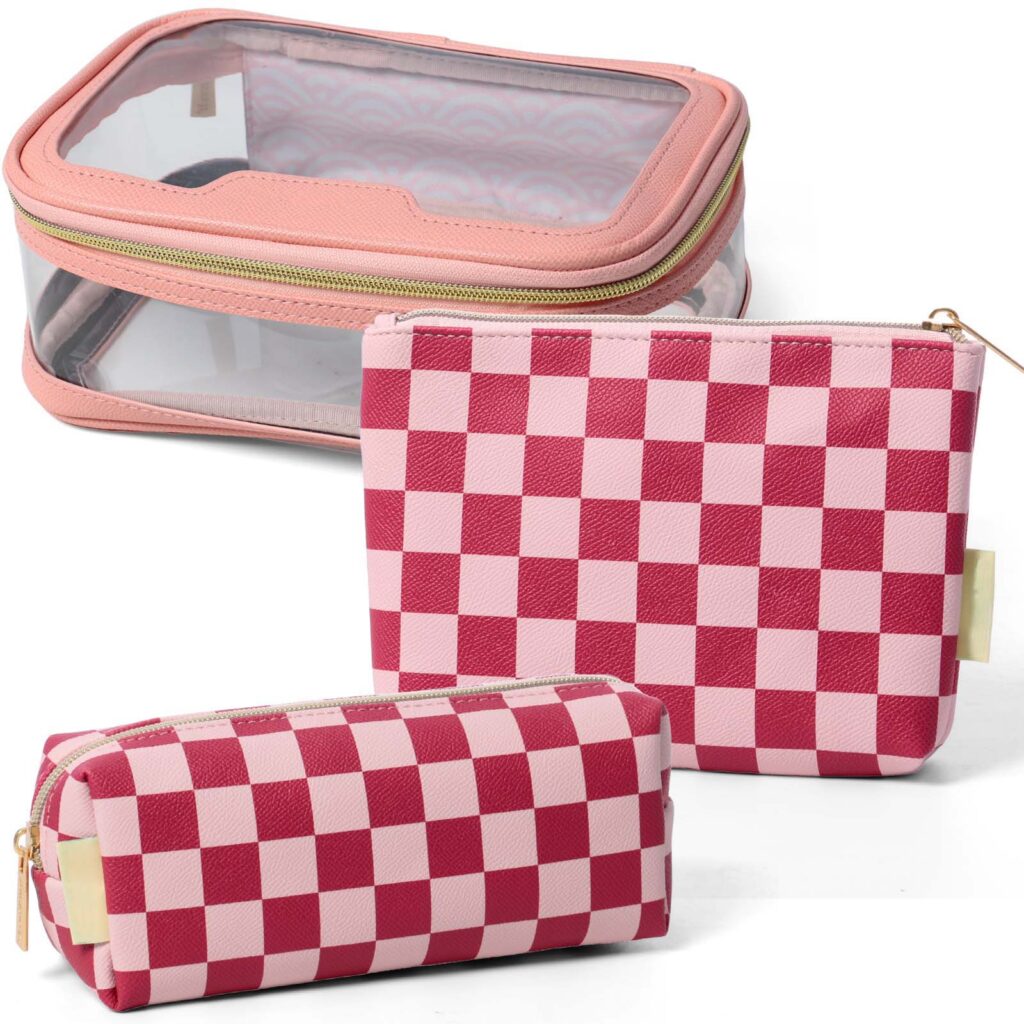
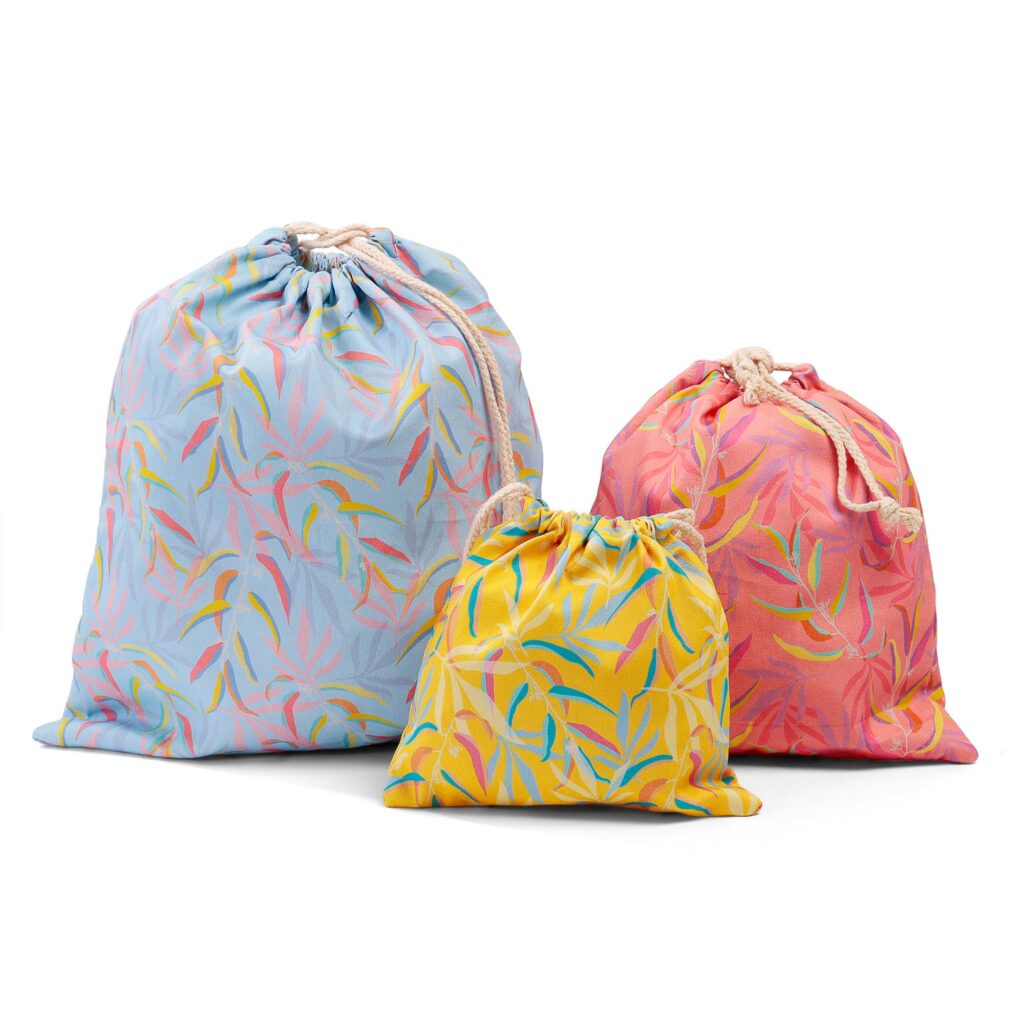
For completely bespoke products, explore our Full OEM Development service. We allow you to confidently Choose Sustainable Materials for Custom Cosmetic Bags with absolute traceability.
Launch faster with Custom Cosmetic Bags OEM100, our flexible low MOQ program built on proven bestselling collections. Order as shown with mix-and-match flexibility, or customize with your own artwork, branding or selected design options from just 100 pcs.
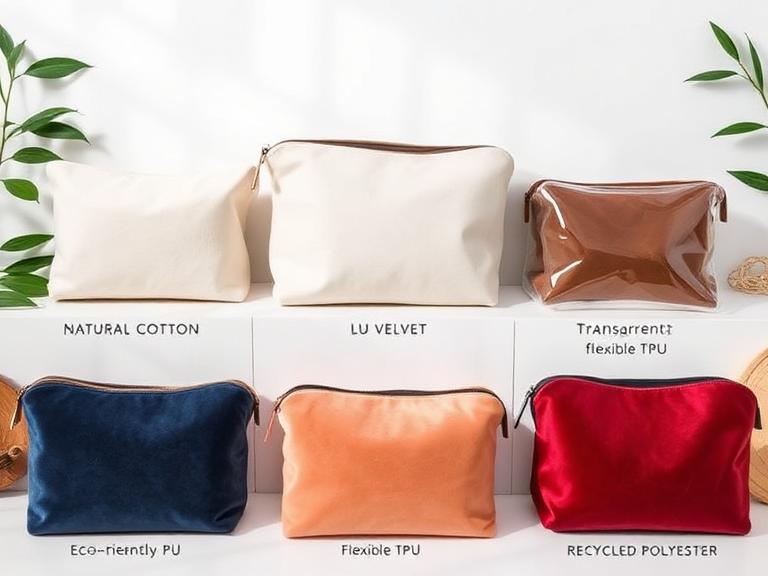
Materials & Construction: Choose from cotton, canvas, velvet, PU, PVC, TPU, recycled polyester and more—or request bespoke fabric combinations. Whatever your vision, our team ensures the materials match your environmental and durability requirements.
Whether you need Cosmetic Bags wholesale for a massive retail rollout or Packaging Solutions for Cosmetic Bags that utilize FSC-certified paper bands to complete the eco-friendly presentation, we ensure your brand values are woven into every stitch.
Frequently Asked Questions (FAQ)
Is rPET (recycled polyester) as durable as virgin polyester for cosmetic bags?
Yes. From our experience, high-quality GRS-certified rPET provides identical tensile strength, abrasion resistance, and water-repellent capabilities as virgin polyester, making it highly suitable for heavy-duty travel cosmetic bags.
How can I waterproof an organic cotton cosmetic bag sustainably?
Raw cotton will absorb makeup spills. To maintain sustainability, we recommend lining the inside of the cotton bag with a thin layer of TPU (Thermoplastic Polyurethane) or rPET. Avoid using standard PVC for the inner lining.
What is the difference between TPU and PVC for clear cosmetic bags?
PVC is a rigid plastic that requires toxic chemical plasticizers (phthalates) to become flexible, which are harmful to the environment. TPU is inherently flexible, solvent-free, highly durable, and biodegrades significantly faster under specific environmental conditions, making it the superior sustainable choice for clear bags.
Are the zippers and pullers on cosmetic bags also sustainable?
They can be, but you must specify this to your manufacturer. You can request zippers made from recycled nylon or rPET tape, and pullers made from recycled zinc alloys or sustainable wood, ensuring the entire product lifecycle is considered.
Authoritative References & Industry Standards
- Textile Exchange (GRS): The governing body for the Global Recycled Standard, ensuring accurate content claims and responsible social, environmental, and chemical practices. Learn about GRS Standards.
- Global Organic Textile Standard (GOTS): The worldwide leading textile processing standard for organic fibres, including ecological and social criteria. Learn about GOTS Certification.
- Ellen MacArthur Foundation: Guidelines on transitioning the plastics economy towards a circular model, emphasizing the elimination of problematic materials like PVC. Explore Circular Economy Guidelines.