Launching a private label cosmetic bag collection does not require thousands of units, a large warehouse, or an entirely original bag design. For a small beauty brand, online seller, salon, influencer, or gift retailer, a 100-piece initial order can be a practical way to test demand while keeping inventory exposure under control. The key is to choose a commercially proven bag style, make the branding visible and consistent, and avoid spending your limited budget on unnecessary customization.
From our experience with custom bag sourcing, the strongest low-MOQ launch is not the collection with the most styles. It is the one with a clear customer, a focused product range, reliable quality, and a realistic plan for selling the first batch. Printembroiderybags’ OEM100 program is designed around this approach: select proven bag structures, choose existing print or embroidery options or provide your own artwork, and personalize the collection with your branding.
Quick Answer: How Can You Launch With 100 Pieces?
To launch a Private Label Cosmetic Bag Collection with 100 pieces, select a proven bag style, decide whether to use existing designs or your own artwork, confirm the logo application and materials, approve a production sample, and place a clearly specified order. Start with one core design or a carefully planned mix of styles and designs if the supplier confirms that the total MOQ permits it. Before paying a deposit, verify what counts toward the 100-piece minimum, the unit price, packaging, production lead time, shipping, and quality standards.
Our recommendation: For a first launch, prioritize one recognizable product concept over a large assortment. Use the first 100 pieces to test pricing, customer response, and sales channels. Expand only after you know which bag style, print, or embroidery design actually sells.
What it is: A branded cosmetic bag collection produced for your business using private label customization.
How it works: Select bag structures, choose materials and designs, add your logo, approve specifications and samples, then order production.
Benefits: Lower initial inventory exposure, brand ownership at the customer-facing level, and a manageable way to test demand.
Limitations: Low MOQ does not automatically mean low unit cost; available materials, colors, packaging, and customization may be restricted.
Who should use it: Beauty startups, e-commerce brands, salons, makeup artists, gift retailers, and creators testing a product line.
Who may not need it: Sellers who only need unbranded bags for temporary use or buyers whose requirements demand extensive custom tooling and large-scale production from the outset.
Common mistakes: Ordering too many designs, skipping sample approval, overlooking packaging costs, and pricing products without including freight and selling fees.
Buying considerations: MOQ terms, materials, logo quality, zipper performance, dimensions, lead time, packaging, shipping, and repeat-order consistency.
Expert recommendation: Start with a focused 100-piece pilot, document every specification, and scale the best-performing design rather than guessing what the market wants.
| Quick Summary | Recommended Approach | Why It Matters |
|---|---|---|
| Initial order | 100 pieces, subject to supplier MOQ terms | Limits the amount of inventory committed before demand is proven |
| Product range | One core style or a controlled mix approved by the supplier | Keeps product selection and stock management simple |
| Branding | Choose embroidery, printing, or another confirmed logo method | Creates a consistent brand identity |
| Design strategy | Use a proven bag structure and customize the details that matter most | Reduces avoidable design and development work |
| Quality control | Approve a representative sample and written specifications | Reduces the risk of receiving bags that differ from expectations |
| Launch strategy | Test one audience and a small number of sales channels | Produces more useful sales data for the next order |
| Reorder decision | Use sales velocity, customer feedback, and contribution margin | Prevents premature scaling |
Table of Contents
- What Is a Private Label Cosmetic Bag Collection?
- Why 100 Pieces Is a Sensible Starting Point
- Choose the Right Cosmetic Bag Product
- Choose Your Branding and Customization
- Understand MOQ and Supplier Terms
- The Production Process: From Concept to Delivery
- Private Label vs. Ready-to-Order vs. Fully Custom
- Budgeting, Pricing, and Cost-Benefit Analysis
- How to Market Your First 100 Bags
- Common Mistakes to Avoid
- How Printembroiderybags OEM100 Can Help
- Frequently Asked Questions
- References
1. What Is a Private Label Cosmetic Bag Collection?
A private label cosmetic bag collection consists of bags sold under your own brand, even when the underlying bag structure comes from a manufacturer’s existing range. You select the style, materials, colors, prints, logo treatment, and packaging options available from the supplier. The finished product is then positioned as part of your brand’s assortment rather than sold as a generic unbranded item.
This is different from simply buying blank bags and applying a logo yourself. A private label supplier may coordinate the bag, branding, and production process as one order. It is also different from fully custom manufacturing, where the buyer may develop a new pattern, construction, material combination, or specialized component from scratch.
For a first-time seller, private label is often the more sensible entry point. It allows you to invest in the parts customers notice—design, usability, brand identity, and presentation—without automatically taking on the cost and risk of developing an entirely new product.
What can be included in a collection?
- Everyday makeup pouches for cosmetics and personal-care essentials.
- Travel toiletry bags with compartments or room for larger products.
- Printed or embroidered cosmetic bags that make the design a central selling point.
- Gift-ready sets with coordinated bag sizes, patterns, or colors.
- Branded promotional bags for salons, beauty events, subscription boxes, or corporate gifts.
The right collection depends on your target buyer. A makeup artist may value easy cleaning and quick access to tools, while a gift shopper may care more about attractive prints, coordinated packaging, and perceived value. Do not assume one bag style can serve every customer equally well.
For broader product options, explore custom cosmetic bags and compare the design possibilities with your intended retail price and audience.
2. Why 100 Pieces Is a Sensible Starting Point
A 100-piece order can be a useful compromise between buying a few samples and committing to a large production run. It gives a new brand enough units to test product photography, online listings, influencer seeding, retail feedback, and initial sales without assuming that demand will immediately justify hundreds or thousands of bags.
However, 100 pieces is not automatically the ideal quantity for every business. If the supplier charges a substantial setup fee or your customer acquisition costs are high, a larger order may eventually offer better economics. Conversely, if your product is untested or your audience is small, even 100 units may be more inventory than you should purchase before validating demand.
Use a small launch to test a specific hypothesis
Do not treat the first order as simply a chance to see whether people like cosmetic bags. Test a more specific proposition: for example, whether a leopard-print travel makeup pouch appeals to your audience at a particular price, or whether embroidered initials make a gift set more attractive.
A clear test produces actionable results. If a design sells quickly but customers complain about the zipper, you have a defined improvement for the next production run. If customers like the bag but reject the price, you can reconsider the material, packaging, positioning, or target channel instead of replacing the entire product concept.
Decide whether to launch one design or a small mix
For beginners, one core bag style with a strong print or logo is usually easier to manage. It simplifies photography, inventory counting, product descriptions, and replenishment. A mixed assortment may make sense if the supplier confirms that the total MOQ can be divided across selected styles and designs.
Before splitting the order, confirm the minimum quantity for each design, color, size, and logo treatment. A supplier’s advertised total MOQ of 100 pieces may not mean you can order ten pieces in each of ten unrelated configurations.
3. Choose the Right Cosmetic Bag Product for Your Audience
Product selection is more important than adding decorative details. A visually attractive bag that does not fit the customer’s daily routine will struggle to generate repeat orders or positive reviews. Start with the use case, then select the shape, size, material, closure, and branding.
Everyday makeup pouches
Everyday pouches work well for customers who carry a small selection of makeup products. A compact shape is easy to store in a handbag, but the interior still needs enough space for the products the intended buyer normally carries. Check the opening width, internal dimensions, lining, and whether the pouch remains usable when filled.
For this category, we recommend prioritizing a practical shape and a distinctive visual identity rather than adding too many compartments that increase complexity without helping the user.
Travel toiletry and makeup bags
Travel bags serve customers who carry skincare, cosmetics, toiletries, and personal-care accessories on trips. Larger capacity, easy access, compartment layout, and convenient packing can be more important than a small difference in decorative finish.
Consider whether the bag needs a wide opening, internal pockets, a carrying handle, a wipe-clean lining, or a shape that fits easily into luggage. If the product is intended for wet toiletries, confirm the actual water resistance of the material and construction. Do not advertise a bag as waterproof unless its performance has been verified.
Explore the travel toiletry bag range if your target market values larger capacity and organized packing.
Embroidered and printed statement bags
Printed and embroidered cosmetic bags can be effective for gift buyers, lifestyle brands, beauty creators, and promotional campaigns. The design gives the customer a reason to choose your bag over a plain alternative. But visual appeal must be balanced with readability, durability, and the quality of the base product.
Embroidery is worth considering when the design benefits from texture or a premium handcrafted appearance. Printing may be more appropriate for detailed illustrations, multiple colors, gradients, or all-over patterns, depending on the process available. Ask the supplier which method is appropriate for your artwork and material.
For design inspiration and sourcing comparisons, review embroidered cosmetic bag options before deciding how your brand should appear on the finished product.
Choose materials based on actual use
Canvas, cotton, polyester, nylon, and other textiles can produce different looks, costs, weights, and performance characteristics. No material is best in every application. A structured bag for a premium gift set may need a different construction from a lightweight pouch designed for promotional distribution.
Ask for material composition, fabric weight where relevant, lining details, color options, and care guidance. If your customers value easy cleaning, evaluate the complete bag rather than assuming a particular outer fabric makes the entire product easy to maintain.
Build a focused collection, not an assortment without a purpose
A coherent collection can use a common color palette, print family, logo placement, or target occasion. This makes the range easier to present on a Shopify store and can encourage customers to buy complementary items. A random mix of unrelated colors and shapes may increase stock complexity without strengthening brand recognition.
4. Choose Your Branding and Customization Strategy
The goal of private label customization is to make the product identifiable as yours without creating unnecessary cost or production risk. At a 100-piece starting quantity, concentrate on a few visible details that improve the customer experience and communicate the brand clearly.
Logo placement and artwork
Decide where the logo should appear before production: front panel, side label, interior label, zipper pull, or packaging. A small logo can look refined on a minimal pouch, while a bold printed design may need more visual space. Ask the supplier to provide a digital mockup or placement guide so you can review scale, position, and contrast.
Submit clean, high-resolution artwork in the file format requested by the manufacturer. Confirm whether the supplier needs vector artwork, font outlines, embroidery files, or other production-ready formats. A logo that looks good on a screen can become illegible when reduced to a small physical size.
Embroidery versus printing
| Branding Method | Best Use | Advantages | Points to Verify |
|---|---|---|---|
| Embroidery | Simple logos, lettering, and textured brand marks | Tactile appearance and a substantial finish | Stitch density, small text readability, backing, thread colors, and fabric suitability |
| Screen or other surface printing | Bold logos and selected graphic designs | Can suit clear, high-contrast branding | Color matching, adhesion, print position, and wash or rub performance as applicable |
| Digital or transfer printing | Detailed artwork or multi-color graphics, where supported | May reproduce complex imagery more effectively than embroidery | Material compatibility, finish, durability, and minimum production conditions |
| Woven or sewn label | Subtle branding and product identification | Consistent branding with less visual coverage on the main panel | Label dimensions, placement, attachment, and label information requirements |
We recommend choosing the method that fits the artwork and intended retail position rather than assuming embroidery is always more premium or printing is always cheaper. The final result depends on the base fabric, production process, complexity, and quality control.
Colors, prints, and packaging
For a first order, use a restrained palette that aligns with your brand identity. Confirm color references, print repeat, and acceptable variation before production. If you are selling a coordinated set, check that the same colors and patterns can be reproduced consistently across the selected pieces.
Packaging should protect the bag and support the selling channel. A simple protective package may be enough for direct-to-consumer shipping, while a retail or gifting product may benefit from a branded insert or presentation packaging. Custom packaging can increase setup costs and minimum quantities, so verify these terms early.
5. Understand MOQ and Supplier Terms Before You Order
MOQ means minimum order quantity. In private label bag manufacturing, the stated minimum may apply to the total order, each bag style, each color, each print, or each customized design. This distinction can materially change the cost and flexibility of a 100-piece launch.
Ask the supplier to confirm the exact quantity rules in writing. If you want 100 bags divided between two styles and three prints, do not assume the split is permitted simply because the supplier advertises a low total MOQ.
Questions to ask a cosmetic bag manufacturer
- Does the 100-piece minimum apply to the total collection or to each design?
- Can existing bag styles be combined with different prints or embroidery patterns?
- Can you use your own artwork, and are there artwork preparation or setup fees?
- Are there extra minimums for special fabrics, colors, linings, zippers, or packaging?
- What is included in the quoted unit price, and what is charged separately?
- What is the sample cost, and is any sample fee credited against a production order?
- What is the production lead time after artwork, sample, and payment approval?
- What inspection process is used, and how are defects or specification deviations handled?
- Can the same materials, colors, and construction be reproduced for repeat orders?
For broader sourcing research, compare cosmetic bag manufacturers and cosmetic bag suppliers in the USA. Treat directory and sourcing articles as a shortlist, not as proof of manufacturing capacity. Confirm each supplier’s actual role, product specialization, commercial terms, and ability to meet your requirements.
Manufacturer, trading company, or customization partner?
A factory may control sewing and assembly directly, while a trading company may coordinate multiple factories or provide a broader product selection. A customization partner may specialize in low-MOQ branding and ready-to-order collections. None of these labels automatically guarantees better quality or price.
For a 100-piece order, the best partner is the one that clearly explains the MOQ, controls the agreed specifications, communicates production risks early, and provides a realistic path to reordering. For a larger long-term program, production capacity, process control, traceability, and consistency across batches become even more important.
6. The Production Process: From Concept to Delivery
A small order still needs a structured production process. Most preventable problems arise when the buyer approves a design without confirming dimensions, materials, logo execution, or packaging. Use a documented workflow rather than relying on messages that describe the product in general terms.
Step 1: Define the customer and product brief
Write down who will buy the bag, what it will hold, the intended retail price, the sales channel, and the visual style. Include target dimensions, preferred material, lining, closure, pocket layout, color, and logo placement. A clear brief helps the supplier recommend an appropriate existing design instead of guessing what you mean.
Step 2: Select the bag structure and design
Choose from available patterns and sizes before requesting extensive changes. Existing structures can simplify development, but verify that the selected style is suitable for your use case. If you need a particular compartment arrangement or unusual size, ask whether it is a standard option or a custom development requirement.
Step 3: Confirm the quotation and sample
Review the unit price, MOQ, sample cost, branding charges, packaging, production schedule, shipping terms, and payment milestones. A representative sample should demonstrate the important features of the final product. Check the dimensions, materials, zipper operation, seams, lining, logo position, and finish.
For a low-MOQ launch, a sample may feel like an additional expense. It is often worth paying for because it lets you identify issues before the entire batch is made. If a physical sample is not feasible, request detailed photos and measurements, but understand that they provide less assurance than inspecting the actual item.
Step 4: Approve a written specification
Record the approved material, dimensions and tolerances, color references, logo artwork, placement, construction, packaging, and any inspection criteria. Make sure the supplier understands which changes require your approval. Keep the approved sample or reference photos for comparison when the production order arrives.
Step 5: Inspect production and shipment readiness
For 100 pieces, a practical inspection may include checking a representative selection of bags and verifying the agreed critical features. Depending on the risk, you may ask for photos during production or arrange a pre-shipment inspection. Do not assume that a small order is too small to have quality problems.
Agree in advance how defects, shortages, and deviations will be reported and resolved. The goal is not to demand an unrealistic zero-defect promise; it is to establish clear standards and a workable corrective process.
Step 6: Launch, measure, and reorder selectively
Once the bags arrive, inspect the shipment before listing the product for sale. Record defects, packaging damage, customer questions, sales by design, and return reasons. Use those observations to improve the next order instead of automatically repeating the first configuration.
For a detailed overview of the workflow, read about customized cosmetic bag production.
7. Private Label vs. Ready-to-Order vs. Fully Custom Production
Not every brand needs the same degree of customization. The right model depends on whether your competitive advantage comes from speed, branding, a unique product design, or a combination of those factors.
| Factor | Ready-to-Order Wholesale | Private Label | Fully Custom OEM |
|---|---|---|---|
| Product structure | Existing supplier design | Usually existing structure with selected customization | May include newly developed pattern or construction |
| Branding | May be unbranded or have limited options | Logo, print, embroidery, and selected brand details | Broad design and branding control, subject to technical feasibility |
| Development effort | Low | Low to moderate | Moderate to high |
| Initial cost exposure | Often lower, depending on product and quantity | Can be manageable when customization options are standardized | May involve extra sampling, setup, and development costs |
| Design differentiation | Limited unless the assortment itself is distinctive | Moderate to high, depending on customization | Potentially high when the design is genuinely differentiated |
| Best fit | Quick stock testing or unbranded retail | New brands that want branded products with controlled risk | Established demand or a clear need for a unique product |
For a first 100-piece collection, private label is often the most balanced option. It gives you room to build a recognizable brand without paying for every component to be developed from scratch. If you already have evidence of strong demand and a design that competitors cannot easily replicate, a fully custom program may make sense later.
Explore private label travel makeup pouch suppliers to understand the range of available approaches. Compare the actual customization terms, not just the headline MOQ.
8. Budgeting, Pricing, and Cost-Benefit Analysis
The biggest pricing mistake is treating the factory unit price as the complete cost of launching a product. A bag quoted at an attractive price can become unprofitable after branding, packaging, freight, import charges, marketplace fees, advertising, fulfillment, and returns are included.
Calculate the landed cost per sellable bag
Start with the cost of producing the bags, then add the costs required to get saleable inventory to your intended location. Divide the total by the number of sellable units, not automatically by the number ordered. If some bags are damaged or reserved for photography and promotions, they may not contribute to revenue.
A practical model is:
Landed cost per sellable unit = (product cost + branding and setup + packaging + freight + applicable import charges + inspection and other inbound costs) ÷ sellable units received.
Next, estimate the costs incurred each time you sell a bag, such as payment processing, marketplace commission, fulfillment, outbound shipping subsidies, and expected returns. These expenses determine how much revenue remains to cover marketing and fixed business costs.
Example: Planning a 100-piece launch
The following figures are illustrative only, not a supplier quotation or a claim about current market prices. Replace every amount with actual quotes for your product, shipping route, and sales channel.
| Cost Item | Illustrative Total | Notes |
|---|---|---|
| 100 bags at $4.00 each | $400 | Example factory product cost |
| Logo and setup costs | $80 | Depends on artwork and production method |
| Packaging | $50 | Assumes basic branded or protective packaging |
| Inbound freight and other inbound costs | $120 | Illustrative; obtain a route-specific quote |
| Total landed batch cost | $650 | Before sales and marketing costs |
| Landed cost per unit | $6.50 | Assumes all 100 units are sellable |
If the intended retail price were $19.00, the difference between retail price and the illustrative $6.50 landed cost would be $12.50 per unit before selling fees, outbound fulfillment, advertising, discounts, returns, and overhead. That $12.50 is not net profit.
Suppose selling and fulfillment expenses average another $4.00 per order and allocated marketing costs average $3.00 per sale. The remaining contribution would be $5.50 per unit before fixed overhead and tax, assuming the full $19.00 price is realized and the other figures are accurate. This is why a launch budget should include customer acquisition and fulfillment rather than only factory cost.
What if not all 100 bags sell?
Unsold stock ties up cash and storage space. If demand is uncertain, set a conservative sales target and estimate how long it may take to sell the initial batch. A lower unit price on a larger order is not a saving if the additional inventory sits unsold for months.
For beginners, a smaller, well-documented launch can provide valuable evidence about price sensitivity, product photography, customer objections, and conversion rate. For commercial users with established sales data, larger orders may improve unit economics—but only after the demand forecast and replenishment cycle justify the commitment.
When is upgrading to custom production worth it?
Upgrade when customer feedback or sales data identifies a specific limitation that affects conversion, satisfaction, or repeat purchase. Examples include a frequently requested size, a better compartment layout, a more durable closure, or a signature pattern that differentiates the brand.
Do not upgrade simply because a more complicated product looks more premium. If buyers are satisfied with an existing structure and your main differentiator is the print or embroidery, investing in stronger branding and better product photography may provide a better return than redesigning the bag.
9. How to Market Your First 100 Cosmetic Bags
Once production is underway, prepare the sales materials before inventory arrives. A low-MOQ launch is most useful when it is treated as a controlled market test, not just a product upload.
Create a clear Shopify product page
Use a descriptive product title, a concise value proposition, and original photos showing the bag from multiple angles. Include dimensions, material details, closure type, interior layout, care instructions, and the items the bag can reasonably hold. Avoid vague descriptions such as “premium quality” without supporting details.
Photograph the bag in context. Show it open and closed, in a hand or beside familiar objects for scale, and with representative products inside. If the product is designed for travel, demonstrate how it packs. If it is intended as a gift, show the packaging accurately rather than depicting packaging that is not included.
Choose one primary audience first
A private label cosmetic bag can be sold to different audiences, but the messaging should reflect the intended buyer. A beauty creator may want a recognizable signature print. A salon may prefer coordinated bags for retail or client gifts. A travel-focused brand may emphasize organization and compact packing.
Choose one audience for the initial campaign and measure its response before expanding into several unrelated segments. This makes it easier to understand which benefit motivates customers to buy.
Use content to demonstrate practical value
- Show what fits inside the bag using realistic product sizes.
- Publish a short demonstration of the opening, pockets, lining, and closure.
- Explain the difference between the available sizes or designs.
- Use customer feedback to address common concerns on the product page.
- Offer coordinated sets only when the additional products improve the customer proposition.
For printed collections, review wholesale printed cosmetic bag options for ideas on coordinating designs and evaluating production partners. Confirm the rights to use all supplied artwork, patterns, fonts, and licensed imagery before commercial use.
Track the numbers that determine your next order
Monitor units sold by design, product-page conversion, average order value, advertising cost per purchase, returns, defects, and customer feedback. Also record how long each stage takes—from purchase order to delivery and from product launch to sale.
A 100-piece launch is successful when it generates useful commercial evidence, even if the first design does not sell out immediately. Use that evidence to decide whether to reorder, adjust the price, improve the product, or stop investing in a weak concept.
10. Common Mistakes When Launching a Private Label Cosmetic Bag Collection
Ordering too many styles at the start
Many new brands spread their budget across several colors, shapes, and prints because a large assortment looks attractive. The result can be shallow inventory for each option, more complex photography, and unclear sales data. Start with a focused concept and add variety after identifying demand.
Assuming 100 pieces means unlimited customization
A low total MOQ may apply only to selected existing styles or approved designs. Custom fabric, unusual dimensions, special hardware, and individual packaging can have separate minimums. Get confirmation before designing the collection around features the supplier may not offer at your quantity.
Skipping the sample to save money
A sample adds cost and time, but it can reveal incorrect proportions, poor logo placement, unsuitable fabric, weak stitching, or an inconvenient opening. For most first-time private label launches, sample approval is a sensible risk-control expense.
Using artwork that is not production-ready
Low-resolution logos, overly fine lines, tiny lettering, and colors that are difficult to reproduce can undermine the final product. Ask the manufacturer to check artwork suitability for the selected process and approve a realistic representation before production.
Ignoring product claims and labeling obligations
Do not describe a cosmetic bag as waterproof, antimicrobial, sustainable, or made from a particular certified material unless you have evidence supporting the claim. Depending on the market and product, labeling, chemical restrictions, packaging rules, or consumer-protection requirements may apply. Confirm relevant obligations before making claims or shipping internationally.
Choosing a supplier on price alone
The lowest quotation may exclude logo setup, packaging, inspection, or shipping. It may also come with unclear tolerances or limited support for repeat orders. Compare quotations using the same product specification and delivered-cost basis.
Reordering before checking the first batch
Even if the first design sells well, review quality, customer comments, and contribution margin before increasing volume. A strong sales result does not make a defect acceptable, and a popular design may still be unprofitable if shipping or advertising costs are too high.
11. How Printembroiderybags OEM100 Can Help You Launch With 100 Pieces
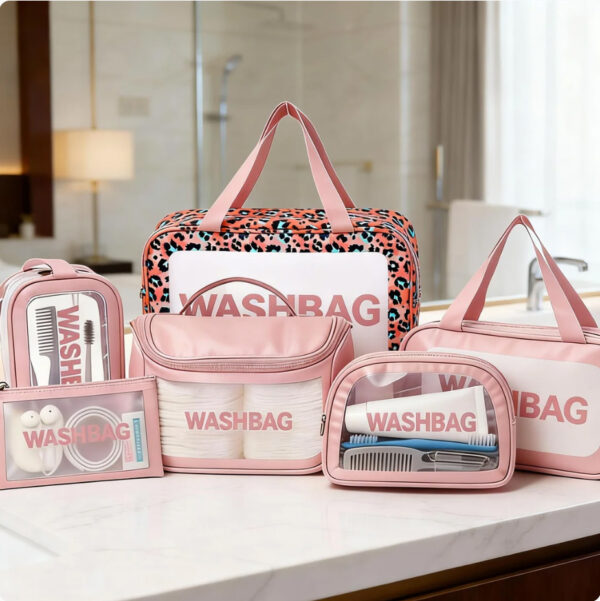
Printembroiderybags offers an OEM100 program built around low-MOQ branded cosmetic bags. The program combines selected existing bag structures with available printed and embroidered designs, allowing buyers to choose from established collection options or personalize selected styles with their own artwork and logo.
For a new brand, this approach can reduce the amount of product development needed before launch. Instead of starting with a blank specification, you can begin with an available structure and concentrate on the details that distinguish your collection. The commercial advantage is a more focused path to testing your brand in the market, provided the chosen options fit your product requirements.
Custom Makeup Bags With Logo: OEM100 Program
The program offers selected ready-to-order printed and embroidered collections, with options to mix selected styles and designs subject to the supplier’s MOQ terms.
- Market-tested bag structures and selected collection options
- Trend-driven print and embroidery designs
- Option to use available patterns or submit your own artwork
- Logo and branding personalization
- Advertised total MOQ from 100 pieces, with a stated MOQ from 100 pieces per design for customized collection options
Before ordering, ask the team to confirm the minimum for your exact combination of styles, designs, and logo treatments, along with sampling, production time, packaging, and shipping costs.
Explore the Printembroiderybags OEM100 program
Which OEM100 approach should you choose?
Option A: Ready-to-order wholesale collections. Choose this route when you want to launch quickly using available designs and need minimal development. It can be appropriate for gift retailers, small e-commerce brands, and businesses testing a new category.
Option B: Customize a proven collection. Choose this route when you want a stronger brand identity through your logo, selected pattern, or artwork while retaining an existing bag structure. This is often the better balance for a first private label collection because it gives customers a recognizable brand without automatically requiring a fully new design.
Option C: Develop a more specialized product. If you require unusual dimensions, new construction, special materials, or unique hardware, ask whether the requirements are possible within the 100-piece budget and quantity. Do not assume every custom feature is included in a standard low-MOQ program.
What to send when requesting a quotation
- Your target market and intended retail price.
- The bag style, approximate dimensions, and preferred material.
- Your selected pattern or original artwork.
- Logo file and preferred branding method.
- Required quantity and proposed split across designs.
- Packaging requirements and destination country.
- Target delivery date and any quality or labeling requirements.
A clear brief makes it easier for the supplier to quote the actual project rather than a generic bag. It also helps you compare the proposal with alternatives such as designer cosmetic bag manufacturers on comparable terms.
12. Frequently Asked Questions
Can I launch a private label cosmetic bag collection with only 100 pieces?
Yes, if the supplier’s MOQ terms support your selected style and customization. Confirm whether the minimum applies to the entire order or each design, color, or style. Printembroiderybags’ OEM100 program advertises low-MOQ options starting at 100 pieces, but the exact terms should be confirmed for your configuration.
Is 100 pieces enough for a new cosmetic bag brand?
It can be enough to test a focused product concept, gather customer feedback, and validate pricing. It is not a guarantee of profitability. The right quantity depends on your audience size, sales channel, landed cost, marketing budget, and expected demand.
Can I mix different cosmetic bag styles in one 100-piece order?
Possibly, depending on the supplier’s MOQ policy. Ask whether the total quantity can be split across styles, colors, prints, and logo options. Some customization choices may have a separate minimum per design.
Should I choose embroidery or printing for my logo?
Embroidery can work well for simple logos and a textured finish, while printing can suit detailed graphics and multi-color artwork. The best choice depends on the design, fabric, budget, and durability requirements. Approve a representative sample before production.
How do I calculate the cost of a private label cosmetic bag?
Add product cost, logo and setup charges, packaging, inbound freight, applicable import charges, and other inbound expenses. Divide the total by the number of sellable units to estimate landed cost per bag. Then include payment fees, fulfillment, marketing, returns, and overhead when evaluating profitability.
Do I need a sample before placing a 100-piece order?
A sample is strongly recommended for a first order, especially when the bag includes custom artwork, embroidery, special materials, or a particular compartment layout. It allows you to check dimensions, stitching, logo placement, zipper performance, and overall appearance before approving production.
How long does private label cosmetic bag production take?
Timing depends on the existing bag style, material availability, branding method, sample approval, production schedule, and shipping. Ask the supplier for a written timeline that separates sampling, bulk production, and transit rather than relying on an unqualified estimate.
How do I choose a reliable cosmetic bag manufacturer?
Compare suppliers using the same written specification. Verify MOQ terms, sample quality, material and logo capabilities, production lead time, inspection procedures, communication, shipping terms, and repeat-order consistency. For a low-MOQ launch, clear terms and responsive support are often more valuable than a small difference in quoted unit price.
When should I reorder or expand the collection?
Reorder when sales data, contribution margin, customer feedback, and inventory turnover support the decision. Expand only when you have a clear reason to introduce another size, print, or style. The first 100 pieces should help identify what customers want, not force you to keep investing in a product that has not been validated.
13. References and Useful Business Resources
Use the following official resources to support product-safety planning, textile labeling research, and intellectual-property checks. Requirements vary by destination market and product, so confirm the rules that apply to your particular cosmetic bag and sales channels.
- U.S. Federal Trade Commission: Threading Your Way Through Labeling Requirements Under the Textile and Wool Acts — guidance for determining whether textile products are subject to applicable U.S. labeling rules.
- U.S. Consumer Product Safety Commission: Business Education — official business resources for understanding relevant consumer product safety responsibilities.
- World Intellectual Property Organization: Trademarks — background on trademarks and brand protection when developing a private label collection.
Final Recommendation: Keep Your First Collection Focused
A Private Label Cosmetic Bag Collection with 100 pieces can be a practical entry point for a new beauty or lifestyle brand, but the advantage comes from disciplined product selection, not from the quantity alone. Choose a bag that suits a clearly defined customer, use customization to make the product recognizable, and confirm the supplier’s MOQ and cost structure before committing.
For most first-time launches, we recommend starting with a proven bag structure, one coherent design direction, a clear logo treatment, and a representative approved sample. Calculate landed cost and contribution margin before setting the retail price. Then use the first batch to measure demand, quality, and customer feedback before expanding.
Printembroiderybags’ OEM100 program is worth exploring if you want to start with available bag styles and personalize them without automatically developing a completely new product. Confirm the exact production terms for your design, document the approved specifications, and scale only when the numbers support the next order.
Start planning your 100-piece private label cosmetic bag collection with OEM100.