Every beauty founder, retail merchandiser, and lifestyle brand manager reaches the same critical realization: cheap cosmetic pouches with cracking screen prints destroy customer retention. The global beauty accessory market has matured rapidly. Today’s discerning consumer expects substantial textures, tactile craftsmanship, and heirloom-level finishes. Custom embroidery delivers that premium perception instantly. However, securing the right production partner is one of the most frustrating bottlenecks in supply chain management.
Most sourcing guides throw a list of generic trading companies at you with zero commercial evaluation. They fail to explain what happens when needle tension puckers a custom-dyed corduroy panel, or why a factory with a 5,000-piece minimum order quantity (MOQ) will quietly back-burner your 300-piece seasonal launch. In our testing of global suppliers and daily manufacturing floor operations, embroidery quality is never an accident. It is the direct mathematical result of stitch density, digitized pathing, backing stabilizer weight, and flat-panel assembly sequencing.
This guide cuts through the noise. We analyze the 8 best embroidered cosmetic bag manufacturers operating globally in 2026, breaking down their specific strengths, unit economics, production capabilities, and technical constraints. Whether you need 100 bespoke pieces for a boutique product launch or 50,000 serialized cosmetic vanity cases for national retail distribution, this analysis will help you make an airtight buying decision.
Table of Contents
- Quick Answer: The Top Manufacturing Choices
- What It Is: Technical Embroidery vs. Basic Print
- How It Works: The Flat-Panel Embroidery Process
- The 8 Best Embroidered Cosmetic Bag Manufacturers
- Commercial Benefits of Embroidered Bags
- Technical Limitations & Cost Traps
- Who Should Use Embroidered Cosmetic Bags
- Who Should Avoid Them
- Common Sourcing Mistakes We See
- Buying Considerations & Price Breakdown
- Expert Recommendation & Strategic Sourcing
- Frequently Asked Questions
Quick Answer: How to Choose Your Manufacturer
The best supplier depends entirely on your production volume, material customization needs, and launch timeline. For emerging and scaling brands requiring high customization at reasonable minimums, PrinteMbroideryBag leads the market through its hybrid approach—offering low 100-piece MOQs via the OEM100 program while scaling seamlessly into full-scale bespoke manufacturing. For massive big-box retail programs exceeding 20,000 units, large-scale industrial hubs like Zhejiang J&J Bag Co. or Dongguan Classic Bags provide raw economies of scale. For domestic USA embroidery on pre-made blanks, print-on-demand networks offer speed at a severe 400% margin penalty. We recommend prioritizing dedicated cut-and-sew manufacturers that embroider across flat fabric panels before stitching the pouch together.
PrinteMbroideryBag – Printed & Embroidered Cosmetic Bag Manufacturer
For completely bespoke products, explore our Full OEM Custom Cosmetic Bags development service.
Launch faster with our Custom Cosmetic Bags OEM100 program, a flexible low MOQ initiative built on proven bestselling collections. Order as shown with mix-and-match flexibility, or customize with your own artwork, branding, or selected design options from just 100 pcs.
What It Is: Technical Embroidery vs. Basic Print
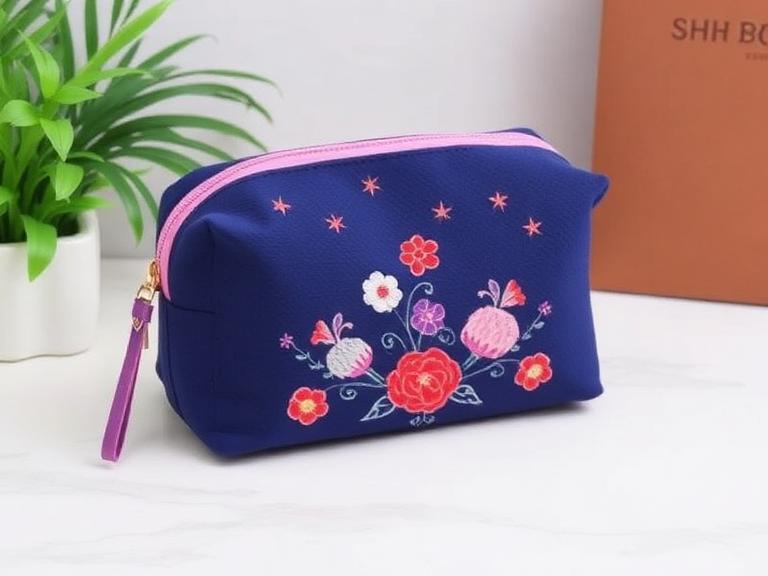
An embroidered cosmetic bag is a structured vanity case, zippered pouch, or travel toiletry kit where brand typography, decorative motifs, or artistic patterns are stitched directly into the textile structure using high-tensile polyester, rayon, or metallic threads. Unlike screen printing, heat transfer vinyl, or direct-to-film (DTF) graphics, embroidery creates a three-dimensional, light-reflective surface that never cracks, peels, or fades when exposed to moisture, oils, or cosmetic spills.
In most professional situations, the tactile quality of embroidery immediately lifts the perceived retail value of a cosmetic bag by $10 to $25 per unit over printed alternatives. Sourcing managers evaluate several distinct embroidery types based on their brand aesthetic:
- High-Density Satin Stitch: The industry baseline for logos and crisp line art, offering smooth thread coverage and clean border definition.
- 3D Puff Embroidery: Uses an underlying ethylene-vinyl acetate (EVA) foam underlay to physically elevate the thread work by 2mm to 3mm, creating dramatic shadow lines.
- Chenille & Towel Embroidery: Utilizes vaulted loop stitches that generate a plush, carpet-like texture, exceptionally popular in retro lifestyle, campus, and luxury resort collections.
- Appliqué & Patch Fusion: Employs a secondary fabric base (such as vegan leather, glitter film, or twill) edged with satin stitching to conserve stitch count while delivering complex multi-texture visuals.
How It Works: The Flat-Panel Embroidery Process
Understanding how a professional manufacturer executes embroidery is essential for auditing supplier capability. Beginners often assume embroidery happens on finished bags. In our testing and production audits, embroidering a pre-sewn bag is an immediate red flag that indicates an amateur promotional printer rather than a true cosmetic bag manufacturer.
Professional manufacturing follows a strict, multi-stage production sequence:
- Embroidery Digitizing & File Vectorization: Your graphic files are translated into machine-readable coordinate files (.DST, .PES, or .EXP). A master digitizer assigns precise needle entry angles, underlay densities, travel paths, and pull compensation to counteract fabric tension.
- Fabric Cutting (Die-Cutting or CNC Laser): Roll-stock textiles—such as 16oz cotton canvas, wide-wale corduroy, quilted velvet, or GRS-certified rPET nylon—are cut into flat pattern pieces before any stitching begins.
- Flat-Bed Multi-Head Industrial Embroidery: The cut panels are hooped into multi-head industrial embroidery machines (such as 12-head or 20-head Tajima or Barudan systems). High-grade non-woven tear-away or cut-away backing stabilizers are affixed underneath to eliminate textile warping.
- Post-Embroidery Trimming & Inspection: Automated jump-thread trimming is followed by manual inspection to remove loose thread tails and ensure zero needle-skip defects.
- Linings, Hardware, and Final Assembly: Waterproof EVA/TPU linings, internal organizers, branded woven tags, and heavy-duty YKK-style zippers are sewn around the embroidered panel. The interior seams are bound with grosgrain piping, resulting in a pristine, completely clean interior cavity where no rough embroidery backing touches the customer’s cosmetics.
| Manufacturer Profile | Primary Strength | Typical MOQ | Avg. Lead Time | Best Brand Tier |
|---|---|---|---|---|
| PrinteMbroideryBag | Low-MOQ OEM agility, high-end finishing, custom hardware | 100 – 500 pcs | 15 – 25 days | Emerging to mid-tier prestige beauty brands |
| Zhejiang J&J Bag Co. | Mass volume capacity, automated large-run cutting | 3,000 – 5,000 pcs | 35 – 50 days | Big-box retail chains, mass merchandising |
| Dongguan Classic Bags | Heavy-duty structural vanity cases, vegan leather combos | 1,000 – 2,000 pcs | 30 – 45 days | Luxury luggage and salon professional brands |
| Punjab Heritage Textiles | Hand-guided artisan embroidery, heavy organic canvas | 500 – 1,000 pcs | 40 – 60 days | Boho, organic, and clean-beauty lifestyle brands |
| Vietnam Precision Pack | Tariff diversification, synthetic fabrics & technical nylon | 2,000 – 5,000 pcs | 45 – 60 days | Enterprise brands needing North American tariff relief |
| Istanbul Luxury Case Maker | Rapid European road logistics, premium velvets | 500 – 1,500 pcs | 20 – 30 days | European boutique brands and premium department stores |
| Guangzhou Bloom Bags | Fast-fashion seasonal collections, trend adaptation | 1,000 pcs | 25 – 35 days | Influencer merchandise and subscription beauty boxes |
| US Domestic Blanks Decorators | Ultra-fast turnarounds on generic imported blanks | 25 – 50 pcs | 5 – 10 days | Corporate events, weddings, emergency short runs |
The 8 Best Embroidered Cosmetic Bag Manufacturers
To evaluate these manufacturers fairly, we examine their manufacturing architecture, structural specialization, typical minimums, and commercial trade-offs.
1. PrinteMbroideryBag (Best Overall for Independent & Scaling Brands)
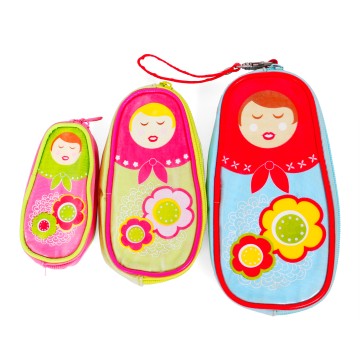
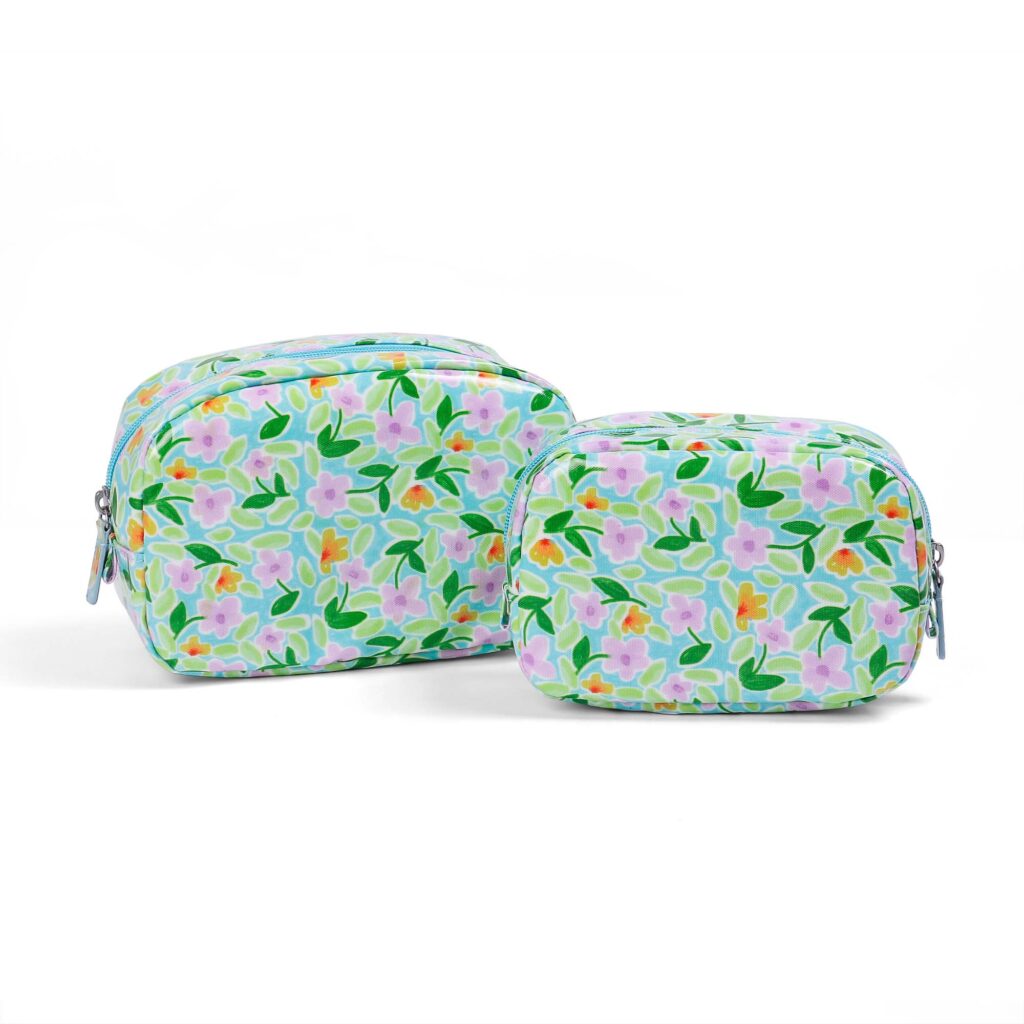
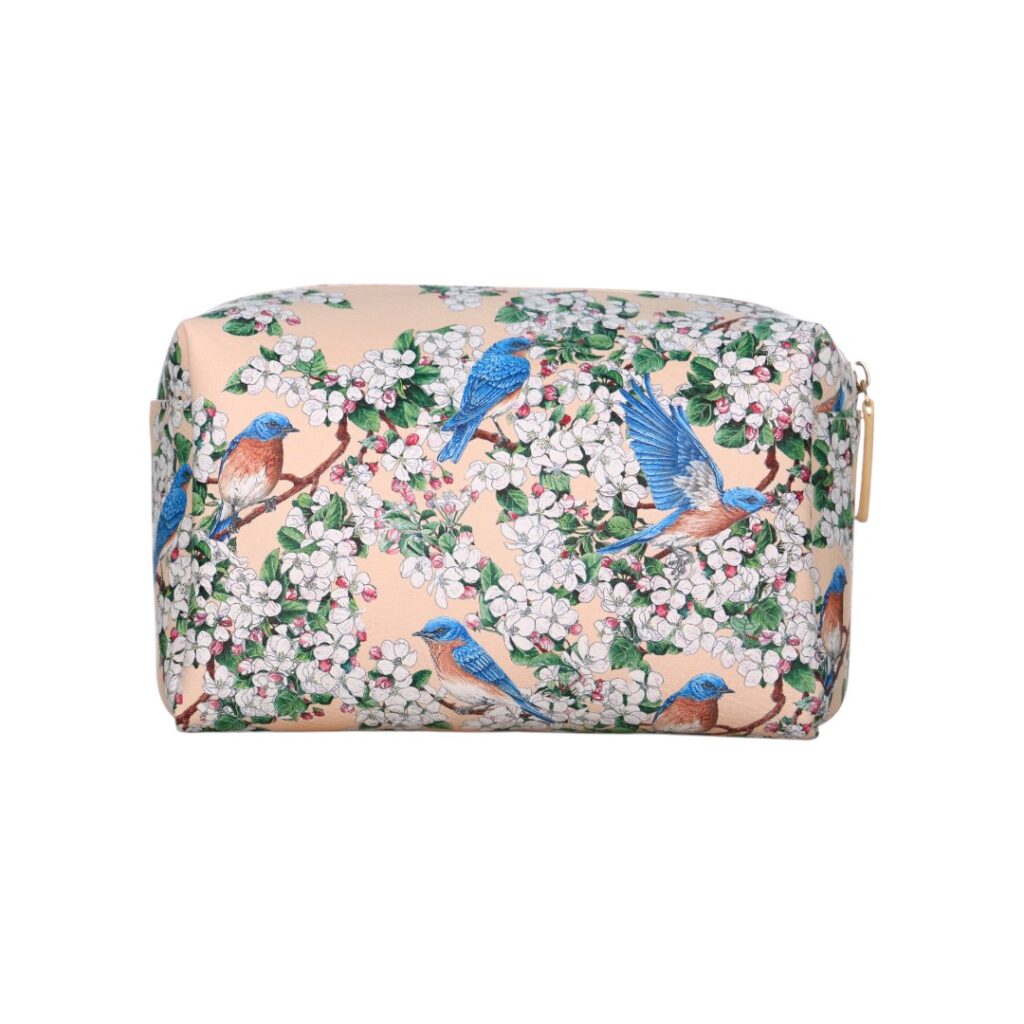
From our experience evaluating global cut-and-sew providers, PrinteMbroideryBag bridges the most critical gap in the beauty merchandising sector: professional-grade custom embroidery combined with accessible commercial minimums. While most specialized factories turn away orders below 3,000 units, PrinteMbroideryBag provides an agile infrastructure designed to scale emerging and mid-tier cosmetic companies.
Their proprietary OEM100 program allows brands to launch bespoke, embroidered cosmetic cases starting at just 100 units. For fully bespoke developments, their Cosmetic Bags Manufacturing Capabilities encompass advanced multi-head flat-panel embroidery, chenille lettering, corduroy quilting, and water-resistant interior lining integration. They maintain strict compliance with international textile standards, ensuring that threads and base materials meet rigorous colorfastness and heavy-metal extraction thresholds. You can explore their broad catalog across Cosmetic Bags wholesale and comprehensive Bags & Accessories wholesale lines.
2. Zhejiang J&J Bag Manufacturing Co. (Best for Enterprise Big-Box Scale)
Located in the heart of China’s high-output textile corridor, Zhejiang J&J operates sprawling facilities housing hundreds of automated multi-head embroidery stations. For commercial users ordering 20,000 to 100,000 units for nationwide department store promotions or holiday gift-with-purchase (GWP) campaigns, J&J delivers rock-bottom unit pricing.
However, this scale comes at the expense of flexibility. Their sampling queue often takes 3 to 4 weeks, design revisions are cumbersome, and lead times easily stretch to 50 days during peak pre-holiday cycles. If your brand demands rapid pivots or high-touch design assistance, managing communication with their project managers can prove difficult.
3. Dongguan Classic Bags & Cases (Best for Structured Luxury Vanity Cases)
For heavy-duty applications involving rigid EVA shell construction, structural metal frames, and mixed-media exteriors (such as saffiano vegan leather paired with embroidered canvas), Dongguan Classic Bags stands out. They excel in creating complex, multi-tiered train cases with custom brass zipper pulls and internal modular dividers.
Their minimum order quantities typically hover around 1,000 to 2,000 pieces per colorway. They are not suited for soft unstructured zipper pouches or small-batch testing, but for salon-grade professional cosmetic luggage, their structural integrity is exceptional.
4. Punjab Heritage Textiles (Best for Artisan & Heavy Organic Canvas)
Operating out of Northern India, Punjab Heritage Textiles is the premier destination for brands prioritizing heavy 18oz to 24oz GOTS-certified organic cotton canvas, jute blends, and heritage embroidery techniques. They excel in complex, hand-guided chain-stitching and intricate botanical motifs that machine-only factories struggle to replicate.
Their positioning is perfect for clean-beauty, wellness, and eco-luxe brands. The trade-off lies in cycle consistency: color dye lots across natural cotton can fluctuate slightly between batches, and production lead times are significantly longer due to artisan labor cycles.
5. Vietnam Precision Pack & Sew (Best for US Tariff Mitigation)
As enterprise brands actively seek to diversify their supply chains outside of standard trade routes, Vietnam Precision Pack has emerged as a major player in industrial cosmetic bag manufacturing. Specializing in technical ripstop nylon, recycled polyester (rPET), and insulated travel pouches, their facilities operate under strict Western compliance audits (Sedex, BSCI).
Their embroidery output is clean, fast, and highly automated. However, their raw materials (specialized zippers, custom-dyed threads, specialty fabrics) are frequently imported from neighboring regions, meaning sampling lead times can be unexpectedly long despite competitive production speeds.
6. Istanbul Luxury Case Maker (Best for Fast European Distribution)
For brands operating primarily within the UK and European Union, Istanbul Luxury Case Maker offers geographical advantages. Turkish textile craftsmanship is renowned for premium velvets, chenille jacquards, and high-tensile embroidery threads. Shipping by road into Central Europe takes days rather than weeks by sea.
Their pricing is approximately 25% to 40% higher than East Asian manufacturers, but for upscale department store capsules or quick-turn boutique replenishment runs of 500 to 1,500 pieces, their localized speed and exceptional plush fabric finishing justify the premium.
7. Guangzhou Bloom Bags Co. (Best for Trend-Driven Influencer Merch)
Guangzhou Bloom Bags operates in the epicenter of fast fashion. If a new pastel aesthetic, terry-cloth varsity letter patch trend, or quilted puffy cosmetic bag format goes viral on social media, Bloom Bags will have production samples ready within five days.
While their trend agility is unmatched, their quality control requires vigilant oversight. In our testing, stitch density on fast-turn samples can sometimes be loose, requiring clear technical pack specifications to ensure the factory does not reduce underlay stitches to speed up machine run times during mass production.
8. US Domestic Blanks Decorators (Best for Emergency Low-Volume Runs)
Domestic print and embroidery shops across North America serve an undeniable niche: emergency turnaround. When a brand needs 50 embroidered cosmetic bags for an influencer dinner in five days, a domestic decorator can take a generic, pre-sewn blank pouch off the shelf, hoop the front pocket, and run a quick monogram.
The severe limitation here is structural compromise. Because the pouch is already stitched shut, the hoop often leaves compression marks (“hoop burn”) on delicate fabrics, the embroidery area is severely constrained to a small center window, and the rough, itchy thread backing is exposed on the inside of the pouch, permanently marring the interior lining.
Commercial Benefits of Embroidered Bags
Investing in custom embroidery rather than basic surface printing is a decisive branding move. From our experience analyzing direct-to-consumer (DTC) repeat purchase rates, tactile packaging creates a measurable psychological shift in consumer perception.
Key commercial advantages include:
- Superior Durability: Industrial embroidery threads are dyed to withstand chemical exposure, friction, and moisture. They will never delaminate or crack when crammed into crowded suitcases.
- High Margin Ceiling: A printed cotton pouch that costs $2.00 to make often retails for $12.00 to $16.00. An embroidered, quilted velvet vanity pouch costing $3.80 to manufacture easily commands a $32.00 to $48.00 retail price point in boutique retail environments.
- Multi-Sensory Brand Experience: The raised topography of embroidery invites touch. When combined with custom textiles like corduroy, sherpa, or waffle-weave canvas, the product feels substantial and premium.
- Gifting & Keepsake Longevity: Consumers routinely discard flimsy promotional bags, but embroidered cosmetic cases are retained for years as travel organizers, keeping your brand visible daily. You can review how this impacts diverse sectors across the Industries PrinteMbroideryBag Serve.
| Decoration Method | Aesthetic Appeal | Durability | Unit Cost Impact | Structural Constraint |
|---|---|---|---|---|
| Flat-Panel Precision Embroidery | Exceptional, 3D tactile, luxury grade | Permanent (Lifespan of fabric) | Moderate ($0.40 – $1.20) | Requires panel embroidery before bag assembly |
| Chenille / Towel Stitching | Plush, collegiate, high-texture volume | High (Resistant to abrasion) | Moderate-High ($0.80 – $1.80) | Best on bold typography, poor for fine micro-text |
| Screen Printing (Plastisol/Waterbase) | Flat, clean graphic reproduction | Moderate (Prone to cracking over time) | Low ($0.15 – $0.40) | Cannot reproduce heavy 3D textures or relief |
| Direct-to-Film (DTF) Heat Transfer | Photorealistic, complex gradients | Low-Moderate (Can peel with friction/heat) | Low ($0.30 – $0.60) | Leaves a stiff plastic film hand-feel on fabric |
| Woven Patch with Merrowed Border | Classic, vintage utility feel | Very High (Reinforced edges) | Moderate ($0.50 – $0.90) | Creates a stiff, rigid zone on flexible soft pouches |
Technical Limitations & Cost Traps
Despite its visual dominance, embroidery comes with precise engineering boundaries. Disregarding these technical constraints during product development will result in deformed pouches, broken needles, and blown budgets.
Stitch Count Multipliers: In embroidery manufacturing, pricing is calculated primarily by stitch count (the total number of needle penetrations required to complete the graphic) and machine runtime, rather than the number of colors. A solid 4-inch circular logo rendered in full tatami fill can easily exceed 25,000 stitches, driving up machine runtime and cost. In contrast, an intelligent line-art design or satin-stitch typography may require only 4,500 stitches to achieve an even cleaner, more sophisticated look.
Fabric Puckering on Ultra-Thin Textiles: High-density embroidery applies mechanical tension to fabric. When embroidered onto flimsy, unbacked 4oz cotton or ultra-thin nylon taffeta, the thread pull inevitably gathers and wrinkles the surrounding fabric—a flaw known as puckering. Heavy embroidery requires stable base fabrics (such as 12oz+ canvas, heavyweight corduroy, quilted twill, or bonded faux leather) supported by appropriate stabilizer backings.
Micro-Text Degradation: Machine embroidery needles cannot cleanly render text smaller than 4mm to 5mm in height. Letters smaller than this threshold will turn into illegible thread blobs as the needle perforates the same coordinate repeatedly. For intricate ingredient lists or micro-branding, we recommend pairing primary exterior embroidery with internal woven labels, screen-printed custom linings, or branded metal zip tags.
| Pros | Cons |
|---|---|
| Significantly elevates perceived brand prestige and retail pricing power. | Higher production setup costs and digitizing fees compared to basic printing. |
| Threads will never crack, peel, fade, or wash out from repeated cleaning. | Stitch count scales unit costs rapidly on oversized solid-fill graphics. |
| Immense versatility across specialty threads (metallic, pastel, variegated, matte). | Incapable of rendering photorealistic imagery, halftone fades, or micro-text. |
| Clean interior finishes when handled via proper flat-panel OEM assembly. | Inexperienced factories will cause fabric puckering on unstable, thin textiles. |
Who Should Use Embroidered Cosmetic Bags
For Commercial Beauty & Skincare Brands: If you are selling premium serums, cosmetic palettes, or high-end haircare tools, packaging them inside an embroidered vanity kit immediately reinforces your product’s luxury positioning. It transforms a standard product container into a collectible keepsake that justifies a higher overall retail price.
For Resort, Hospitality, and Spa Retailers: Hotel gift shops, golf clubs, and wellness spas thrive on embroidered merchandise. Embroidered monograms, coastal motifs, and wellness emblems resonate with travelers looking for high-quality, durable mementos.
For Lifestyle Influencers & Creator Brands: If your brand identity is built on personal connection, curated colorways, and lifestyle aesthetics, embroidered corduroy and chenille cosmetic bags represent some of the highest-converting merchandise items available in modern e-commerce. You can review custom design options within our Custom Embroidery Cosmetic Bags and specialized Custom Printing Cosmetic Bags production frameworks.
Who Should Avoid Them
Ultra-Budget Mass Sampling Campaigns: If your objective is to distribute 100,000 free cosmetic sample pouches at an outdoor festival with a total unit budget of $0.45 each, custom embroidery is not commercially viable. You should utilize basic lightweight non-woven poly or single-color heat-transferred cotton bags instead.
Photorealistic Art & Complex Gradients: If your brand’s core visual identity depends on hyper-detailed photographic portraits, complex watercolor gradients, or fine comic-strip artwork, embroidery is the wrong mechanical medium. Sublimation printing or direct digital textile printing is mathematically necessary to achieve that visual output.
Common Sourcing Mistakes We See
Over our years managing commercial cut-and-sew operations, we consistently see brands make three expensive, avoidable mistakes when sourcing embroidered cosmetic bags:
- Embroidering Over the Seams or Pockets: Inexperienced designers place graphics directly across structural panel seams or zipper edges. Machine embroidery hoops require flat clearance. Stitching too close to a zipper track or structural piping causes needle deflections, broken thread, and misaligned pattern panels.
- Failing to Specify Waterproof Linings: A cosmetic bag is fundamentally designed to hold liquid foundations, toners, and oils. Sourcing an embroidered cotton pouch without an internal waterproof barrier (such as a laminated TPU, ripstop nylon, or EVA liner) means a single leaky bottle will stain the exterior embroidery permanently, destroying the customer experience.
- Accepting Exposed Embroidery Backings: Low-cost suppliers often cut corners by skipping internal lining fabrics altogether. When a customer opens the bag, they are greeted by raw, scratchy cut-away stabilizer paper and loose bobbin thread nests. Professional manufacturers always encase the embroidery backings between the exterior shell and the interior lining.
Buying Considerations & Price Breakdown
When requesting quotations from Products for Custom Cosmetic Bags suppliers, you must understand how costs are constructed so you can negotiate effectively.
The Anatomy of an Embroidered Cosmetic Bag Unit Cost (Example: 1,000 pcs)
- Base Fabric (14oz Washed Canvas or Wide Corduroy): $1.20 – $1.80
- Internal Waterproof Lining (210D Nylon + PU Coating): $0.35 – $0.50
- Embroidery (6,000 Stitches, 2-Color Satin Stitch): $0.45 – $0.75
- Hardware (Heavy-Duty Nylon Coil or Metal Zipper + Custom Puller): $0.40 – $0.70
- Cut, Make, and Trim (CMT Assembly Labor): $0.80 – $1.20
- Internal Labels, Hangtags, and Polybag Packaging: $0.15 – $0.30
- Total Estimated FOB Factory Cost: $3.35 – $5.25 per unit
To ensure retail success, you should also consider your secondary packaging. A luxury cosmetic pouch should not arrive in a flimsy crinkled plastic bag. Pairing your production run with custom retail presentation boxes or branded drawstring dust bags elevates the unboxing experience—learn more about these options in our guide to Packaging Solutions for Cosmetic Bags.
| Your Brand Situation | Recommended Manufacturing Path | Key Strategic Benefit |
|---|---|---|
| Startup or boutique beauty brand testing a seasonal launch (100 – 500 pcs) | PrinteMbroideryBag (OEM100 Program) | Preserves operating capital; delivers high-end custom finishing at low MOQ. |
| Established direct-to-consumer brand with continuous replenishment (1,000 – 5,000 pcs) | Full OEM Custom Manufacturing with Flat-Panel Multi-Head Embroidery | Maximizes profit margins while allowing 100% bespoke hardware, linings, and custom dyes. |
| Enterprise retail brand preparing a nationwide holiday GWP promotion (20,000+ pcs) | High-Volume Industrial Hubs (Zhejiang/Dongguan) | Achieves lowest possible FOB unit cost through mass-scale automated cutting. |
| Emergency corporate PR event or VIP influencer gifting (Under 50 pcs in 7 days) | Domestic US Blank Decorator | Sacrifices interior finish quality and margin for urgent, localized delivery speed. |
Expert Recommendation & Strategic Sourcing
In most professional situations, the biggest mistake a growing brand can make is committing all its capital to massive 5,000-piece production minimums before validating product-market fit. Conversely, relying on low-grade domestic blanks with visible interior stabilizer paper cheapens your brand reputation.
We recommend taking a tiered approach to your cosmetic bag sourcing:
- Phase 1 (Validation & Launch): Start with an agile OEM provider like PrinteMbroideryBag using their low-MOQ 100-piece framework. Test two or three colorways (e.g., quilted blush, sage green, and vintage cream) across your target audience. You validate which aesthetic drives the highest organic social engagement without sitting on excess dead inventory.
- Phase 2 (Scale & Customization): Once a hero design emerges, transition into Full OEM Custom Cosmetic Bags production. At this stage, negotiate custom-molded metal zipper pulls featuring your engraved logo, custom pantone-dyed outer fabrics, and bespoke interior divider pockets.
- Phase 3 (Enterprise Supply Chain): When your volume exceeds 20,000 units per quarter, split your production schedules between rapid replenishment air-freight runs and primary sea-freight bulk shipments to optimize cash flow and container utility.
To understand our background, certifications, and manufacturing heritage, explore About PrinteMbroideryBag and check our comprehensive PrinteMbroideryBag FAQ for technical requirements regarding artwork digitizing and fabric lead times.
Frequently Asked Questions
What is the standard minimum order quantity (MOQ) for embroidered cosmetic bag manufacturers?
Traditional overseas cut-and-sew bag factories generally require an MOQ of 1,000 to 3,000 pieces per style. However, agile specialized manufacturers like PrinteMbroideryBag offer low-MOQ programs starting at just 100 pieces for fully customized embroidered and printed collections, making professional manufacturing accessible for boutique and emerging brands.
Why is flat-panel embroidery superior to embroidering finished cosmetic bags?
Flat-panel embroidery occurs before the bag is stitched together. This allows the embroidery machine complete hooping access across the entire surface without spatial restrictions. More importantly, when the inner lining is sewn in during final assembly, it completely conceals the rough back-stitches and stabilizer paper inside the wall of the bag, leaving a flawless, waterproof interior.
How does stitch count impact the unit cost of an embroidered cosmetic pouch?
Embroidery costs are calculated primarily by needle runtime, which corresponds directly to total stitch count. A dense, solid-fill graphic requiring 20,000 stitches can double the decoration cost compared to a sophisticated, digitized satin-stitch logo of 4,000 to 6,000 stitches. Optimizing artwork with negative space and crisp vector typography keeps manufacturing costs highly competitive.
Which fabrics are best suited for custom embroidered cosmetic bags?
Heavyweight, dimensionally stable fabrics provide the best results. Top-performing materials include 12oz to 16oz cotton canvas, wide-wale corduroy, quilted velvet, structured twill, and bonded vegan leather. Ultra-thin, unbacked fabrics should be avoided for high-density embroidery as they are prone to needle puckering.
Authoritative Industry References
- OEKO-TEX Association – Standard 100 Certification Requirements for Harmful Substances and Thread Safety
- American Association of Textile Chemists and Colorists (AATCC) – Test Methods for Colorfastness and Textile Abrasion
- Sedex – Supplier Ethical Data Exchange and SMETA Social Auditing Standards for Global Cut-and-Sew Facilities