Every beauty brand director wants a luxurious cosmetic pouch that looks like it belongs on a luxury department store counter. Yet, when initial manufacturing quotations return from overseas cut-and-sew factories, the reality of high unit costs, custom hardware minimums, and complex seam construction frequently derails product launch margins. In the current global supply chain, material inflation, tariff adjustments, and rising sewing labor rates mean that casual sourcing decisions will quickly erase your gross profit. The real secret to managing the cost of custom cosmetic bag production is not demanding aggressive price cuts from factory managers; it is designing out manufacturing waste on the technical specification sheet before a single yard of fabric is ever cut.
Lowering unit costs without degrading perceived retail value requires practical manufacturing judgment. A custom pouch is an intricate mechanical assembly combining shell textiles, structural foam interlinings, water-resistant linings, coil zippers, pullers, edge piping, and decorative branding methods. Minor design decisions—such as specifying a custom molded alloy zipper puller instead of debossed micro-fiber, or selecting an awkward pattern dimension that wastes 25% of a textile roll—silently inflate your bill of materials. We provide actionable, factory-floor strategies to help brands cut production expenses while maintaining the structural elegance required to succeed in competitive beauty retail.
Quick Answer: How Can Brands Lower Cosmetic Bag Manufacturing Costs?
To reduce the Cost of Custom Cosmetic Bag Production by 20% to 35% without compromising consumer quality, brands must target five primary cost drivers: 1) Optimize pattern markers to standard fabric roll widths (54-inch or 58-inch) to push fabric yield above 88%; 2) Standardize on off-the-shelf nylon coil zippers while customizing only the detachable puller or woven tab; 3) Consolidate multi-panel complex gussets into streamlined two-piece fold constructions that eliminate manual sewing minutes; 4) Switch from high-stitch-count full embroidery to hybrid heat-transfer rubber badges, woven damask labels, or localized direct embroidery; and 5) Source directly from vertically integrated OEM factories that handle printing, quilting, cutting, and assembly under one roof to bypass trading agent markups.
Table of Contents
- Where Your Money Actually Goes: The Anatomy of Cosmetic Bag Production Costs
- Quick Summary: The Top Cost Reduction Strategies at a Glance
- In-Depth Analysis: 8 Proven Ways to Slash Production Expenses
- Decorative Technique Comparison: Cost vs. Perceived Retail Value
- Pros and Cons of Aggressive Production Cost-Cutting
- Who Should Re-Engineer Costs vs. Who Must Maintain High-Spec Luxury
- Featured OEM Partner: Printembroiderybags Manufacturing Solutions
- Costly Mistakes Brands Make When Sourcing Cosmetic Bags
- Commercial Procurement Criteria Before Approving Bulk Production
- Expert Recommendation and Manufacturing Sourcing Verdict
- Frequently Asked Questions (FAQ)
- Authoritative References
Where Your Money Actually Goes: The Anatomy of Cosmetic Bag Production Costs
To reduce the cost of custom cosmetic bag production effectively, you must understand the true cost distribution inside a professional cut-and-sew facility. A typical quotation does not divide cleanly into simple materials and profit. Instead, it reflects an intricate manufacturing formula consisting of four primary buckets: raw materials (shell, lining, and internal interlining), functional hardware (zippers, sliders, D-rings, and magnetic snaps), manual assembly labor (measured in standard allowed minutes or SAM), and decorative branding processes (embroidery, screen printing, embossing, or sublimation).
In our testing of production line efficiency, manual labor often accounts for 35% to 45% of the total unit cost in intricate cosmetic cases, while fabric waste can quietly consume up to 15% of your total material spend. When a designer drafts a bag with curved piping, internal elastic organizer pockets, zippered mesh dividers, and full-wrap edge binding, every added feature introduces another specialized sewing station. An operator must pick up the sub-assembly, align seam guides, stitch, trim thread, and pass it down the line. By streamlining interior architecture and nesting pattern pieces efficiently on fabric markers, brands eliminate unnecessary assembly labor without diminishing the bag’s exterior beauty on retail shelves.
Furthermore, shipping air inside bulky empty bags destroys landed margins. A structured vanity case that cannot collapse flat during transit quadruples your volumetric freight costs on ocean and air routes. Factoring in dimensional shipping weight during early pattern development is just as important as negotiating raw fabric pricing.
Quick Summary: The Top Cost Reduction Strategies at a Glance
The table below outlines the primary engineering interventions, their technical mechanisms, and their anticipated impact on unit production pricing:
| Cost Reduction Lever | Technical Engineering Action | Direct Factory Impact | Potential Cost Savings |
|---|---|---|---|
| 1. Fabric Yield Optimization | Adjusting pouch dimensions to fit 54″ / 58″ bolt markers | Cuts scrap loss from 25% down to under 10% | 8% to 15% on fabric spend |
| 2. Hardware Standardization | Using stock #5 nylon coil zippers with custom pullers | Eliminates custom mold tooling & high alloy MOQs | $0.40 to $0.90 per unit |
| 3. Seam Architecture Simplification | Replacing complex piping with clean turned-edge seams | Reduces sewing Standard Allowed Minutes (SAM) | 12% to 20% on labor costs |
| 4. Strategic Branding Selection | Substituting full-coverage embroidery with woven labels | Reduces machine run times and thread break delays | $0.60 to $1.50 per unit |
| 5. Collapse-Flat Structural Design | Designing fold-flat gussets for transit packaging | Maximizes master carton packing density | 25% to 40% on ocean/air freight |
| 6. Lining & Interlining Rationalization | Specifying 210D polyester over 420D nylon interior | Lower square-meter cost; maintains water resistance | $0.25 to $0.50 per unit |
In-Depth Analysis: 8 Proven Ways to Slash Production Expenses
1. Optimize Pattern Dimensions to Match Standard Fabric Bolt Widths
Textile mills weave commercial fabrics—such as 12oz cotton canvas, recycled RPET, twill, and velvet—in standardized widths, predominantly 54 inches (137 cm) or 58 inches (147 cm). When your designer specifies an arbitrary dimension like 23cm x 16cm without consulting automated marker nesting software, the cutting dies leave wide ribbons of unused material across every roll. That discarded scrap is factored directly into your unit quotation.
From our experience on production lines, scaling a pouch down by just 1.5 cm often allows the factory cutting team to squeeze an extra row of cut panels across the marker width. This simple dimensional adjustment increases fabric utilization from 74% to over 90%, immediately lowering raw material expense across bulk orders. Before freezing your technical package, require your manufacturing partner to run digital nesting layouts to verify maximum fabric yield.
2. Standardize Zipper Chains and Customize Only the Puller
Nothing inflates manufacturing costs and minimum order quantities faster than requesting custom-colored metal tooth zippers with bespoke mold tooling. High-end metal zippers (like YKK Excella style) are expensive, heavy, and prone to catching on soft cosmetic liners if installed without wide clearance margins.
In most professional situations, we recommend specifying industry-standard #5 nylon reverse coil zippers in classic black, natural cream, or matched dye-to-order tones. Reverse coil zippers present a sleek, water-resistant matte aesthetic that mimics luxury outdoor luggage while operating smoothly around curved corners. To express your brand identity, invest your tooling budget exclusively in a custom zinc-alloy puller, a debossed vegan leather tab, or a branded silicone pull cord. This delivers high perceived luxury at a fraction of the cost of a fully custom zipper assembly.
3. Eliminate Labor-Intensive Internal Compartments
Designers love cramming cosmetic pouches with five interior lipstick slots, two zippered mesh compartments, and elastic brush loops. While these look impressive on promotional concept art, they drive labor costs sky-high. Every interior partition requires pre-hemming, elastic gathering, positioning, and double-needle bar-tack reinforcement before the main shell is even joined.
Unless you are manufacturing a dedicated professional makeup artist train case, average consumers find overly partitioned small pouches restrictive. Large cosmetic compacts and bulky makeup bottles do not fit into tight sewn loops. Simplify the interior to a single, spacious open cavity featuring one flat slip pocket for smaller items. This trims minutes off assembly lines, lowers thread consumption, and gives end users more versatile storage space.
4. Rationalize Inner Linings and Structural Foam Padding
The interior of a cosmetic bag must be wiped clean of spilled foundations, pressed powders, and serums, but it does not require ultra-heavyweight textiles. Specifying 420D high-density nylon or heavy satin inside a bag is an unnecessary luxury that adds rigid weight and cost where consumers rarely notice it.
We recommend standardizing on 190T or 210D polyester with an environmentally compliant polyurethane (PU) or water-repellent (WR) backing. It provides complete fluid resistance, wipes clean instantly, and cuts square-meter lining costs by over 40% compared to heavy nylons. Furthermore, when selecting internal structure, choose 2mm to 3mm high-density polyethylene (EPE) closed-cell foam over expensive, heavy EVA sheets. EPE foam delivers the required protective shock absorption for glass perfume bottles while maintaining a featherlight profile that keeps shipping weights low.
5. Transition from Complex Piping to Self-Bound or Turned Seams
Exterior piping—wrapping a plastic core cord inside bias-cut fabric strips along every outer seam—is a traditional method for giving soft pouches a rigid, boxy silhouette. However, sewing piping requires skilled stitchers operating specialized walking-foot machines with piping guide attachments. It slows down line throughput and introduces high reject rates due to puckering at sharp corners.
Modern cut-and-sew engineering replaces traditional welted piping with inverted self-turned seams or clean internal tape binding. By using structured interlinings bonded directly to the outer fabric, the pouch maintains its crisp, stand-up structural geometry without the tedious labor of manual piping insertion. This single change can shave 15% to 20% off direct assembly labor.
6. Choose Cost-Effective Branding Techniques
Embroidery conveys classic luxury, but high-stitch-count full-coverage embroidery drives up production expenses. Complex multi-colored embroidery requires computerized multi-head machines running at reduced speeds, and high stitch counts increase thread breakages and QA inspection reject rates. Explore our specialized craftsmanship in embroidered cosmetic bags to understand how stitch density directly influences piece-part pricing.
For high-volume retail collections, we recommend combining techniques: utilize clean, high-speed rotary screen printing, digital pigment printing, or all-over pattern sublimation across the fabric yardage, and accent the piece with a localized woven damask label, a high-frequency molded TPU badge, or a minimalist metal plaque. If your collection focuses on vibrant custom patterns, review our sourcing report on wholesale printed cosmetic bags to achieve sharp artwork registration at lower operational costs.
7. Design for Knock-Down Flat Packaging to Slash Freight
A major hidden driver of the final landed cost of custom cosmetic bag production is ocean and air logistics. If a factory packs rigid, pre-formed cube vanity cases into export master cartons with hollow air inside each bag, you end up paying international freight carriers to transport empty space. Following standard dimensional weight (CBM) freight calculations, shipping hollow bags can easily add $1.00 to $2.50 to the landed cost of every single piece.
Engineer your patterns with soft folding side gussets, collapsible bases, or two-way perimeter zip flat designs that allow the pouch to ship completely compressed. A carton that normally holds 24 rigid cosmetic boxes can easily hold 100 to 120 flat-packed pouches. This quadruples your container packing density, drastically reducing per-unit ocean freight and import brokerage fees.
8. Bypass Intermediaries via Direct Factory OEM Programs
Sourcing cosmetic bags through third-party sourcing agents, promotional product distributors, or local trading houses adds multi-tiered markups of 20% to 50% on top of factory gate prices. Furthermore, communication gaps between your design team and the actual pattern makers on the factory floor lead to prolonged sampling iterations and costly pre-production sample delays.
Partnering directly with a dedicated, vertically integrated manufacturing facility gives your team direct access to pattern engineers, in-house printing tables, and automated cutting machinery. If your brand is scaling up its production footprint, review our procurement guide for finding vetted cosmetic bag manufacturers, examine leading domestic cosmetic bag suppliers USA, and explore our international analysis of cosmetic bag manufacturers USA Canada UK.
Decorative Technique Comparison: Cost vs. Perceived Retail Value
Branding is essential for beauty merchandising, but different application methods carry vastly different machine runtime, tooling, and labor expenses. The matrix below compares the commercial performance of dominant branding methods:
| Decoration Method | Relative Cost Tier | Initial Setup / Tooling Fee | Perceived Consumer Luxury | Optimal Production Scenario |
|---|---|---|---|---|
| Direct Embroidery (High Density) | High ($0.80 – $1.80/pc) | Low ($20 – $40 digitizing tape) | Very High (Tactile & classic) | Boutique resort collections, heritage beauty brands |
| Woven Damask Perimeter Label | Very Low ($0.08 – $0.20/pc) | Minimal ($15 loom setup) | High (Clean, contemporary) | Minimalist retail packaging, volume commercial orders |
| Silkscreen Pigment Printing | Low ($0.15 – $0.35/pc) | Low ($20 per color screen) | Moderate to High | Bold 1- to 3-color graphic logos, canvas totes |
| High-Frequency Welded TPU Badge | Moderate ($0.35 – $0.65/pc) | Moderate ($60 – $120 copper mold) | Exceptional (Modern athleisure) | Waterproof toiletry bags, neoprene cosmetic pouches |
| Die-Cast Custom Metal Plate | High ($0.75 – $1.50/pc) | High ($150 – $300 steel mold) | Maximum (Designer prestige) | High-ticket vanity sets, luxury department store lines |
Pros and Cons of Aggressive Production Cost-Cutting
Before implementing sweeping cost-reduction measures across your cosmetic bag line, weigh the commercial benefits against the brand risks:
| Strategic Action | Commercial Advantages (Pros) | Operational Risks (Cons) |
|---|---|---|
| Disciplined Design Simplification (Fewer seams, flat packaging, standard zips) | Expands gross profit margins by 20% to 35%. Speeds up factory throughput and shortens lead times. Drastically cuts ocean and air logistics expenses. | May require minor adjustments to creative design concepts. Reduces internal organizational pockets if overly simplified. Requires upfront pattern engineering and nesting reviews. |
| Aggressive Bottom-Tier Material Cheapening (Uncalibrated PVC, thin 0.2mm zippers, raw seams) | Achieves lowest possible upfront factory unit cost. Allows aggressive retail clearance discounting. | High return rates from split zipper teeth and torn seams. Chemical odors from low-grade plastics alienate beauty consumers. Damages premium brand equity and repeat customer retention. |
Who Should Re-Engineer Costs vs. Who Must Maintain High-Spec Luxury
In our experience consulting for beauty and lifestyle brands, your cost-optimization strategy must match your sales channel and retail price point.
Who Should Aggressively Optimize Production Costs:
- Subscription Beauty Box Brands: When producing hundreds of thousands of cosmetic pouches as promotional gift-with-purchase (GWP) items, every single cent directly dictates campaign profitability.
- E-Commerce High-Volume Retailers: Fast-turnaround brands selling makeup bags in the $15 to $25 retail bracket must keep landed factory costs between $2.50 and $4.50 to absorb digital advertising costs.
- Corporate Event & Hospitality Gifting: Large promotional runs require streamlined, high-yield patterns to maximize limited event budgets. Explore flexible options under our dedicated OEM cosmetic bag program.
Who Should Maintain Premium Complex Architecture:
- Luxury Designer Labels: If your vanity cases retail above $85 in premium boutiques, consumers demand heavy custom metal hardware, intricate quilting, and welted seams. Review our benchmarks for designer cosmetic bag manufacturers.
- High-Capacity Travel Luggage Brands: Multi-compartment hanging toiletry organizers require reinforced hanging hooks, clear TPU spill-proof pockets, and heavy-duty materials. Examine our purpose-built travel toiletry bags and specialized private label travel makeup pouches for heavy-duty travel specs.
Direct Manufacturing Partner: Printembroiderybags OEM Solutions
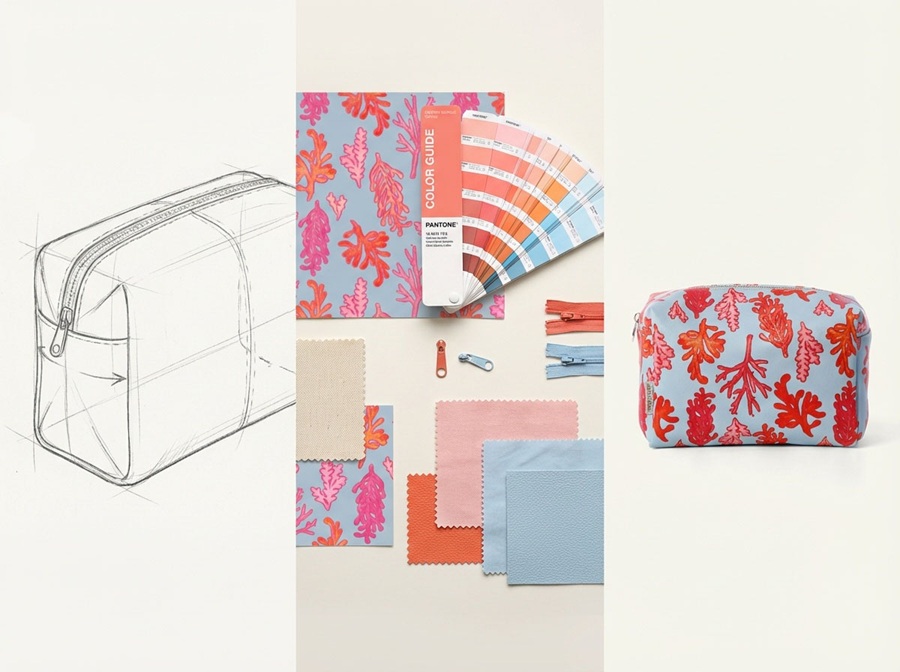
Complex Product Development for Design-Led Brands: We transform creative concepts into retail-ready cosmetic bags and accessories with strong visual appeal, functional structures, and market-driven designs. Artwork to Production: Our team converts brand ideas into professional print layouts, embroidery files, production drawings, and detailed technical specifications to ensure accurate manufacturing.
Advanced Decorative Techniques: We provide specialized craftsmanship including embroidery, appliqué, quilting, precision color matching, and mixed-material combinations to create distinctive cosmetic bag collections. Focused Collection Development: We support brands through sampling, design refinement, material selection, and production planning to build cohesive product lines efficiently. Complete Retail Presentation: We integrate product structures, inner linings, hardware components, labels, and packaging solutions to deliver a complete brand experience from factory to retail shelf.
Core Production Capabilities: Full OEM & ODM Cut-and-Sew Manufacturing
In-House Decorative Arts: Precision Embroidery, Screen Printing, Sublimation, Quilting
Supported Materials: Canvas, Velvet, RPET, Nylon, Vegan Leather, TPU
Pattern Engineering: Automated Nesting Markers for Maximum Fabric Yield
Packaging Optimization: Flat-Pack Vacuum Carton Loading for Low Freight Costs
Quality Compliance: Prop 65, REACH, RoHS, and BSCI Social Audits
Initiate your custom project through our comprehensive full OEM cosmetic bag development pipeline, learn how we guide products from concept to production, explore our full catalog of custom cosmetic bags, and review the essential custom cosmetic bag ordering checklist before issuing your next purchase order.
Costly Mistakes Brands Make When Sourcing Cosmetic Bags
In our experience auditing production runs, procurement teams repeatedly fall into four avoidable traps that generate unexpected cost overruns:
- Rushing Straight to Sampling Without a Technical Tech Pack: Sending a factory a rough sketch or an inspirational Instagram photo leads to repeated rounds of costly sampling. The pattern maker guesses at seam structures, uses incorrect interlinings, and rebuilds samples three or four times, burning weeks of time and hundreds of dollars in sample fees. Provide a fully annotated tech pack detailing dimensions, seam types, stitch-per-inch (SPI) counts, and exact Pantone codes.
- Overlooking Fabric Dye-Lot Minimums (MOQs): A factory may agree to produce 500 bags, but if you demand a unique custom-dyed lavender canvas, the textile dye-house requires a minimum order of 2,000 meters of raw fabric. You end up paying a heavy surcharge for custom dye lots or leaving unused fabric rolls sitting idle in a warehouse. Always utilize factory stock-color fabric rolls for orders under 2,000 units.
- Specifying Cheap Metal Zippers That Tarnish and Jam: Trying to save twenty cents by purchasing unbranded alloy metal zippers backfires when end users pull them. Low-grade metal teeth have sharp micro-burrs that snag delicate cosmetic linings, tarnish when exposed to ambient bathroom moisture, and jam easily. If budget is tight, always choose smooth nylon coil zippers over bargain-bin metal teeth.
- Failing to Account for Regulatory Chemical Testing Costs: If your bags contain vinyl, PVC, or artificial leather, California Proposition 65 and European REACH regulations strictly limit phthalates, lead, and cadmium. Finding out post-production that your waterproof lining contains restricted plasticizers means the entire shipment can be seized at customs. Always mandate certified REACH and Prop 65 compliant raw materials from the initial quotation stage.
Commercial Procurement Criteria Before Approving Bulk Production
Before releasing a deposit or approving bulk production tooling for your cosmetic bag line, audit these four commercial criteria with your manufacturing partner:
- Bilingual Approved Golden Sample Sign-Off: Never approve mass production based on digital renderings. Produce three identical pre-production golden samples: one kept at your corporate headquarters, one retained on the factory sewing line as a visual master benchmark, and one kept sealed with the factory quality control director. Every stitch, puller weight, and zipper clearance on that approved unit becomes the legally binding quality standard.
- Stitch-Per-Inch (SPI) and Seam Reinforcement Standards: Specify 7 to 8 stitches per inch (SPI) along all load-bearing seams, with double-stitching at zipper ends and box-tack reinforcement on pull tabs. Low-cost factories often drop stitch density to 5 SPI to sew faster, resulting in loose, visible seam gaps that pull apart under tension.
- Interchangeable Hardware Sourcing Agreements: Protect your supply chain by contractually confirming that functional hardware components—such as pullers, sliders, and snap buttons—can be dual-sourced from standard open-mold component catalogs without requiring proprietary re-tooling fees.
- Flat-Pack Packaging and Drop-Test Compliance: Verify master carton board ratings (e.g., 275 lb/in² burst test double-wall corrugated) and mandate that pouches are packed flat in polybags with desiccant silica gel packets to prevent mold growth during humid ocean transit.
Expert Recommendation and Manufacturing Sourcing Verdict
In most professional situations, lowering the cost of custom cosmetic bag production is an exercise in structural discipline, not a race to the bottom on material quality. Sacrificing fabric durability or buying brittle zippers to save a few pennies destroys customer trust and generates expensive retail return rates that quickly wipe out any manufacturing savings.
We recommend a clean, professional value-engineering approach: adjust your exterior pattern dimensions to achieve maximum yield across standard 58-inch fabric rolls; replace heavy metal zippers with smooth #5 reverse nylon coil chains accented with custom-branded alloy pullers; streamline interior compartments into an open, versatile cavity; and design soft side gussets that pack completely flat for shipping. Finally, bypass third-party trading intermediaries and partner directly with an integrated, design-led OEM manufacturer like Printembroiderybags. Taking command of your cut-and-sew engineering from the initial sketch ensures your cosmetic bags achieve the sleek, luxurious presentation your beauty customers expect while delivering the healthy gross margins your business needs to grow.
Frequently Asked Questions (FAQ)
What is the most effective way to reduce custom cosmetic bag manufacturing costs?
The most effective way to reduce production costs is optimizing pattern dimensions to fit standard 54-inch or 58-inch fabric roll markers, which minimizes material scrap. Pairing this with standardized nylon coil zippers, simplified interior pocketing, and flat-pack shipping designs cuts overall manufacturing and landed logistics expenses by up to 35% without degrading retail quality.
How does zipper selection affect cosmetic bag pricing?
Zippers represent a significant hardware cost driver. Custom-molded metal tooth zippers require expensive tooling and have high minimum order quantities. Standardizing on off-the-shelf #5 nylon reverse coil zippers saves between $0.40 and $0.90 per unit, while pairing them with a custom-molded puller preserves a premium, branded look.
Why does shipping flat-packed cosmetic bags save so much money?
International ocean and air freight rates are calculated using dimensional volume (CBM) rather than deadweight alone. Rigid, pre-formed cosmetic boxes ship with empty air inside, consuming excessive cargo space. Designing pouches with soft, collapsible gussets that pack flat allows up to four times as many bags to fit inside each master carton, reducing landed freight costs by 25% to 40%.
Which branding technique offers the best balance of cost and luxury?
High-density woven damask labels, high-frequency molded TPU patches, and localized screen printing offer the best balance of cost and perceived value. While full-coverage embroidery looks luxurious, it significantly increases machine runtime and thread breakage risks. Localized branding accents provide a clean, modern aesthetic at a fraction of the cost.
What is the standard minimum order quantity (MOQ) for custom cosmetic bags?
Direct-to-factory cut-and-sew production typically requires minimum order quantities between 500 and 1,000 units per style to achieve competitive pricing. Working below these quantities often incurs small-batch cutting surcharges and limits material choices to stock fabric colors rather than custom dye-lots.
Authoritative References
- American Association of Textile Chemists and Colorists (AATCC): Standard Test Methods for Colorfastness and Water Resistance
- ASTM International: Standard Test Methods for Measuring Zipper Dimensions and Mechanical Performance (ASTM D2060)
- California Office of Environmental Health Hazard Assessment (OEHHA): Proposition 65 Regulatory Chemical Standards for Consumer Goods