Launching a bespoke cosmetic pouch collection without understanding textile mechanics and embroidery digitizing is the quickest way to end up with puckered canvas, broken metallic zippers, and thread nests that tear apart in consumer wash bags. Beauty brand directors, corporate merchandise managers, and independent retail founders frequently approach pouch development like ordering a printed cotton tote bag. They send a flat digital vector logo to an unvetted vendor, only to discover that the high-density needle punches pull the base fabric out of alignment, the thread tension twists the zipper track, and the backing stabilizer leaves itchy, stiff paper remnants inside the cosmetic pouch liner. A custom cosmetic pouch is a structured 3D accessory, not a flat promotional t-shirt.
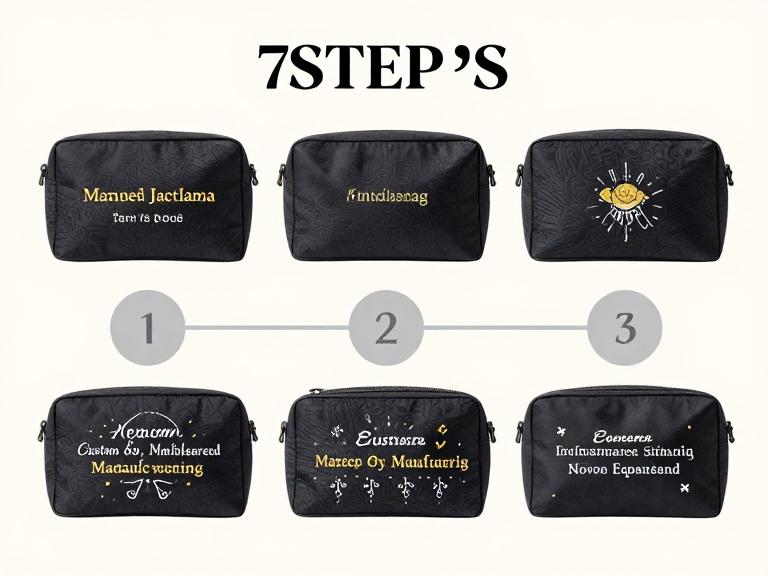
Navigating the production lifecycle of a commercial custom embroidered makeup bag requires rigorous technical oversight across seven distinct manufacturing phases. Sourcing teams must coordinate fabric grammage, embroidery backing stabilizers, stitch density algorithms, waterproof internal linings, hardware plating, cut-and-sew assembly, and rigorous pre-shipment quality inspection. From our experience auditing production floors across Asian manufacturing hubs, whether you are developing a luxury velvet pouch for a holiday gift set or high-volume cotton canvas bags for retail subscription boxes, mastering these seven manufacturing steps guarantees exceptional structural durability, sharp embroidery registration, and healthy gross profit margins. We break down the complete engineering roadmap to take your customized pouch line from digital sketch to container-ready inventory.
Quick Answer: How to Manufacture a Custom Embroidered Makeup Bag in 7 Steps
Manufacturing a commercial-grade custom embroidered makeup bag requires an orderly, seven-stage production pipeline: Step 1: Outer Fabric & Structural Substrate Engineering (selecting between heavy 12oz–16oz cotton canvas, luxury velvet, waffle weave, or textured nylon); Step 2: Vector-to-Stitch Digitizing & Density Optimization (converting artwork into precise machine coordinates while capping underlay and satin stitch pull-compensation to prevent fabric puckering); Step 3: Stabilizer Backing Selection (matching tear-away, cut-away, or water-soluble backings to the base fabric elasticity); Step 4: Machine Embroidery Execution on Flat Pattern Panels (embroidering on flat, pre-cut fabric panels before bag sewing, never on pre-assembled bags); Step 5: Waterproof Protective Lining & Internal Pocket Integration (laminating leakproof TPU or water-resistant 210D polyester linings with spill barriers); Step 6: Commercial Cut-and-Sew Assembly & Hardware Integration (installing smooth-gliding nylon coil or metal zippers with reinforced edge binding); and Step 7: Pre-Shipment Quality Control & Transit Packing (enforcing AQL 2.5 standards for loose thread trimming, needle detection testing, and moisture-controlled master packing). In most professional situations, partnering directly with a dedicated cut-and-sew OEM factory cuts production costs by 35% compared to domestic promotional re-sellers.
Table of Contents
- Embroidery Mechanics: Flat Panel Processing vs. Pre-Made Bag Stitching
- Quick Summary: The 7 Manufacturing Steps at a Glance
- In-Depth Guide: 7 Steps to Custom Embroidered Makeup Bag Manufacturing
- Production Method Comparison: Direct OEM Embroidery vs. Post-Assembly Embroidery vs. Screen Printing
- Pros and Cons of Custom Embroidered Cosmetic Bags
- Who Needs Custom OEM Embroidery vs. Who Can Use Off-the-Shelf Stock
- Featured Manufacturing Partner: Printembroiderybags OEM Solutions
- Costly Mistakes Brands Make When Manufacturing Embroidered Bags
- Commercial Procurement and Factory Sourcing Criteria
- Expert Recommendation and Production Sourcing Verdict
- Frequently Asked Questions (FAQ)
- Authoritative References
Embroidery Mechanics: Flat Panel Processing vs. Pre-Made Bag Stitching
To produce a premium beauty pouch, brand directors must understand the physical difference between industrial OEM production and promotional post-assembly embroidery. Promotional gift suppliers frequently purchase generic, pre-sewn blank pouches from wholesale warehouses, force a tubular embroidery hoop through the narrow zipper opening, and attempt to clamp the bag under an embroidery head. This approach severely limits the available embroidery surface area to a tiny central rectangle, risks puncturing the interior lining, and leaves the raw thread backing exposed inside the pouch where cosmetics and makeup brushes snag on loop threads.
In high-grade contract manufacturing, commercial embroidery is performed on flat, pre-cut fabric pattern pieces (die-cut panels) before the bag is stitched together. Flat-panel framing allows multi-head computerized embroidery machines (such as 12-head or 20-head Tajima or Barudan industrial systems) to maintain uniform multi-directional fabric tension. The needles move freely across the entire panel area without spatial restrictions, enabling edge-to-edge motifs, intricate floral monograms, and dense chenille patch placements. Once the embroidery process and jump-thread clipping are completed, the embroidered exterior panel is laminated with internal reinforcement stabilizers and stitched to the independent inner lining.
In our testing on automated cut-and-sew lines, flat-panel embroidery completely encloses the thread underlay and bobbin stitches between the outer shell and the inner lining. The consumer sees clean, dense embroidery on the outside, while the interior remains a pristine, water-resistant compartment that protects makeup brushes and prevents liquid spills from leaking out. Sourcing through specialized portals like our dedicated custom embroidered bags division ensures your cosmetic pouches feature this clean, enclosed construction.
Quick Summary: The 7 Manufacturing Steps at a Glance
The table below provides a quick operational reference to the seven production stages, outlining the engineering mechanisms, tooling requirements, and quality checkpoints involved:
| Manufacturing Step | Primary Engineering Focus | Technical Tooling / Materials | Critical Quality Gate |
|---|---|---|---|
| Step 1: Substrate Selection | Selecting outer shell fabric grammage & weave | 12oz–16oz Cotton Canvas, Velvet, Corduroy, Nylon | Tear resistance, colorfastness to wet crocking |
| Step 2: Vector Digitizing | Converting artwork to machine coordinates | Wilcom / Tajima software; satin/fill stitch coding | Pull compensation calibration; density ≤ 0.40mm |
| Step 3: Stabilizer Backing | Matching backing support to fabric stretch | Cut-away non-woven, tear-away, or water-soluble film | Zero fabric distortion under high needle penetration |
| Step 4: Panel Embroidery | Stitching flat die-cut pattern panels | Multi-head CNC embroidery heads; 40wt trilobal polyester | Thread tension balance; zero loopy bobbin underlay |
| Step 5: Lining Lamination | Integrating protective inner barrier layers | 210D/420D Polyester, wipeable PEVA, TPU coating | Hydrostatic head leakproof barrier verification |
| Step 6: Cut-and-Sew Assembly | Assembling 3D pouch body and zippers | #5 Nylon coil or brass zippers; piping, edge binding | Stitch density (7–8 SPI); smooth zipper glide |
| Step 7: Final QA & Packaging | Clearing production defects & export packing | Conveyor needle detector, iron finishing, silica gel packs | AQL 2.5 random sampling; 100% metal-free audit |
In-Depth Guide: 7 Steps to Custom Embroidered Makeup Bag Manufacturing
Step 1: Outer Fabric & Structural Substrate Engineering
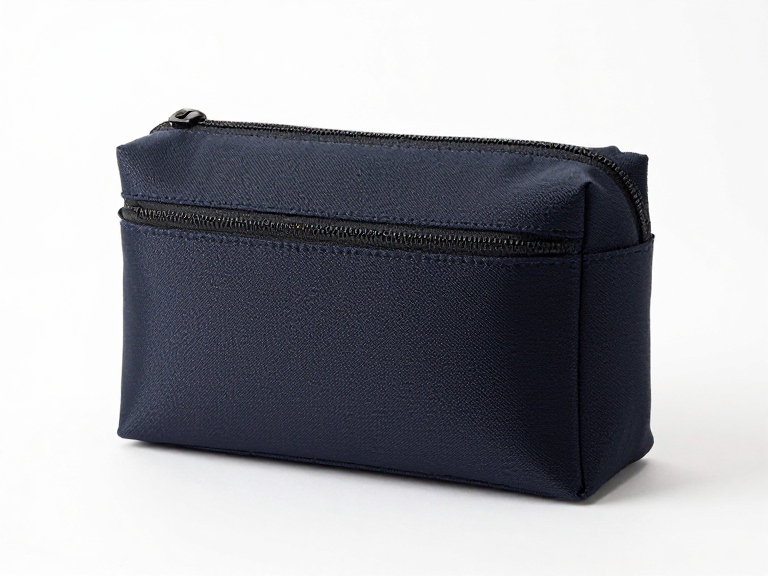
The manufacturing process begins with raw textile selection. You cannot stitch high-density embroidery onto thin, flimsy fabrics; an intricate design packed with 15,000 stitches will pull and warp a lightweight 6oz cotton cloth, causing puckering that no steam iron can remove. The outer fabric must provide sufficient structural weight to support heavy needle penetrations.
In most professional situations, we recommend four proven material categories:
- Heavy Cotton Canvas (12oz to 16oz): The premier choice for structured, natural makeup pouches. Thick canvas provides a dense weave that holds complex satin stitches without stretching or distortion.
- Waffle Weave & Cotton Terry: Highly popular for spa and resort cosmetic bags. Requires water-soluble topping films during stitching to keep threads from sinking into the textured fabric grooves.
- Luxury Velvet & Velour: Ideal for holiday gift sets and premium beauty brands. Demands low needle penetrations and careful handling to prevent hooping marks (hoop burn) on the velvet pile.
- Structured Corduroy & Quilted Nylon: Trendy, highly durable options for urban lifestyle makeup kits. Quilted fabrics require careful underlay stitching to maintain loft around the embroidered logo.
Audit textile selections and test shrinkage stability by reviewing our comprehensive cosmetic bag supplier audit checklist before purchasing bulk rolls.
Step 2: Vector-to-Stitch Digitizing & Density Optimization
Automated industrial embroidery machines do not read standard vector files (like AI, EPS, or PDF). An embroidery digitizer must manually translate graphic vectors into machine code files (such as DST, PES, or EXP), programming needle penetration coordinates, entry angles, thread color changes, and jump cuts. Amateur digitizing simply auto-traces shapes, resulting in chaotic stitch counts that snap threads and punch holes in the base fabric.
Professional digitizing requires configuring three technical settings:
- Pull Compensation: When needles penetrate fabric thousands of times, the tension naturally pulls the weave inward along the stitch direction while pushing it outward at the edges. Digitizers add 0.2mm to 0.4mm of pull compensation to ensure circular monograms remain perfectly round on the finished pouch.
- Underlay Architecture: Before the visible top satin or tatami fill stitches are laid down, the machine stitches an anchor grid (edge walk or lattice underlay) to stabilize the fabric and prevent the visible stitches from sinking into the weave.
- Stitch Density Limits: Standard density should sit between 0.38mm and 0.42mm. Stacking stitches too tightly creates excessive thread build-up (bulletproofing) that makes the bag panel rigid and punctures the fabric, while loose density leaves visible gaps where base fabric shows through.
Step 3: Stabilizer Backing Selection
Embroidery backing (stabilizer) is a non-woven support substrate placed behind the base fabric inside the embroidery hoop. Without proper stabilization, the mechanical pulling force of high-speed embroidery needles shifts the fabric weave, throwing multi-color elements out of registration.
Contract factories deploy three distinct backing configurations based on fabric elasticity:
- Cut-Away Stabilizers (Heavy Non-Woven Polypropylene): Mandatory for knits, velvet, and flexible textiles. The stabilizer remains permanently behind the embroidery stitches, providing lifelong support through repeat machine washes.
- Tear-Away Stabilizers: Best for rigid, heavy-weight woven cotton canvas. Excess backing tears away cleanly along the perimeter after embroidery, leaving a softer feel inside the pouch.
- Water-Soluble Topping Films (Solvy): Placed over the top of plush fabrics (like terrycloth, sherpa, or waffle weave). The clear film keeps embroidery stitches floating neatly on top of the fabric pile rather than sinking into the textured loops, and dissolves completely during post-production steaming.
Step 4: Machine Embroidery Execution on Flat Pattern Panels
Once digitizing files and backings are confirmed, mass production moves to multi-head computerized embroidery frames. Large-scale contract manufacturers operate 12-head, 18-head, or 24-head automated embroidery machines running at speeds of 750 to 900 stitches per minute (SPM). Raw fabric panels are laser-cut or die-cut into pattern blanks, hooped with backing, and clamped under the embroidery needles.
In our testing on factory floors, thread selection dictates final visual quality and wash performance. Premium makeup pouches deploy 40-weight continuous-filament trilobal polyester threads (such as Madeira or Amann). Trilobal polyester delivers a brilliant, silk-like sheen while resisting chlorine bleach and oil-based cosmetic stains. If a luxury look calls for metallic gold or silver threads, machine speeds must be dialed down to 550 SPM, using large-eye titanium needles (size 75/11 or 80/12) to prevent metallic thread shredding. Explore broad production setups across our cosmetic bag manufacturing capabilities page.
Step 5: Waterproof Protective Lining & Internal Pocket Integration
A makeup bag must protect the contents of a user’s suitcase from liquid foundation leaks, broken powder compacts, and spilled perfume bottles. Constructing an unlined bag or using thin, raw cotton interiors results in stains soaking straight through the exterior fabric. Professional cosmetic bags mandate a dedicated, wipe-clean internal lining.
Contract manufacturers typically line pouches with 210-denier or 420-denier water-resistant polyester coated with polyurethane (PU), or deploy completely waterproof, food-safe PEVA and thermoplastic polyurethane (TPU) films. In high-end pouches, internal drop pockets, elasticized brush loops, and zippered dividers are pre-stitched onto the lining panel before final bag assembly. The embroidered outer panel and the waterproof lining panel are joined wrong-sides-together, completely encasing the rough embroidery backing within the bag’s internal wall cavity.
Step 6: Commercial Cut-and-Sew Assembly & Hardware Integration
With flat panels embroidered and linings prepared, the components move to the main cut-and-sew assembly line. Highly skilled industrial sewing operators assemble the 3D makeup bag across sequential workstations using heavy-duty walking-foot sewing machines.
This assembly stage incorporates three critical structural elements:
- Zipper Installation: High-grade cosmetic pouches use smooth-running #5 nylon coil zippers or electroplated metal teeth. Coil zippers are preferred for curved zipper lines because they flex smoothly around gusset corners without jamming.
- Custom Hardware Pullers: Custom zipper pullers—such as electroplated zinc alloy tabs featuring debossed brand logos, genuine leather pull tags, or matching fabric ribbon loops—elevate the overall presentation.
- Reinforced Edge Binding: All internal raw fabric seams must be bound with herringbone twill tape or polyester bias tape using clean lockstitch runs (7 to 8 stitches per inch). Raw, overlocked seams fray over time, spilling thread remnants into the cosmetic compartment.
Browse diverse pouch shapes in our cosmetic bags wholesale catalog, review multi-piece vanity bundles in giftable cosmetic bag sets, or study alternative print applications via our custom bag printing department.
Step 7: Final QA, Thread Trimming, Needle Detection, and Packaging
The final phase before container loading is quality control and export packaging. Hand finishers use thread nippers and micro-shears to trim all jump threads, loose ends, and bobbin threads flush against the fabric surface. The pouches undergo high-pressure steam pressing to relax shipping wrinkles and remove temporary hooping marks on sensitive fabrics.
Crucially, because broken sewing needles present a severe consumer safety and liability hazard, all finished cosmetic bags must pass through an automated multi-channel conveyor needle detection machine (detecting ferrous metal fragments down to 0.8mm). Once cleared, bags are packed with silica gel desiccant packs inside sealed moisture-barrier polybags, then boxed into heavy-duty 5-ply double-wall corrugated master export cartons to prevent crushing during ocean transit. Review our formal inspection standards on the cosmetic bag quality assurance portal.
Production Method Comparison: Direct OEM Embroidery vs. Post-Assembly Embroidery vs. Screen Printing
To help guide your corporate procurement strategy, the matrix below compares the commercial, operational, and aesthetic dynamics of the three primary cosmetic bag manufacturing paths:
| Manufacturing Method | Stitch Quality & Precision | Interior Lining Finish | Design Placement Freedom | Average Unit Production Cost |
|---|---|---|---|---|
| Direct OEM Flat-Panel Embroidery | Maximum; clean pull compensation & tension | 100% enclosed; zero thread exposure | Full edge-to-edge pattern placement | $1.80 – $3.80 (Lowest direct factory cost) |
| Post-Assembly Tubular Embroidery | Moderate; risk of distortion & hoop burn | Poor; raw backing & threads exposed inside | Restricted to small central chest pocket zone | $4.50 – $7.50 (High domestic shop labor) |
| Direct Screen / Heat Transfer Printing | Flat ink; lacks 3D luxury tactile depth | Enclosed (if built OEM) or standard | Broad, but prone to cracking over time | $1.20 – $2.60 (Budget promotional tier) |
Pros and Cons of Custom Embroidered Cosmetic Bags
Before launching an embroidered product line, brand managers must weigh the commercial strengths against the technical constraints of embroidery:
| Commercial Advantages (Pros) | Operational Boundaries & Constraints (Cons) |
|---|---|
| High Perceived Retail Value: Textured embroidery communicates luxury, allowing brands to command $18 to $45 retail prices. | Gradient Limitation: Embroidery cannot recreate fine photorealistic color gradients; colors must be mapped to distinct thread spools. |
| Permanent Durability: Thread stitches will not peel, crack, or fade in the wash like heat transfers or rubber prints. | Micro-Text Legibility Limits: Text below 4.5mm in height blurs into messy thread knots; typography must remain bold and clean. |
| Tactile 3D Presence: Raised thread topography delivers an engaging, tactile consumer unboxing experience. | Stitch-Count Cost Scaling: Designs with massive fill areas (over 25,000 stitches) increase machine run-time and unit costs. |
| Excellent Corporate Gift Appeal: Personalized initials and monograms turn basic makeup bags into cherished keepsakes. | Longer Setup Timelines: Digitizing proofing and strike-off swatch approvals add 5 to 7 days to pre-production cycles. |
Who Needs Custom OEM Embroidery vs. Who Can Use Off-the-Shelf Stock
In our experience consulting for beauty and retail brands, your distribution volume and brand positioning dictate your procurement strategy.
Who Needs Ground-Up Custom OEM Embroidery Manufacturing:
- Cosmetic, Skincare, and Fragrance Brands: Developing customized holiday gift-with-purchase (GWP) bags, subscription box kits, or retail vanity sets that require custom Pantone-matched fabrics, branded pullers, and clean enclosed linings.
- Boutique Fashion and Lifestyle Retailers: Launching proprietary accessory lines featuring unique dimensions, custom woven labels, and distinctive seasonal patterns. Discover leading design studios in our review of cosmetic pouch designers in China.
- Corporate Merchandise Programs (500+ Units): Enterprise brands celebrating corporate milestones that demand polished, premium gifts rather than cheap promotional giveaways.
Who Can Use Blank Off-the-Shelf Stock Bags:
- Small Bridal Parties and Single Events: Ordering five to ten personalized pouches for bridesmaids is handled more economically by local Etsy crafters using pre-made blanks.
- Low-Budget Single-Day Giveaways: Trade show events requiring thousands of disposable 50-cent bags should stick with thin polypropylene non-woven bags with single-color screen printing.
Featured Commercial Manufacturer: Printembroiderybags OEM Solutions
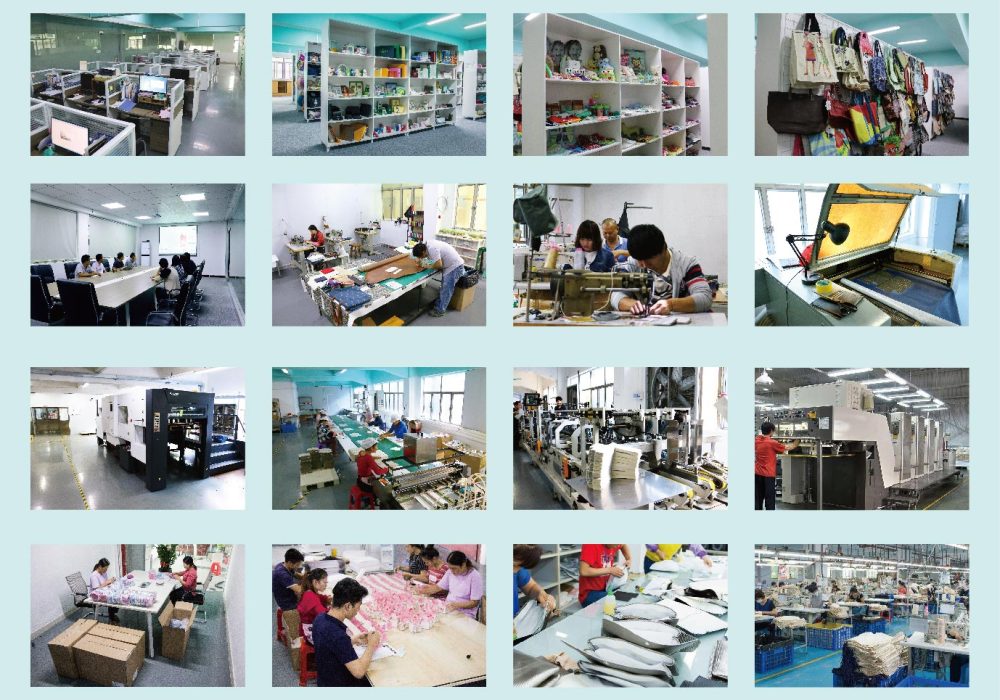
Printembroiderybags specializes in designing and manufacturing printed and embroidered cosmetic bags and accessories, combining trend-driven aesthetics with proven production expertise. From fabric selection and pattern development to finishing details, every product is created to deliver both visual appeal and commercial success.
Operating dedicated multi-head CNC embroidery suites, clean cut-and-sew assembly workshops, and ISO-compliant quality inspection lines, Printembroiderybags provides full-service OEM and ODM contract manufacturing for growing beauty brands, department stores, and global retailers.
Core Specialization: Expert in printed & embroidered cosmetic bags
Design Capability: Trend-driven design development & fast 3D CAD modeling
Craftsmanship Standards: Premium materials, high-density embroidery & reinforced edge seams
Service Scope: One-stop manufacturing, custom hardware & export packaging support
Quality Testing: 100% Conveyor needle detection, AQL 2.5 random sampling audits
Compliance Support: REACH, CA Prop 65, FDA-compliant food/cosmetic contact linings
Request a customized production estimate on our custom cosmetic bag quote portal, explore enterprise development options on the full OEM development page, and discover industry trends in our cosmetic bag manufacturing blog.
Costly Mistakes Brands Make When Manufacturing Embroidered Bags
In our audits of overseas production runs, cosmetic bag projects frequently run into four common manufacturing pitfalls:
- Forgetting to Account for Zipper Curve Clearance in Embroidery Layouts: Placing an embroidered design too close to the top zipper line or bottom gusset seam causes the embroidery foot to collide with the zipper teeth or seam allowance during sewing. Keep embroidery motifs at least 25mm (1 inch) away from all cut edges and zipper stitching lines to ensure clean assembly.
- Attempting to Embroider Fine Script Text Below 5mm: Thread is a physical three-dimensional fiber with a defined width. When digitizers attempt to stitch script lettering or complex taglines under 5mm in height, needle penetrations overlap tightly, turning the letters into an illegible knot of thread. Keep small typography above 5mm to 6mm, or use woven brand labels for fine legal text.
- Skipping Pre-Production Physical Strike-Off Approvals: Approving mass production based entirely on a digital 2D PDF simulation on a computer monitor is a major error. Screen pixels do not reflect real thread luster, pile sinkage, or fabric pull tension. Always mandate a physical, embroidered fabric swatch (strike-off) shipped via express courier to confirm thread sheen, stitch density, and colorfastness before approving bulk production.
- Omitting Conveyor Needle Detection Testing: High-speed industrial embroidery needles inevitably break under heavy production volume. If a needle tip snaps off and lodges inside the padded lining of a makeup bag, an unsuspecting customer reaching for lipstick can suffer a severe puncture wound. Mandating automated conveyor needle detection with calibrated 0.8mm sensitivity eliminates dangerous metal contamination liabilities.
Commercial Procurement and Factory Sourcing Criteria
Before issuing a deposit or signing a contract manufacturing agreement for an embroidered cosmetic pouch run, verify these four essential quality benchmarks with your supplier:
- California Proposition 65 and REACH Heavy-Metal Compliance: Makeup pouches touch cosmetics, lips, and hands. Demand laboratory test reports confirming that all exterior fabrics, interior vinyl linings, zipper coatings, and embroidery threads are certified free of lead, cadmium, and restricted ortho-phthalates.
- Fabric Rubbing Colorfastness (Wet and Dry Crocking): Stained cosmetic bags destroy brand reputations. Demand laboratory crock-meter test reports (AATCC 8 or ISO 105-X12) showing a minimum Grade 4 rating, confirming that colored embroidery threads and dyed outer canvas will not bleed onto white clothing or towels when damp.
- Zipper Cross-Strength and Reciprocation Testing: Zippers on makeup pouches undergo continuous daily pulling. Require test data verifying that zipper assemblies withstand at least 500 cycles of continuous opening and closing without tooth separation or slider jamming.
- Defect Acceptance Thresholds (AQL 2.5 Standards): Establish written quality standards governed by ANSI/ASQ Z1.4 sampling procedures. Define critical defects (broken needle fragments, broken zippers = 0% tolerance) and major defects (thread fraying, crooked logo placement > 3mm = 2.5% AQL threshold) before releasing manufacturing deposits.
Expert Recommendation and Production Sourcing Verdict
In most professional situations, we recommend avoiding the practice of embroidering pre-sewn blank pouches purchased from local promotional brokers. While pre-made blanks offer lower minimum order numbers, you pay high unit prices for a compromised product with restricted embroidery placement, exposed scratchy backing threads, and unlined interiors that leak cosmetic spills.
If you are developing a commercial cosmetic line, an executive corporate gift set, or a retail accessory collection of 500 units or more, invest in **ground-up custom OEM flat-panel manufacturing**. Sourcing through direct cut-and-sew specialists allows you to select premium 12oz to 16oz cotton canvas, luxury velvet, or textured nylon; calibrate vector-to-stitch digitizing for crisp thread registration; integrate waterproof, wipeable linings that enclose rough embroidery backings; and add custom debossed zipper pulls. Partnering with an experienced, vertically integrated manufacturer like Printembroiderybags delivers high retail craftsmanship, automated needle-safety screening, and factory-direct pricing, ensuring your custom embroidered makeup bag line delights customers and protects your operating margins.
Frequently Asked Questions (FAQ)
What are the 7 steps to manufacturing a custom embroidered makeup bag?
The 7 steps are: 1) Outer fabric selection and substrate engineering; 2) Vector artwork digitizing and stitch density optimization; 3) Stabilizer backing selection; 4) CNC machine embroidery on flat pre-cut fabric panels; 5) Waterproof inner lining lamination; 6) Commercial cut-and-sew assembly with zipper installation; and 7) Final thread trimming, conveyor needle detection, and export packaging.
Why should embroidery be performed on flat panels before sewing the bag together?
Embroidering flat panels allows industrial multi-head machines to maintain uniform fabric tension, eliminates hoop size restrictions, and enables edge-to-edge designs. Most importantly, it allows the interior lining to be sewn in afterward, completely enclosing the rough backing stabilizer and bobbin threads inside the bag walls so they never snag on makeup brushes or toiletries.
What is the best fabric for custom embroidered cosmetic pouches?
Heavy cotton canvas (12oz to 16oz) is the premier choice for durable, structured makeup bags because its dense weave supports high stitch counts without puckering. Luxury velvet, textured corduroy, and waffle weave are also popular choices when paired with appropriate cut-away backings and water-soluble topping films.
Can fine text and small logos be embroidered on a makeup bag?
Embroidery thread has a physical thickness that limits micro-text resolution. As an industry rule, typography should remain at least 5mm (0.2 inches) in height to ensure clean legibility. For tiny taglines, legal text, or intricate graphic gradients, combining embroidery with woven labels, rubber patches, or screen printing yields superior visual results.
Why is needle detection testing mandatory for custom cosmetic bags?
High-speed commercial embroidery needles can snap during dense stitching runs. If a broken needle fragment embeds inside the multi-layer fabric or padded lining, it creates a severe consumer injury hazard. Passing all finished cosmetic pouches through automated conveyor needle detectors ensures bags are 100% free of dangerous metal fragments before shipping.
Authoritative References
- AATCC (American Association of Textile Chemists and Colorists): Standard Test Method 8 for Colorfastness to Crocking (AATCC 8)
- ASTM International: Standard Test Methods for Strength Tests of Zippers (ASTM D2061)
- American Society for Quality (ASQ): Sampling Procedures and Tables for Inspection by Attributes (ANSI/ASQ Z1.4 / ISO 2859-1)