Launching a high-margin beauty line, luxury gift-with-purchase (GWP) campaign, or standalone travel accessories collection is fraught with hidden manufacturing landmines. Too many beauty brands and merchandise directors assume that sourcing cosmetic pouches is as simple as sending a JPEG logo to an online broker, picking a pantone color, and waiting for finished cartons to arrive. That naive approach almost always ends in disaster: crooked piping, puckered stitching along zipper tracks, lining fabrics that disintegrate when exposed to spilled facial toner, and cheap slider pullers that snap off under minimal torque. In the cut-and-sew industry, your packaging is an active extension of your brand equity. Finding a qualified, reliable custom cosmetic bag manufacturer requires looking past slick trading company websites and evaluating factory-floor pattern making, structural interlinings, material certifications, and rigorous AQL quality inspection standards.
Quick Answer: How to Source the Right Custom Cosmetic Bag Manufacturer
To secure retail-ready quality without costly production overruns, commercial buyers must partner directly with an asset-backed custom cosmetic bag manufacturer that provides full-scope original equipment manufacturing (OEM) and original design manufacturing (ODM) support. A true factory partner must deliver: (1) Precise Tech Pack Translation from 2D sketches to 3D CAD pattern blocks; (2) Certified Material Sourcing (including California Prop 65, REACH, and GRS-compliant vegan leather, nylon, canvas, and leak-proof TPU linings); (3) Advanced Decorative Capabilities spanning multi-head computerized embroidery, high-frequency embossing, and non-bleeding silk-screen printing; (4) Structural Reinforcement Engineering utilizing multi-density EVA foam and laminated interlinings to maintain silhouette shape; and (5) Flexible Low-MOQ Sampling starting from 100 to 500 units for agile market validation. In most professional situations, partnering with an experienced integrated specialist like Printembroiderybags provides the direct factory communication, rapid sampling, and margin protection required to scale successfully.
Article Directory
- What Is an OEM Custom Cosmetic Bag Manufacturer and How Does Production Work?
- Quick Summary Table: Key Sourcing Criteria & Factory Benchmarks
- The 6 Pillars of Professional Cosmetic Bag Manufacturing
- Featured OEM Solution: Printembroiderybags Bespoke Development
- Direct Service Comparison: Direct OEM Factory vs. Sourcing Trader vs. Stock Imprinter
- Pros and Cons of Commissioning Custom OEM Cosmetic Bags
- Who Needs a Custom Cosmetic Bag Manufacturer vs. Who Can Buy Stock
- Costly Sourcing Mistakes Brand Buyers Make (And How to Avoid Them)
- Essential Buying Considerations: Materials, Hardware, and Chemical Compliance
- Expert Procurement Strategy & Cost-Benefit Analysis
- Frequently Asked Questions
- Authoritative Industry Standards & Testing References
What Is an OEM Custom Cosmetic Bag Manufacturer and How Does Production Work?
A dedicated custom cosmetic bag manufacturer is an industrial cut-and-sew production facility that executes complete, bespoke fabrication of beauty pouches, vanity cases, travel toiletry kits, and makeup organizer trunks according to custom brand specifications. Unlike promotional catalog distributors that merely heat-press a logo onto an existing, pre-made imported pouch, an authentic OEM/ODM manufacturer builds the product from raw fiber rolls, hardware ingots, and chemical adhesives.
In our testing of global cut-and-sew supply chains, professional cosmetic pouch production follows five distinct manufacturing steps:
- Pattern Engineering and Structural Prototyping: The manufacturer translates your graphic concept or physical reference sample into CAD cutting patterns, grading panels, seam allowances, and internal interlining layers to establish structural stability.
- Material Slitting and Precision Die-Cutting: Raw materials—ranging from textured PU vegan leather and heavyweight cotton canvas to waterproof ripstop nylon—are die-cut using automated hydraulic presses or computer-controlled laser cutters to guarantee millimeter-level dimensional accuracy across thousands of units.
- Pre-Assembly Decoration: Logos, bespoke patterns, and decorative elements are applied to flat fabric panels before stitching. This ensures embroidery backings, silk-screen inks, or embossed foil impressions remain pristine without distorting the final assembled seams.
- Multi-Stage Assembly and Internal Binding: Skilled machine operators assemble the bag components using industrial walking-foot sewing machines. Critical stress points—such as zipper end stops, top handles, and internal elastic organizer pockets—are reinforced with cross-stitching or bartacks, while raw inner seams are bound with durable grosgrain or polyester bias tape.
- Form Shaping, Cleaning, and AQL Quality Inspection: Finished bags undergo thread trimming, hot-air blow molding to remove transit wrinkles, hardware polishing, and final inspection under standardized Acceptable Quality Limit (AQL) protocols before individual polybagging and carton packing.
From our experience on factory floors, working with a true custom cosmetic bag manufacturer is the only way to control the internal structure of your product. A pouch that looks crisp in a digital rendering will collapse into an unappealing, wrinkled heap on retail shelves if the factory fails to specify the correct interlining density. Sourcing directly from an asset-backed manufacturer ensures your design maintains its structure throughout daily consumer use.
Quick Summary Table: Key Sourcing Criteria & Factory Benchmarks
| Evaluation Parameter | Industry Minimum Standard | Professional OEM Benchmark | Operational Failure Prevented |
|---|---|---|---|
| Minimum Order Quantity (MOQ) | 1,000 – 3,000 units per colorway | 100 – 500 units (Agile OEM program) | Tying up launch capital in unsold inventory |
| Sampling Turnaround | 15 to 25 working days | 7 to 10 working days | Missing seasonal retail launch windows |
| Chemical Safety Compliance | Self-declared compliance | Certified REACH, Prop 65 & RoHS testing | Customs seizures and product liability recalls |
| Zipper & Hardware Durability | Standard #3 unbranded nylon coil | #5 reinforced coil or zinc alloy (ASTM D2061) | Customer returns from jammed or broken zippers |
| Lining Leak-Resistance | Uncoated 190T polyester lining | 210D/420D PU-coated, wipe-clean TPU | Liquid makeup spills ruining exterior shell |
| Quality Inspection Standard | Informal visual spot check | Formal AQL 2.5 / 1.5 pre-shipment audit | High retail defect rates and negative reviews |
The 6 Pillars of Professional Cosmetic Bag Manufacturing
1. Raw Material Curation: Balancing Aesthetics with Chemical Resilience
The exterior shell of a cosmetic bag must look luxurious, but the interior lining does the heavy lifting. Inside an active makeup pouch, products leak. Formulations containing mineral oils, alcohol-based setting sprays, salicylic acid, and loose pigment powders create a harsh environment. If your manufacturer lines your pouch with cheap, raw taffeta, spilled foundation will seep into the outer shell, staining the exterior fabric permanently.
In most professional situations, we recommend pairing structured exterior shells—such as GRS-certified recycled nylon, heavy cotton canvas, or scratch-resistant PU leather—with 210D polyester coated with water-resistant polyurethane (PU) or thermoplastic polyurethane (TPU). For transparent pouches designed for airport travel, insist on virgin optical-grade TPU rather than cheap PVC; PVC off-gasses chemical odors, cracks in cold temperatures, and leaches banned phthalates that fail European and North American regulatory inspections. To explore specialized material applications, review our guide on wholesale printed cosmetic bags.
2. Structural Pattern Engineering and Interlining Architecture
What separates a luxury vanity case from a cheap promotional giveaway is its internal skeleton. Fabric alone has no structural memory. To achieve a crisp silhouette that stands upright on a bathroom vanity, a skilled custom cosmetic bag manufacturer laminates the shell with specialized interlinings:
- Ethylene-Vinyl Acetate (EVA) Foam: Provides rigid, semi-flexible support for structured train cases and boxy vanity organizers, protecting glass dropper bottles and pressed powder compacts from crushing.
- Open-Cell Sponge / Polyurethane Foam: Delivers a soft, cloud-like, cushioned hand-feel for puffer-style cosmetic pouches while absorbing everyday drops.
- Non-Woven Reinforcement Boards (PE Boards): Heat-sealed into base panels to prevent heavy skincare bottles from causing the bottom of the bag to sag.
Failing to calibrate interlining thickness against exterior fabric weight causes unsightly puckering along corner seams. An experienced pattern maker balances these layers down to the millimeter.
3. Advanced Decorative Craftsmanship: Bringing Brand Identity to Life
A cosmetic bag is a high-visibility personal accessory. The quality of your branding communicates your product’s value. A capable custom cosmetic bag manufacturer must offer diverse, in-house decorative capabilities rather than farming out embellishment to unvetted subcontractors:
- Computerized Multi-Head Embroidery: Delivers dimensional, tactile prestige. For intricate serif typography, plush chenille patches, or high-density 3D puff designs, explore our detailed breakdown of embroidered cosmetic bags to understand stitch count mechanics.
- High-Frequency Debossing and Hot Foil Stamping: Perfect for minimalist, high-end branding on smooth vegan leather or velvet, producing clean, permanent recessed logos that never peel.
- Precision Silk-Screen and Sublimation Printing: Essential for continuous, vibrant all-over prints (AOP) across water-resistant nylon or canvas shells, requiring eco-friendly water-based inks that resist alcohol rub testing.
4. Hardware Metallurgy and Zipper Track Engineering
More than 60% of all consumer returns in the accessories category stem from a single failure point: a broken, jammed, or tarnished zipper. Specifying delicate #3 garment zippers on a wide-mouth cosmetic case is a recipe for customer complaints. The teeth twist out of alignment under packing pressure, and the slider binds around curved corner sweeps.
For commercial users, we recommend specifying reinforced #5 nylon coil zippers or polished metal-look plastic zippers paired with solid die-cast zinc alloy pullers. Zinc pullers resist bending torque, and when treated with secondary electrophoretic clear lacquer, they survive humid bathroom steam without corroding. If you are developing rugged travel kits, examine our dedicated collection of travel toiletry bags to evaluate heavy-duty closure designs.
5. Internal Organization: Compartments, Brush Sleeves, and Dividers
A cosmetic bag that functions as a chaotic black hole frustrates consumers. Modern beauty lovers demand thoughtful internal architecture: elasticized brush pockets with wipe-clean TPU protective flaps, zippered mesh compartments for hair pins, and modular hook-and-loop dividers that adjust to fit varying bottle heights.
Integrating these features requires an experienced factory team. The manufacturer must engineer elastic tension so brush pockets hold slim eyeliners securely without sagging over time. If your collection targets jet-set consumers, consult our guide to private label travel makeup pouches for proven interior layout strategies.
6. Standardized Quality Assurance (AQL 2.5 / 1.5) and Chemical Safety
Never accept a manufacturer’s promise of “good quality” without an enforceable, objective testing standard. Professional OEM production contracts must mandate pre-shipment inspections following ANSI/ASQ Z1.4 (ISO 2859-1) Acceptable Quality Limit standards: typically AQL 1.5 for critical defects (broken needles, open seams, toxic odors) and AQL 2.5 for minor cosmetic flaws (loose threads, minor print alignment variance).
Furthermore, cosmetic bags come into direct contact with skin and personal beauty tools. Reputable factories must verify that all raw materials comply with strict international safety standards:
- California Proposition 65: Restricting toxic lead, cadmium, and phthalate plasticizers (DEHP, DBP, BBP) in synthetic leathers and transparent PVC.
- EU REACH Annex XVII: Prohibiting banned AZO dyes, nickel release from metal pullers, and polycyclic aromatic hydrocarbons (PAHs).
Enforcing these compliance standards protects your brand from customs delays and costly liability claims.
Manufacturer Spotlight: Printembroiderybags OEM Development
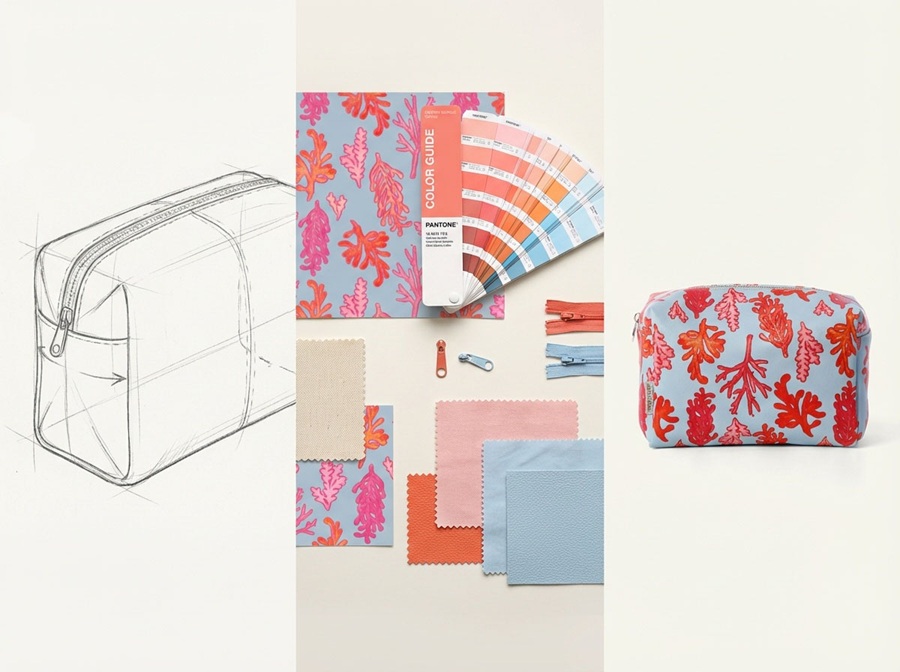
Navigating the balance between complex bespoke styling, strict chemical compliance, and commercial production minimums requires an experienced, asset-backed manufacturing partner. Printembroiderybags provides full-service OEM/ODM product development tailored to design-led beauty brands, corporate retailers, and indie cosmetics creators worldwide.
| Engineering Core | Complete concept-to-shelf development: CAD drafting, physical pattern engineering, and rapid 7-day sampling |
| Decorative Craftsmanship | Precision multi-head embroidery, appliqué, quilting, high-frequency debossing, and pantone-matched screen printing |
| Material Flexibility | PU vegan leather, GRS recycled nylon, organic cotton canvas, transparent TPU, velvet, and custom hardware |
| Packaging & Fulfillment | Custom woven branding labels, branded hangtags, luxury gift boxes, and Amazon-compliant barcode polybags |
| Production Agility | Specialized low-MOQ programs starting from 100 pieces up to high-volume container freight |
Procurement Recommendation: Review our comprehensive Create Completely Bespoke Cosmetic Bags services or explore our streamlined OEM cosmetic bag program to launch tested, market-ready collections without tying up capital in massive inventory runs.
Direct Service Comparison: Direct OEM Factory vs. Sourcing Trader vs. Stock Imprinter
| Sourcing Channel | Structural Customization | Material Sourcing Freedom | Minimum Order Quantities | Direct Unit Pricing | Quality Accountability |
|---|---|---|---|---|---|
| Direct OEM Manufacturer (e.g., Printembroiderybags) | 100% Bespoke; custom patterns, sizes, and internal pockets | Complete; custom pantone dyeing, eco-materials, and linings | Flexible; 100 to 500 units on agile lines | True factory cost; zero intermediary markups | Direct warranty; in-house QA audits and AQL inspection |
| Sourcing Trading Company (Export Agent / Broker) | Moderate; restricted to their subcontractor network | Limited to what third-party partner factories stock | High; typically 1,000 to 3,000+ units | Marked up by 20% to 35% broker margins | Fragmented; passes blame between sub-tier workshops |
| Stock Catalog Imprinter (Promotional Print Vendor) | Zero; strictly pre-stitched blank catalog stock | Fixed; standard basic polyester or cheap canvas | Very low; 25 to 50 units | Very high per-unit cost for basic imprinting | Covers only surface print defects; no structural warranty |
Pros and Cons of Commissioning Custom OEM Cosmetic Bags
| Production Route | Commercial & Brand Advantages | Operational Demands & Trade-Offs |
|---|---|---|
| Custom OEM Manufacturing (Bespoke Cut-and-Sew Production) | Exclusive silhouettes and patterns impossible for competitors to copy. Optimized interior organization tailored specifically to your product line. Higher retail margins and perceived brand value. Customized branded hardware, pullers, woven labels, and packaging. Full traceability of certified non-toxic and recycled materials. | Longer lead times for pattern prototyping, fabric dyeing, and assembly. Requires upfront development capital for sampling and custom tooling dies. Demands detailed technical direction and tech pack preparation. |
| Off-The-Shelf Stock Imprinting (Blank Wholesale Pouches) | Fast turnaround times (typically 7 to 14 days for surface printing). Low initial investment for tiny promotional runs. No pattern engineering or sampling required. | Generic silhouettes found across thousands of competing brands. Basic, low-grade lining fabrics prone to staining and leaking. Zero control over zipper quality, interlining firmness, or seam strength. |
Who Needs a Custom Cosmetic Bag Manufacturer vs. Who Can Buy Stock
Every dollar in your procurement budget must match your sales strategy, retail positioning, and customer expectations. Understanding your commercial needs helps you decide between full OEM custom production and simple stock printing.
Who Must Partner with a Custom Cosmetic Bag Manufacturer:
- Indie Beauty Brands & Skincare Formulators: If you are bundling high-value cosmetics, custom bottles, and serums into a holiday gift set, the bag must fit your product dimensions perfectly. Stock bags result in loose, rattling bottles that break during shipping.
- Design-Led Lifestyle and Fashion Labels: Brands selling cosmetic organizers at retail price points from $35 to $120 cannot use generic catalog shapes. You need bespoke hardware, customized vegan leathers, and tailored linings. Review our global analysis of designer cosmetic bag manufacturers to evaluate luxury manufacturing benchmarks.
- Corporate GWP Programs for Tier-1 Brands: Luxury fragrance houses and department store retailers require certified audit trails, Prop 65 compliance, and custom-embossed hardware that reinforces luxury prestige. Learn more about regional supply dynamics in our review of cosmetic bag suppliers USA.
- Eco-Conscious Clean Beauty Brands: Companies committed to sustainability require verified Global Recycled Standard (GRS) nylon, organic GOTS-certified cotton, and biodegradable packaging that stock catalog printers cannot verify.
Who Should Choose Simple Stock Catalog Imprinting:
- Local Event Organizers & Pop-Up Giveaways: If you need 50 inexpensive giveaway bags for a local charity run, bridal shower, or community festival, paying for custom tooling and pattern making is an unnecessary expense.
- Fast-Track Campaigns Under 2 Weeks: If your product launch is in ten days, custom cut-and-sew manufacturing is physically impossible. You must source blank, in-stock domestic inventory ready for immediate screen printing.
- Early Bootstrapped Concepts Testing Logo Appeal: If your business is testing simple graphic designs without a finalized beauty product line, start with basic catalog printing to test market interest before investing in custom OEM production.
Costly Sourcing Mistakes Brand Buyers Make (And How to Avoid Them)
Factory Floor Warning: The costliest mistake brands make is approving a pre-production sample based on photos alone. A cosmetic bag can look stunning on a computer screen, but feel stiff, emit foul chemical plasticizer odors, or have a sticky zipper. Always hold and test a physical golden sample before releasing production deposits.
- Relying on Vague Visual Mockups Instead of Technical Tech Packs: Sending a factory a Photoshop mockup without specifying seam allowances, fabric denier, foam density, or zipper puller alloy leads to misaligned expectations. Take the time to create a detailed tech pack that spells out exact dimensions, materials, and tolerances. Learn the process step-by-step in our guide on customized cosmetic bag production.
- Overlooking Zipper Corner Sweep Friction: Designers often draw rounded dome pouches with tight 90-degree corner curves. If the pattern maker uses stiff zipper tape or misaligns the teeth, the slider will catch and bind every time a customer pulls it around the bend. Require your manufacturer to conduct physical cycle tests around all curved corners.
- Failing to Test Inner Lining Chemical Resistance: Assuming all synthetic linings are waterproof is an expensive error. Uncoated polyester allows cosmetic oils and micellar water to seep through, staining exterior fabrics. Always test your golden sample by smearing liquid foundation and micellar water directly onto the inner lining; a quality wipe-clean lining will clean up completely with a damp cloth.
- Ignoring Shipping Volume and Dimensional Weight: Designing rigid, non-collapsible vanity trunks without nesting capabilities means you pay to ship empty air across the ocean. High-volume buyers should engineer bags with fold-flat bases or nested sizing systems to minimize shipping container volume and lower landed costs.
Essential Buying Considerations: Materials, Hardware, and Chemical Compliance
Before transferring a production deposit to any custom cosmetic bag manufacturer, verify these four essential commercial criteria with your production team:
1. Clarify Tooling Die and Mold Ownership
If your design incorporates custom-shaped metal zipper pullers, molded silicone logo badges, or unique embossing blocks, verify who owns that physical tooling. Your contract must state clearly that all custom stamping dies, molds, and CAD patterns remain your exclusive intellectual property and will not be reused for competing clients.
2. Audit Factory Decorative and Stitching Capabilities
Inspect the manufacturer’s stitching quality. Look for tight, uniform stitching (typically 7 to 8 stitches per inch for luxury bags), clean edge paint on vegan leather handles, and reinforced bartack stitching at stress points. Review our comprehensive breakdown of Cosmetic Bags Manufacturing Capabilities to understand standard industrial assembly tolerances.
3. Demand Formal Material Safety Documentation
Ensure that all raw materials meet the regulatory standards of your target sales markets. Require written test reports confirming compliance with California Proposition 65 limits on heavy metals, EU REACH restrictions on phthalates, and OEKO-TEX Standard 100 certifications for lining fabrics. For wholesale procurement standards, explore our general Cosmetic Bags wholesale and broader Bags & Accessories wholesale catalogs.
4. Structure Enforceable Commercial Milestone Payments
Never work with a manufacturer demanding 100% upfront payment before production begins. Standard commercial terms in professional OEM cut-and-sew manufacturing are:
- Deposit: 30% to 50% upon pre-production golden sample sign-off to fund raw material purchasing.
- Balance: Remaining balance payable only after passing a verified AQL 2.5 / 1.5 pre-shipment quality inspection.
This milestone framework protects your capital and ensures the factory stays focused on quality throughout the production run.
Expert Procurement Strategy & Cost-Benefit Analysis
In our professional assessment, continuing to buy generic, off-the-shelf blank pouches and adding a basic screen-printed logo is a losing strategy for serious beauty and lifestyle brands. Consumers associate flimsy, unlined bags with cheap promotional giveaways. To build real brand loyalty and command premium retail pricing, you must control your product’s silhouette, materials, and internal organization.
Partnering with an experienced, direct-from-factory custom cosmetic bag manufacturer like Printembroiderybags bridges the gap between creative design and manufacturing discipline. By taking advantage of agile low-MOQ production runs (starting from 100 to 500 units), you can test fresh collections with minimal inventory risk, verify wipe-clean lining performance, and protect your margins by cutting out middleman brokers. Treat your manufacturer as an essential engineering partner, invest in proper sampling, and build cosmetic accessories that elevate your brand on retail shelves for years to come.
Frequently Asked Questions
What is the typical minimum order quantity (MOQ) when working with a custom cosmetic bag manufacturer?
Traditional cut-and-sew contract factories enforce minimums between 1,000 and 3,000 units per style to satisfy custom fabric dyeing and hardware casting runs. However, specialized agile manufacturers like Printembroiderybags support emerging brands and promotional launches through flexible programs starting from 100 to 500 units by utilizing in-stock premium fabrics and standard hardware dies.
How long does the complete OEM cosmetic bag sampling and mass production cycle take?
A standard OEM production cycle requires 10 to 14 working days for initial paper pattern drafting and physical pre-production prototype sampling, followed by 25 to 35 working days for mass cut-and-sew assembly once the golden sample is approved. Ocean transit requires an additional 20 to 30 days, while express air courier takes 5 to 8 days.
What technical details must be included in a cosmetic bag tech pack before requesting a quote?
A complete manufacturing tech pack must specify exterior shell fabric weight and composition (e.g., 16oz cotton canvas, water-resistant PU leather, or 210D RPET nylon), inner lining material and water-repellent coating, exact length/width/gusset dimensions, zipper tooth gauge (e.g., #5 nylon coil or metal alloy), puller alloy finish, reinforcement interlinings (EVA or sponge foam), decoration dimensions with Pantone color codes, and packaging requirements.
How can brands ensure their custom cosmetic bags comply with international chemical and safety regulations?
Demand that your custom cosmetic bag manufacturer sources raw materials certified under EU REACH regulations, California Proposition 65, and OEKO-TEX Standard 100. This guarantees that exterior shells, transparent TPU panels, vinyl linings, and electroplated metal hardware are free from toxic lead, cadmium, phthalates, and banned AZO colorants that leach into stored skincare products.
Authoritative Industry Standards & Testing References
- ASTM International: ASTM D2061 Standard Test Methods for Strength Tests of Zippers
- Federal Trade Commission (FTC): Threading Your Way Through Textile, Wool, and Fur Product Labeling Rules
- California Office of Environmental Health Hazard Assessment (OEHHA): Proposition 65 Safe Harbor Warnings and Toxic Chemical Thresholds