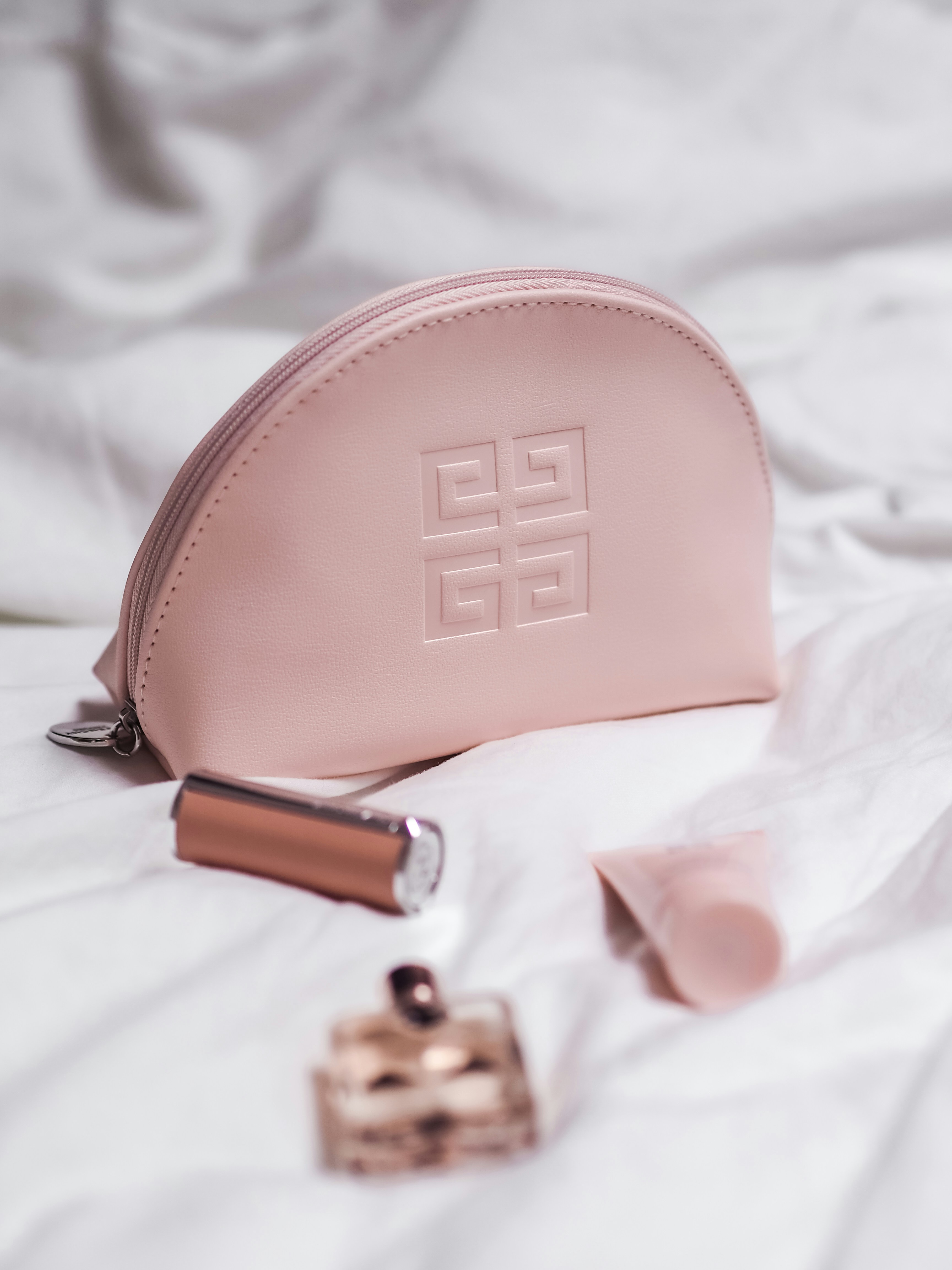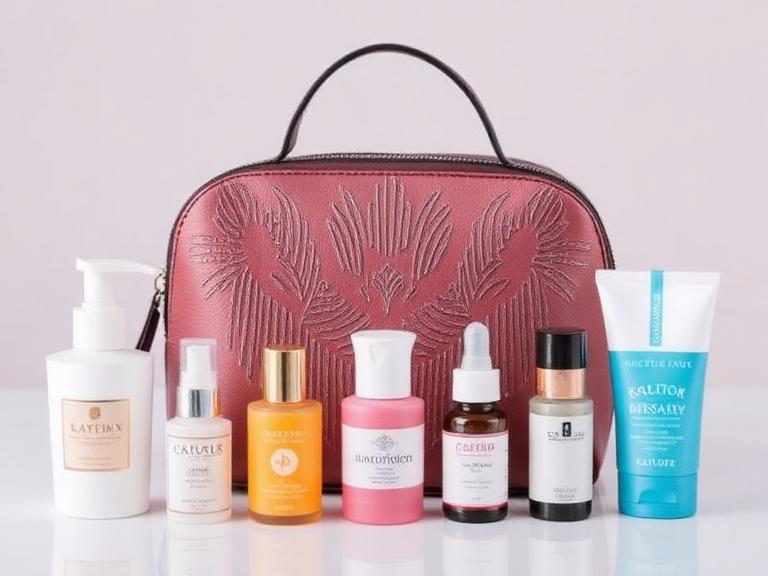
Every beauty brand founder, retail accessories buyer, and lifestyle product developer eventually reaches the same frustrating realization: taking a cheap, mass-produced stock polyester pouch and slapping a silkscreened corporate logo across the front does not create a branded product. It creates cheap promotional merchandise. In our testing across retail counters and commercial unboxing audits, consumers immediately recognize the difference between disposable gift-with-purchase blanks and authentic lifestyle accessories. When a makeup bag features flimsy single-stitch seams, raw fabric threads that snag on zipper teeth, unlined shells that absorb leaked foundation, and generic off-the-shelf pullers, it actively damages your brand equity. A custom cosmetic bag should feel like an organic, intentional extension of the beauty collection it houses. To command retail shelf presence, premium margins, and everyday customer loyalty, a bag must harmonize structural pattern engineering, carefully selected face textiles, bespoke decorative embellishments, functional interior architecture, and industrial hardware finishing. As master cut-and-sew manufacturers who engineer pattern dies, calibrate computerized embroidery heads, test lamination peel strengths, and oversee commercial production lines daily, we examine exactly what makes a cosmetic bag truly custom, giving you the practical technical framework required to build an enduring, profitable accessories collection.
Quick Answer: The Anatomy of a Truly Custom Cosmetic Bag
A cosmetic bag is not defined as custom simply because it displays a company logo. True cut-and-sew customization is an integrated multi-phase manufacturing discipline defined by seven cohesive pillars: (1) A Grounded Product Concept aligned with target customer retail positioning; (2) A Purpose-Engineered Silhouette and Internal Structure tailored specifically to the dimensions of the cosmetics it carries; (3) Curated Material Pairings that balance surface tactile aesthetics with structural EVA foam cores; (4) Holistic Print and High-Density Embroidery Integration where surface embellishment is engineered into the textile panels before stitching; (5) Spill-Proof, Grosgrain-Bound Interior Architecture featuring wipe-clean TPU or laminated liners; (6) Branded Hardware and Refined Trim Details including custom-cast pullers and coordinated zipper tapes; and (7) Commercial Manufacturing Feasibility balancing unit economics through flexible production pathways such as low-MOQ curated programs or full bespoke OEM manufacturing. When these seven elements work together, the finished item transforms from a generic carrier into an indispensable branded asset.
Article Directory
- Pillar 1: A Clear Product Concept and Retail Positioning
- Quick Summary Table: Custom Architectural Elements at a Glance
- Pillar 2: Purpose-Built Silhouette and Spatial Engineering
- Pillar 3: Material Formulation and Structural Layering
- Pillar 4: Integrated Textile Printing and Multi-Color Embroidery
- Pillar 5: Thoughtful Interior Architecture and Spill Barriers
- Pillar 6: Bespoke Hardware and Cohesive Collection Finishing
- Pillar 7: Production Feasibility and Commercial Sourcing Strategy
- Production Pathways: OEM100 Agility vs. Full OEM Development
- Direct Technical Comparison: Truly Custom Bags vs. Stock Logo Imprints
- Pros and Cons Table: Investing in Ground-Up Custom Manufacturing
- Who Needs a Truly Custom Bag vs. Who Can Use Stock Blanks
- Costly Sourcing and Sampling Mistakes Brand Managers Make
- Essential Buying Considerations: Auditing a Cut-and-Sew Manufacturer
- Expert Manufacturing Verdict: The Brand Development Blueprint
- Frequently Asked Questions
- Authoritative Textile and Quality Standards References
Pillar 1: A Clear Product Concept and Retail Positioning
Every successful commercial product begins with a defined strategic purpose. In our experience working with emerging beauty brands and heritage retailers, the most common reason custom bag projects fail in sampling is the lack of an initial concept brief. When a design team attempts to create a bag that simultaneously serves as a minimalist evening clutch, a rugged waterproof camping organizer, and a high-capacity vanity trunk, the resulting product satisfies none of those functions well.
Before selecting a single swatch of fabric, brands must define the commercial boundaries of the project:
- The Intended Physical Contents: Is the bag engineered to house full-size 200ml glass skincare bottles, delicate pressed-powder compacts, long-stemmed makeup brushes, or small lip oils and travel essentials? The physical dimensions and weight of the payload dictate the necessary tensile seam strength and padding thickness.
- Target Retail Positioning & Pricing: Is this product intended to retail at a premium $45 to $85 price point in high-end specialty boutiques, or will it be offered as a $22 beauty add-on at checkout? Your target retail margin dictates whether you can invest in multi-colored jacquards, genuine leather cosmetic bags, or high-tensile coated canvas.
- The Emotional Design Direction: Is your brand identity minimal, clinical, romantic, botanical, or retro-contemporary? A clean modern aesthetic demands sharp lines, matte hardware, and structured profiles, while a heritage or botanical collection demands rich surface textures, warm corduroys, and dimensional floral embroidery.
In most professional situations, the goal is not to customize every individual component simply because it is technically possible. True design maturity is knowing which elements to elevate to communicate your brand identity, while keeping construction clean, manufacturable, and commercially viable.
Quick Summary Table: Custom Architectural Elements at a Glance
| Design Dimension | Generic Promotional Imprint Bag | Truly Custom Cut-and-Sew Bag | Commercial Impact on Brand |
|---|---|---|---|
| Pattern & Silhouette | Fixed catalog stock pouch (flat or standard taco) | Original pattern dies, custom gussets, vanity boxes | Instant shelf differentiation; optimized product fit |
| Material Layering | Single-layer raw polyester or thin cotton canvas | Multi-ply shell, closed-cell EVA foam, wipeable liner | Prevents glass bottle breakage; luxurious hand-feel |
| Embellishment | Post-production surface silkscreen or vinyl decal | Engineered placement print, high-density embroidery | Artisanal tactile luxury; threads never peel or crack |
| Interior Finishing | Unlined or thin nylon with exposed overlocked seams | TPU/vinyl waterproof barrier with grosgrain binding | 100% leak containment; zero fraying threads in zippers |
| Hardware & Trims | Generic #3 plastic zipper with stamped tin puller | Commercial #5 coil/metal zipper, cast zinc alloy pulls | Smooth, jam-free operation; premium tactile touchpoints |
| Procurement Route | Middleman promotional suppliers | Direct factory OEM or curated low-MOQ programs | High gross retail margins; direct quality control |
Pillar 2: Purpose-Built Silhouette and Spatial Engineering
The three-dimensional silhouette of a bag is the very first physical attribute a customer perceives. A custom cosmetic bag must balance visual elegance with mechanical utility: if a bag looks stunning on a shelf but tips over when placed on a wet bathroom vanity, or fails to open wide enough to retrieve an eyeliner from the bottom corner, the customer will abandon it.
Custom structural engineering allows brands to move beyond generic flat pouches:
- Structured Base Gussets: Adding an expanded rectangular or oval bottom gusset lowers the center of gravity, allowing the bag to stand upright independently on vanity countertops.
- The Lay-Flat Architecture: For travel and active morning routines, lay-flat zip-around silhouettes open 180 degrees like a book, presenting all cosmetics simultaneously so the user never has to dig blindly through dark corners.
- Multi-Compartment Zoned Folios: By incorporating dual horizontal tiers or internal vertical accordion dividers, high-capacity vanity cases keep wet liquid foundations separated from clean synthetic powder brushes and delicate eyeshadow compacts.
- Reinforced Grab Handles and Hardware Anchors: Adding top-mounted carry handles or detachable webbed straps requires reinforced internal backer plates behind the seam to distribute load weight evenly across the fabric panel, preventing stitching tear-out under heavy payloads.
To ensure your product dimensions accommodate target containers seamlessly, review our comprehensive custom cosmetic bag ordering checklist before finalizing tech packs.
Pillar 3: Material Formulation and Structural Layering
Fabric is never merely a backdrop for a graphic; it is the physical body and character of the finished bag. In our testing of cut-and-sew durability, an otherwise beautiful bag will fail in retail if the face fabric feels flimsy or lacks internal structural support.
A truly custom cosmetic bag is an engineered sandwich consisting of three coordinated structural layers:
- The Outer Shell (Face Substrate): Sets the visual and tactile tone. Brands can deploy heavy 12oz to 16oz organic cotton canvas for natural texture, plush 350 GSM velvet for evening luxury, wide-wale corduroy for contemporary streetwear appeal, or high-grade wipe-clean oilcloth. For modern corporate gifting, exploring clear logo bags engineered with optical-grade TPU provides contemporary transparency without the toxic plasticizers found in cheap PVC.
- The Cushioning Core (Protective Interlining): Positioned between the shell and liner, a 2mm to 4mm layer of closed-cell Ethylene Vinyl Acetate (EVA) foam or high-density needle-punched fleece provides critical impact absorption. This layer cushions delicate glass perfume flacons and pressed pigments during international travel, while ensuring the bag retains its architectural silhouette even when empty.
- The Chemical Barrier (Interior Lining): Must withstand aggressive cosmetic solvents, oils, and pigments without degrading. Sourcing guidance detailed in our report on sustainable cosmetic bag materials illustrates how post-consumer recycled (rPET) ripstop linings and bio-based coatings provide leak-proof performance while satisfying modern environmental mandates.
Pillar 4: Integrated Textile Printing and Multi-Color Embroidery
The hallmark of an amateur cosmetic pouch is a surface logo printed as an afterthought onto an already-assembled bag. In professional manufacturing, print and embroidery are integral components of the textile design, engineered directly onto flat pattern panels before a single seam is stitched.
High-end cut-and-sew customization leverages two primary embellishment disciplines:
1. Precision Textile Printing
Print establishes the thematic mood of a collection. Depending on the fiber composition, factories deploy specialized printing techniques:
- Rotary or Flatbed Screen Printing: Delivers thick, opaque ink deposits and rich Pantone saturation on natural cotton canvas and heavy linens.
- Digital Reactive & Pigment Printing: Enables photographic detail, subtle watercolor gradations, and intricate botanical artwork without the high setup plate costs of traditional screens.
- Dye Sublimation: Binds color directly into synthetic polyester and nylon fibers at the molecular level, creating vibrant, all-over patterns that will never crack, peel, or fade under heavy wash cycles.
2. High-Density Dimensional Embroidery
While printing provides color, embroidery introduces tangible luxury through physical relief, texture, and light reflection. Computerized multi-head embroidery machines drive tens of thousands of stitches through the face fabric using high-luster rayon or durable trilobal polyester threads. From micro-embroidered butterflies and raised leaf borders to tactile chenille patches and appliqué inserts, embroidery elevates a cosmetic pouch into an heirloom textile object.
From our experience on production lines, the pinnacle of surface design is the hybrid combination: printing a soft, atmospheric watercolor ground pattern and layering high-density embroidered botanical accents directly over key focal points. This interplay of color and physical texture is the signature manufacturing specialty of Printembroiderybags.
Pillar 5: Thoughtful Interior Architecture and Spill Barriers
Customers judge a cosmetic bag by its exterior on the store shelf, but they judge its quality every morning when they unzip it in their bathroom. A bag with an unfinished, chaotic interior creates daily frustration and guarantees negative product reviews.
Custom interior architecture requires deliberate functional detailing:
- Impermeable Leak Containment: Deploying Thermoplastic Polyurethane (TPU), coated vinyl, or treated 210D ripstop nylon creates a waterproof barrier. If a serum bottle unscrews in transit, the liquid remains contained inside the bag rather than soaking through into the customer’s luggage or designer handbag.
- Fully Enclosed Grosgrain Binding: Cheap manufacturers cut costs by leaving internal raw fabric edges exposed or running a fast 3-thread overlock stitch. Over time, those loose fabric threads fray and catch inside the zipper slider, jamming the teeth. A truly custom bag encases every raw interior seam in durable polyester grosgrain binding tape.
- Zoned Brush and Bottle Organization: Integrating elasticized pocket lips, dedicated makeup brush slots with clear wipeable protective PVC flaps, and zippered mesh interior pockets ensures that small eyeliners, tweezers, and hairpins remain organized and sanitary.
- Concealed Embroidery Backing: On high-end products, the stabilizer mesh and thread tails on the reverse side of exterior embroidery should never be visible inside the bag. The interior lining must float cleanly over the embroidery backer, providing a smooth, pristine interior finish.
Pillar 6: Bespoke Hardware and Cohesive Collection Finishing
The difference between an ordinary accessory and an extraordinary collection lies in the finishing trims. In contract manufacturing, hardware represents the primary physical touchpoint: every time a customer opens the bag, their fingers engage with the zipper puller.
Custom finishing details should reinforce your brand’s unique design vocabulary:
- Custom-Cast Zipper Pullers: Moving beyond generic rectangular sliders to custom-molded zinc alloy pullers featuring debossed logos, organic sculpted shapes, or matching fabric ribbon pulls elevates perceived luxury instantly.
- Coordinated Zipper Coil & Tape: Instead of defaulting to standard black or white zipper tape, custom manufacturing dyes the woven polyester zipper tape to match your primary fabric Pantone shade precisely, pairing it with electroplated metal teeth in light gold, antique brass, gunmetal, or polished chrome.
- Structural Piping and Welt Seams: Inserting fabric-covered cord piping along exterior perimeter seams reinforces structural edges, preventing the bag from collapsing while providing a crisp, tailored frame.
- Woven Brand Labels and Metal Plaquettes: High-definition damask woven labels stitched into side seams, or micro-riveted brushed metal logo plates on the exterior face, signal uncompromising craftsmanship. Explore cohesive collection design across our broader bags and accessories portfolio.
Pillar 7: Production Feasibility and Commercial Sourcing Strategy
An exquisite prototype is a commercial failure if it cannot be manufactured with consistent quality at an accessible unit cost. In professional product development, every creative design decision must be evaluated against factory-floor realities.
A mature cut-and-sew development process balances four critical manufacturing metrics:
- Assembly Cycle Time: Overly complex multi-layer seam intersections increase manual sewing time, driving up labor costs and defect rates. Experienced patternmakers optimize seam geometry to simplify assembly without sacrificing aesthetic structure.
- Material Yield and Cutting Efficiency: Irregular pattern shapes generate high fabric scrap waste during die-cutting. Engineering pattern layouts to maximize fabric utilization keeps raw material expenses low.
- Shipping and Carton Packaging Density: Rigid, uncollapsible box cases occupy massive volumetric space during container shipping, multiplying ocean and air freight rates. Designing semi-structured or collapsible silhouettes allows bags to pack flat in master cartons, dramatically reducing landed freight costs per unit.
- Quality Control Compliance: The factory must enforce strict Acceptable Quality Limit (AQL 2.5) standards, including automated needle-detection scanning to ensure zero broken sewing needles remain trapped inside quilted batting. For detailed vendor vetting, review our guide on how to choose a cosmetic bag manufacturer.
Production Pathways: OEM100 Agility vs. Full OEM Development
Recognizing that brands sit at different stages of growth and have varied capitalization levels, professional manufacturing partners provide structured development pathways tailored to specific commercial requirements.
| Strategic Vector | OEM100 Agile Program | Full Bespoke OEM Development |
|---|---|---|
| Minimum Order Quantity (MOQ) | Accessible low MOQ: starts at 100 pieces per design | Volume manufacturing: typically 1,000 to 3,000+ pieces |
| Development & Tooling Lead Time | Rapid: 2 to 4 weeks for sampling and production setup | Comprehensive: 6 to 12 weeks for bespoke tooling & dies |
| Silhouette & Pattern Customization | Proven catalog silhouettes and pre-tested structural dies | 100% original custom pattern drafting and unique shapes |
| Surface Art & Embellishment | Custom brand artwork applied via print, embroidery, or patch | Full bespoke fabric development, custom jacquards, custom pulls |
| Ideal Commercial Fit | Emerging brands, seasonal capsule drops, retail testing | Established beauty houses, enterprise retail, global rollouts |
For independent brands seeking to test new colorways or launch limited-edition capsules without tying up cash flow in thousands of units, our specialized low MOQ cosmetic bag manufacturer model provides the perfect entry point. Conversely, enterprise retailers scaling global assortments can leverage our complete full OEM cosmetic bag development capabilities to engineer completely proprietary products from raw yarn to final packaging.
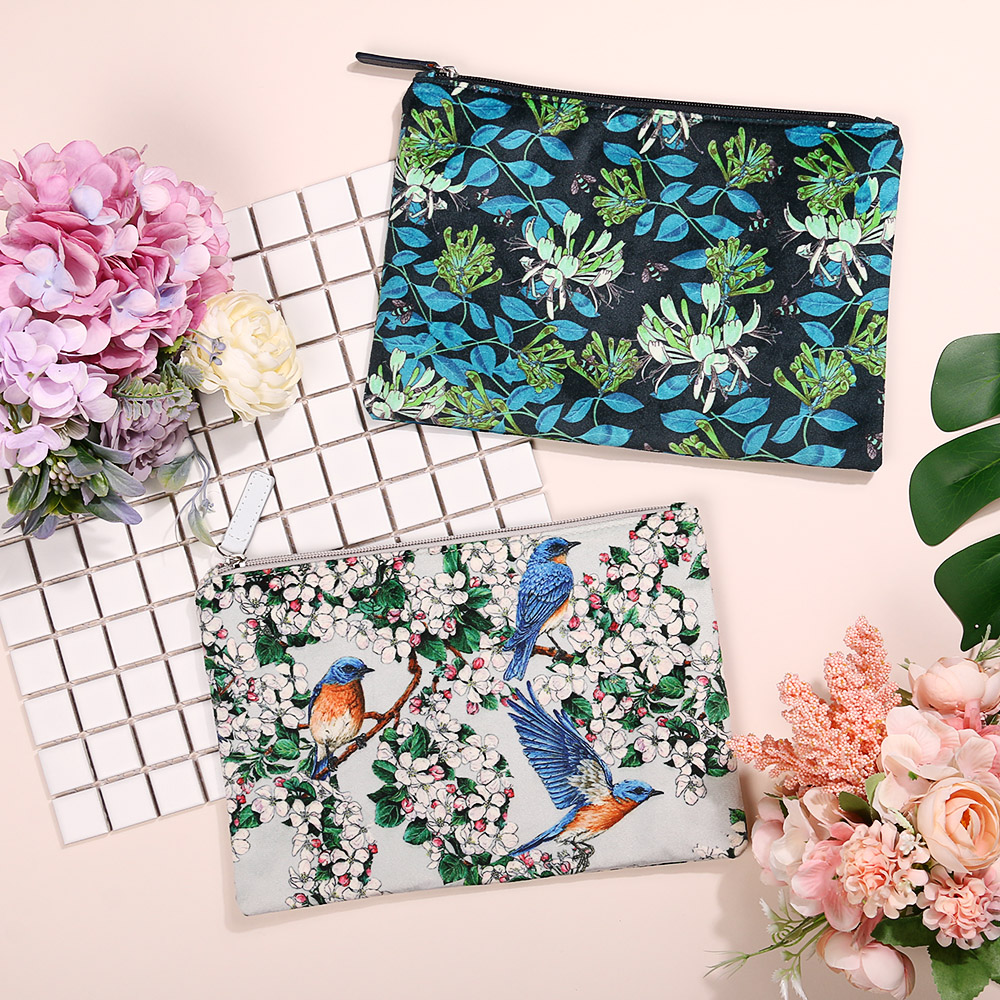
Manufacturer Spotlight: Printembroiderybags Customization Ecosystem
Bridging traditional textile artisan craft with modern high-speed cut-and-sew manufacturing, Printembroiderybags engineers retail-ready custom cosmetic bags, vanity organizers, and travel accessories for leading brands globally.
| Specialized Embellishment | Multi-color high-density embroidery, digital textile printing, screen printing, and hybrid placements |
| Material Capabilities | Heavy organic cotton canvas, structured oilcloth, wipeable vinyl, plush velvet, corduroy, and vegan leather |
| Interior Engineering | Impermeable TPU linings, enclosed grosgrain-bound seams, multi-tier brush folios, and elastic organizers |
| Agile Sourcing Options | OEM100 Program (customized from 100 pcs) alongside enterprise-scale Full OEM contract production |
| Hardware Customization | Custom-cast zinc alloy pullers, dyed-to-match zipper tapes, reinforced metal teeth, and welt piping |
| Compliance & Quality | REACH, RoHS, and Prop 65 compliant; AQL 2.5 quality control standards with automated needle detection |
Consultation Advisory: Have questions regarding tech pack setup or fabric lead times? Browse our comprehensive cosmetic bag FAQ section or connect directly with our technical engineering team today.
Direct Technical Comparison: Truly Custom Bags vs. Stock Logo Imprints
| Evaluation Metric | Stock Blank + Logo Imprint | Semi-Custom (OEM100 Program) | Full Bespoke OEM Custom |
|---|---|---|---|
| Perceived Brand Value | Low (Appears as cheap promotional swag) | High (Premium boutique boutique retail quality) | Exceptional (Heirloom luxury designer grade) |
| Material Control | Zero (Locked into cheap stock polyester) | High (Select from curated premium textiles) | Total (Custom weaves, custom coatings, custom dyes) |
| Liquid Barrier Protection | Poor (Unlined or unsealed porous seams) | Very High (Wipe-clean impermeable liners) | Maximum (Heat-welded TPU or coated vinyl) |
| Interior Compartmentalization | Single empty cavern (No organization) | Zoned slip pockets and brush holders | Bespoke multi-tier folios and dividers |
| Customer Retention & Lifespan | Under 3 months (Discarded or torn) | 3 to 5+ Years of regular daily use | 5 to 10+ Years of long-term use |
| Typical Gross Margin Potential | 20% – 35% (Price ceiling limited) | 55% – 70% (Strong retail positioning) | 70% – 85%+ (Luxury retail positioning) |
Pros and Cons Table: Investing in Ground-Up Custom Manufacturing
| Manufacturing Approach | Commercial & Brand Advantages (Pros) | Operational Realities & Considerations (Cons) |
|---|---|---|
| Ground-Up Custom Manufacturing (OEM100 & Full OEM Pathways) | Establishes an unmistakable, proprietary visual identity. Eliminates catastrophic makeup leaks inside luxury handbags. Commands premium retail pricing and high gross profit margins. Protects fragile cosmetics with engineered EVA foam cores. Creates coordinated, multi-category brand accessories lines. | Requires upfront tech pack preparation and sampling review. Longer lead times than buying off-the-shelf stock blanks. Requires clear forecasting of inventory and target launch dates. |
| Stock Promotional Blanks (Generic Screen-Printed Bags) | Extremely fast turnaround (often ships within 5 to 7 days). Low initial cash outlay for small-batch giveaways. Zero technical pattern knowledge required to order. | Zero retail perceived value; impossible to sell at premium prices. Cheap zippers jam and break within weeks of regular use. Raw unlined seams fray and ruin cosmetics upon first leak. Competitors can buy the exact same bag from the same catalog. |
Who Needs a Truly Custom Bag vs. Who Can Use Stock Blanks
Every commercial dollar invested in product development should match your strategic brand goals. Sourcing a truly custom cosmetic bag is an essential investment for specific business models, while stock promotional blanks remain adequate for others.
Who Must Invest in Truly Custom Cosmetic Bags:
- Indie Beauty Brands & Cosmetic Lines: If your core business is selling skincare, makeup, or fragrances, packaging your products inside an unbranded or cheap bag devalues your core formulations. A custom bag creates an elevated unboxing ritual that drives customer retention and social media sharing.
- Boutique Fashion & Lifestyle Retailers: Retailers looking to expand their accessories category need high-margin products that align with their seasonal apparel color palettes. Custom printed and embroidered bags provide compelling impulse-purchase items at point-of-sale counters.
- Luxury Hospitality & Premium Subscription Brands: Curated subscription services and high-end hotels require durable, sophisticated amenity bags that guests keep and use for years after their stay. Evaluating suppliers across top regions in our report on cosmetic bag manufacturers USA Canada UK ensures alignment with high hospitality standards.
Who Can Comfortably Use Stock Promotional Blanks:
- One-Time Corporate Trade Show Swag: If your goal is handing out 2,000 cheap goodie bags at a regional trade show booth where the recipient will likely discard the bag after taking out the flyers, investing in custom cut-and-sew engineering is an unnecessary expense.
- Single-Event Wedding or Party Favors: If you need twenty simple canvas pouches printed with a bridal party hashtag for a weekend event, quick-turn digital imprint shops will fulfill your needs faster than a dedicated cut-and-sew manufacturing plant.
Costly Sourcing and Sampling Mistakes Brand Managers Make
Factory Floor Advisory: The “Thin Fabric” Sampling Trap
The most common mistake brand managers make during sampling is approving a fabric swatch based purely on its surface appearance in an office swatch book. A fabric that looks gorgeous when draped flat can collapse into a limp, wrinkled mess once stitched into a three-dimensional box pouch. Always insist on seeing the fabric fully laminated to its target EVA foam core and interior lining before approving pre-production prototypes.
- Designing Without Accounting for Seam Allowance Reductions: Novice designers often draft bag dimensions to match a specific eyeshadow palette exactly (e.g., 8×5 inches). When the bag is sewn, 0.5-inch seam allowances, corner curve radii, and interior foam padding reduce the usable interior space. The finished bag arrives, and the palette will not fit through the zipper opening. Always add at least 1.0 to 1.5 inches of clearance to your product’s maximum dimensions.
- Specifying Undersized #3 Zippers on High-Capacity Vanity Cases: Utilizing a light #3 dressmaker zipper on a structured travel bag saves twenty cents in manufacturing but guarantees field failure. When a customer packs the bag full and pulls the slider around curved corners, lateral burst tension splits the small zipper coil. High-capacity cosmetic bags must always deploy commercial-grade #5 nylon coil or metal zippers.
- Overlooking Embroidery Stabilizer Puckering: Placing dense, high-stitch-count embroidery onto thin, unbacked fabrics causes the textile to pucker and buckle under needle tension. A professional cut-and-sew factory integrates multi-ply non-woven cut-away or tear-away stabilizers and calibrates computerized hoop tension to ensure the fabric remains smooth and flat around the artwork.
- Skipping Pre-Production Wash and Crocking Tests: Inexpensive synthetic dyes can bleed onto white vanity surfaces or rub off onto clothing when damp. Always demand certified wet and dry crocking tests to ensure ink and dye stability before authorizing mass production runs.
- Ignoring Carton Packaging Squeezing in Transit: Packing finished structured bags loosely into thin export cartons without internal tissue stuffing results in crushed, permanently creased bags upon arrival at your warehouse. Insist on custom-dimensioned 5-ply corrugated export cartons with tissue stuffing to preserve three-dimensional bag silhouettes.
Essential Buying Considerations: Auditing a Cut-and-Sew Manufacturer
Before transferring a sampling fee or issuing a production deposit for custom cosmetic bags, audit prospective manufacturing partners against these four non-negotiable operational benchmarks:
1. Verified Cut-and-Sew Asset Ownership
Ensure your supplier owns and operates dedicated cutting beds, computerized multi-head embroidery machines, automated programmable pattern stitchers, and clean assembly lines. Sourcing directly from an asset-backed manufacturer eliminates middleman trading markups, shortens sampling iterations, and provides direct quality accountability.
2. Certified Chemical and Environmental Safety
Cosmetic bags house personal care items used on the face and skin. Ensure all fabrics, vinyl coatings, and synthetic leathers comply with international chemical safety standards:
- EU REACH & RoHS: Certified free from restricted phthalates, azo dyes, and heavy metals.
- California Proposition 65: Ensuring materials meet strict limits for lead and carcinogenic plasticizers.
- OEKO-TEX Standard 100: Proving that fabrics and threads contain zero harmful residual processing chemicals.
3. Physical Tensile and Seam Strength Standards
Demand documented laboratory physical testing verifying that fabrics and seams comply with recognized industrial standards such as ASTM D5034 (Standard Test Method for Breaking Strength and Elongation of Textile Fabrics) and AATCC Test Method 8 for Colorfastness to Crocking. Strong seam construction prevents handle pull-out and zipper tape separation under heavy loads.
4. Structured AQL Quality Inspection Protocols
Verify that the production facility adheres to international statistical quality control standards governed by ISO 2859-1 (Sampling Procedures for Inspection by Attributes), enforcing a strict AQL 2.5 standard for major defects and 4.0 for minor cosmetic blemishes, backed by automated metal and broken needle detection.
Expert Manufacturing Verdict: The Brand Development Blueprint
In our professional assessment across decades of soft goods contract manufacturing, a truly custom cosmetic bag is never defined by a single decorative feature. It is defined by the disciplined harmony of all its parts working together to tell a cohesive brand story.
When you engineer a bag with an intentional silhouette, select rich tactile materials supported by protective foam cores, integrate print and high-density embroidery directly into the pattern panels, and finish the interior with wipe-clean leakproof liners, you create an accessory that customers cherish, use daily, and proudly display on their vanities.
Here is your clear commercial roadmap:
- Define Your Target Retail Strategy: Establish your physical dimensions, retail price point, and target user before drafting patterns.
- Choose Your Sourcing Pathway: If you are testing a new concept or launching a boutique capsule, launch via our agile OEM100 Program starting at just 100 pieces per design. If you are rolling out an enterprise collection requiring bespoke hardware and unique silhouettes, execute through our comprehensive Full OEM Development pathway.
- Insist on Prototype Perfection: Never cut corners during sampling. Review the physical hand-feel, test your target cosmetic containers inside the prototype, verify wipe-clean liner performance, and inspect seam binding before authorizing mass production.
Ready to bring your cosmetic bag or accessories collection to life? Send your design concept, artwork, target quantities, and planned launch date directly to our technical product development team at info@printembroiderybags.com or visit PRINTEMBROIDERYBAGS.COM to engineer a truly custom collection that elevates your brand identity and drives lasting retail success.
Frequently Asked Questions
What is the difference between a promotional cosmetic bag and a truly custom cosmetic bag?
A promotional cosmetic bag is a pre-manufactured stock blank where a brand logo is merely screen-printed or heat-transferred on top of generic fabric. A truly custom cosmetic bag is engineered from the ground up: its silhouette, internal compartments, interlining foam, bespoke printed or embroidered textiles, zipper hardware, and leak-proof interior linings are specifically developed and assembled as an integrated product line.
How does combining print and embroidery elevate a custom cosmetic bag?
Combining all-over textile printing with engineered embroidery creates multi-dimensional tactile depth. The printed ground establishes the color palette, mood, and fine background patterns, while multi-color embroidery adds physical elevation, shadow, and an artisanal handcrafted touch that consumers immediately associate with luxury craftsmanship.
What is the minimum order quantity required to manufacture a custom cosmetic bag?
Historically, full cut-and-sew customization required 2,000 to 5,000 pieces per style. However, agile OEM production programs like the Printembroiderybags OEM100 initiative enable independent brands to access custom print, embroidery, and private labeling starting at just 100 pieces per design, while full bespoke OEM programs cater to large-scale collections requiring completely custom hardware and proprietary fabric weaves.
Why is interior lining construction critical to custom cosmetic bag quality?
The interior lining protects the bag and its surroundings from cosmetic spills, liquid foundation leaks, and pigment staining. Truly custom bags deploy non-porous wipeable materials like TPU or coated vinyl with fully encased, grosgrain-bound seams that conceal raw fabric edges, prevent thread fraying into zipper coils, and contain internal liquid accidents.
Authoritative Textile and Quality Standards References
- ASTM International: ASTM D5034 Standard Test Method for Breaking Strength and Elongation of Textile Fabrics (Grab Test)
- American Association of Textile Chemists and Colorists (AATCC): Test Method 8 Colorfastness to Crocking and Surface Abrasion Resistance
- International Organization for Standardization: ISO 2859-1 Sampling Procedures for Inspection by Attributes (AQL Quality Standards in Textile Manufacturing)