Every beauty brand founder and merchandise sourcing manager obsesses over exterior shell fabrics, vegan leather textures, and custom embroidery colors. Yet, more than 60% of customer returns and negative product reviews in the cosmetic travel category are triggered by a single hardware component: a failed, jammed, or scratching zipper closure. When evaluating Metal vs Plastic Zippers for your next collection, choosing purely on aesthetics is a costly mistake. A zipper is an active mechanical track subjected to lateral burst strain, cosmetic oil exposure, abrasive powder intrusion, and tight radius sewing curves. Selecting the wrong fastener will either undermine your product margins or leave consumers struggling with stuck teeth on their vanity counters.
Quick Answer: Metal vs Plastic Zippers in Production
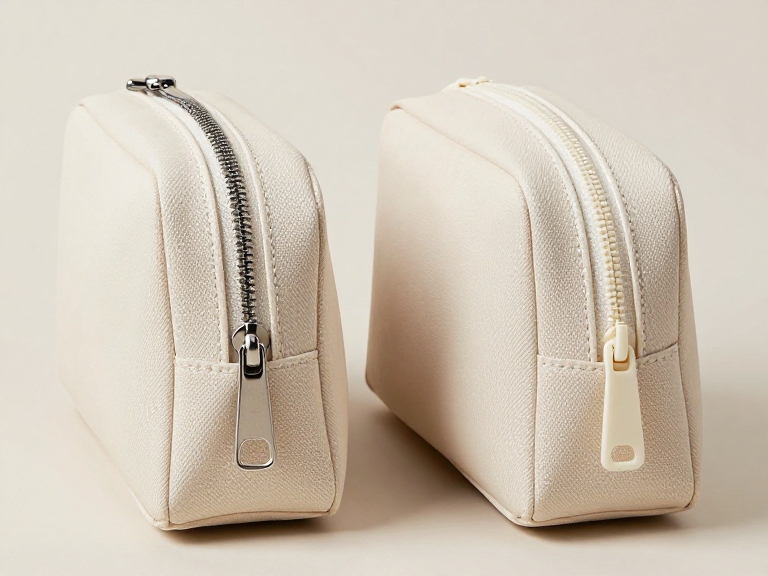
For more than 80% of functional beauty pouches, nylon coil plastic zippers are objectively superior to metal alternatives. They bend effortlessly around curved pouch corners, resist chemical corrosion from spilled foundations and setting sprays, do not jam from loose pressed powder particles, and cost 60% to 75% less. You should only specify metal zippers on structured, flat-opening genuine leather cosmetic bags, heritage canvas train cases, or premium retail vanity trunks where high retail pricing absorbs higher material costs and consumers prioritize cold metallic weight over fast, flexible utility. For everyday makeup bags, metallic-finish nylon coil paired with a custom zinc alloy puller provides the luxury visual of metal without operational jamming.
Article Directory
- Anatomy of Fasteners: Metal Teeth vs. Continuous Coil vs. Molded Resin
- Quick Summary Table: Metal vs Plastic Zippers
- The Cosmetic Environment Test: Powders, Fluids, and Tight Curves
- Engineering Benefits and Operational Limitations Analyzed
- Manufacturing Spotlight: Full OEM Development by Printembroiderybags
- Direct Technical & Commercial Comparison Table
- Pros and Cons: Metal Teeth vs. Plastic Formats
- Decision Framework: Who Should Choose Metal vs. Plastic
- Factory Floor Economics: Needle Breakage, Sewing Speed, and Scrap
- Costly Sourcing Mistakes Brand Buyers Make
- Essential Sourcing Checklist: Gauges, Plating, and Sliders
- Frequently Asked Questions
- Authoritative References & Testing Standards
Anatomy of Fasteners: Metal Teeth vs. Continuous Coil vs. Molded Resin
To make an informed manufacturing decision, procurement teams must look past exterior finishes and evaluate fastener engineering. The slide fastener industry divides closures into three structural categories:
- Metal Zippers: Consist of individual symmetrical or directional metal teeth (stamped from brass, aluminum, nickel, or manganese-zinc alloy) clamped mechanically onto a woven fabric tape. When the slider travels forward, internal cams force opposing teeth to interlock. They deliver high lateral crosswise strength and a weighty feel, but feature zero longitudinal flexibility.
- Nylon Coil Zippers (Plastic Spiral): Built from an extruded continuous monofilament of polyester or nylon plastic wound into a spiral coil and stitched directly to the carrier tape. Because the interlocking mechanism is a continuous flexible spring rather than separate teeth, coil zippers flex in all directions, self-heal when popped open under pressure, and glide smoothly around sharp corners.
- Plastic Molded Zippers (Vislon / Polyacetal POM): Feature individual plastic teeth injection-molded directly onto the polyester tape using polyoxymethylene (POM / Delrin) resin. They deliver a chunky, athletic aesthetic with complete chemical inertness and zero corrosion potential, bridging the visual definition of metal with the lightweight, water-resistant performance of plastic.
In our testing on cut-and-sew production lines, confusing nylon coil with molded plastic under the generic term “plastic zipper” creates major specification errors. Before consulting how to choose a cosmetic bag manufacturer, your tech pack must identify whether you require flexible spiral coil, molded polyacetal teeth, or stamped metal alloy.
Quick Summary Table: Metal vs Plastic Zippers
| Fastener Class | Primary Material Chemistry | Curved Corner Glide Efficiency | Cosmetic Powder / Fluid Tolerance | Relative Cost per Yard | Primary Failure Mode |
|---|---|---|---|---|---|
| Metal Zippers (Brass/Alloy) | Copper-zinc alloy, aluminum, nickel | Poor to Moderate (Prone to binding) | Low (Chemical tarnish, mechanical tooth fouling) | High ($0.80 – $2.20+) | Tooth detachment, oxidation, slider seizing |
| Nylon Coil (Plastic) | Extruded polyester / nylon monofilament | Exceptional (Smooth 360° flexibility) | High (Passes powder cleanly, zero corrosion) | Low ($0.20 – $0.55) | Slider wear, tape tearing under severe puncture |
| Molded Plastic (POM/Vislon) | Injection-molded polyacetal resin | Moderate (Stiffer than coil, better than metal) | Exceptional (100% rust-proof, wipe-clean) | Moderate ($0.45 – $0.85) | Individual tooth shearing under heavy impact |
The Cosmetic Environment Test: Powders, Fluids, and Tight Curves
A makeup bag lives in a hostile environment compared to a jacket or backpack. Inside an active toiletry pouch, products shift, leak, and spill. The physical behavior of Metal vs Plastic Zippers in this environment dictates long-term user satisfaction.
1. Loose Powder and Pigment Intrusion
Pressed powders, setting clays, bronzers, and eye pigments break during travel. When fine particulate matter enters a metal zipper, the microscopic talc and silica grains settle into the gear-like cavities between metal teeth. Because metal does not yield, the slider grinds the powder into an abrasive paste, causing friction, scratching the plating off, and eventually locking the slider. Nylon coil zippers behave like flexible springs: as the slider passes over powder dust, the flexible monofilament yields slightly, allowing particles to fall through the coil mesh without jamming the slider cams.
2. Fluid Leakage and Chemical Corrosion
Toners containing salicylic acid, micellar water, ethyl alcohol, and lipid-rich foundation emulsions inevitably leak inside travel kits. When acidic or saline fluids reach unlacquered or poorly plated metal teeth, chemical oxidation begins. In our testing under 48-hour salt-spray and alcohol exposure, brass and zinc alloy teeth develop green verdigris crusts and whitish oxidation deposits that ruin the aesthetic of the bag. Plastic polymers—both polyester coil and molded POM resin—are completely inert to cosmetic oils, alcohol bases, and water, wiping clean without surface tarnishing.
3. Corner Geometry and Sewing Tension
Most cosmetic pouches feature curved top edges, half-moon silhouettes, or three-sided perimeter openings. Metal teeth are rigid blocks of metal clamped along a flexible tape. When bent around a curve with a radius tighter than 35 mm, the teeth on the outer perimeter splay apart, while the inner teeth compress together. This uneven tooth pitch causes the slider to drag and scrape every time the user pulls it around the bend. Nylon coil bends naturally around tight radii, preserving identical pitch spacing throughout the curve for a silky, one-handed pull.
Engineering Benefits and Operational Limitations Analyzed
Metal Zippers: Structural Benefits and Severe Limitations
The primary advantage of metal zippers is visual and tactile prestige. Stamped brass teeth, plated in mirror-polished shiny gold, light rose gold, or gunmetal, immediately communicate luxury. On heavy materials like saddle leather, structured structured canvas, or rigid train cases, a metal zipper anchors the structural lines of the bag. It carries high crosswise lateral burst strength (exceeding 600 N on #5 gauge).
However, the limitations in cosmetic applications are severe. Metal zippers are heavy, adding unnecessary shipping weight. If the tooth edges are not barrel-tumbled and polished, sharp burrs can scratch the user’s knuckles when reaching inside for lipsticks, or abrade delicate leather compact cases. Furthermore, cold metal teeth lack self-healing capabilities; if a metal tooth is forced out of alignment by overpacking, the entire bag becomes unusable.
Plastic Zippers: Practical Superiority with Aesthetic Trade-Offs
Plastic zippers, particularly #3 and #5 nylon coil formats, represent modern manufacturing efficiency. They provide self-healing properties: if an overfilled makeup bag forces the teeth to split open behind the slider, pulling the slider back over the separation resets the continuous spiral coil without damaging the teeth. They are soft to the touch, weigh a fraction of metal, and support water-repellent matte polyurethane laminations for splash-proof travel cases.
The main limitation of standard plastic zippers is perceived value. A plain, raw nylon coil zipper can look utilitarian or cheap on an expensive vanity kit if not specified correctly. However, modern manufacturing solves this aesthetic limitation: suppliers now produce metallic-electroplated nylon coil, where the surface of the plastic spiral is coated with an ultra-thin metallic film. This delivers the gleaming finish of polished brass alongside the smooth, flexible glide of synthetic coil.
Manufacturing Partner Spotlight: Printembroiderybags OEM Solutions
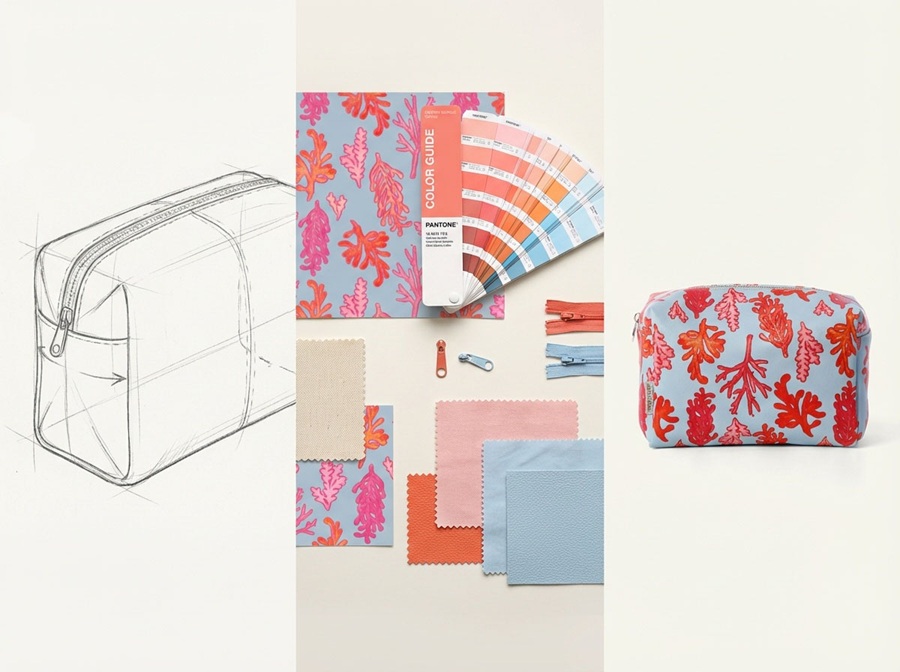
Navigating hardware selections, zipper tooth gauges, and lining fabrics requires a production partner with real cut-and-sew engineering experience. Printembroiderybags provides full-service original equipment manufacturing (OEM) and custom branding tailored to beauty brands, private label retailers, and global corporate distributors.
| Engineering Core | End-to-end full OEM cosmetic bag development from CAD drafting to mass production |
| Hardware Integration | Custom metal pullers, continuous nylon coil, molded POM, and metallic coil tracks |
| Material Capabilities | PU vegan leather, high-density cotton canvas, TPU/EVA, and clear logo bags |
| Branding Precision | Multi-head computerized embroidery, high-definition screen printing, and debossing |
| Supply Flexibility | Agile production from specialized low MOQ cosmetic bag manufacturer programs up to container volumes |
Manufacturer Verdict: From technical tech-pack reviews to final shipping cartons, explore their transparent cosmetic bag manufacturing philosophy and protect your brand’s gross margins across production runs.
Direct Technical & Commercial Comparison Table
| Fastener Attribute | Metal Stamped Teeth (#5) | Nylon Spiral Coil (#5) | Molded Plastic Vislon (#5) |
|---|---|---|---|
| Raw Material Composition | Solid brass, zinc alloy, aluminum | Extruded polyester / nylon monofilament | Polyacetal (POM / Delrin) resin |
| Fluid / Chemical Resistance | Poor (Subject to verdigris & tarnishing) | High (Immune to oxidation and oils) | Exceptional (Chemically inert) |
| Self-Healing Capability | Zero (Bent teeth cause permanent failure) | Yes (Slider reset clears coil pop-outs) | No (Missing teeth destroy function) |
| Glide Resistance on Curves | High (Noticeable friction and catch) | Very Low (Seamless multi-axis flex) | Moderate (Requires smooth corner radius) |
| Haptic Hand-Feel | Rigid, cool, can feel abrasive | Soft, smooth, non-scratching | Blunt, lightweight, sporty feel |
| Sewing Machine Needle Scrap | High (Needle strikes break steel points) | Negligible (Needle deflects past coil) | Moderate (Needle strike can chip plastic) |
| Average Component Cost | Baseline × 3.0 to 4.0 | Baseline 1.0 (Most economical) | Baseline × 1.5 to 2.2 |
Pros and Cons: Metal Teeth vs. Plastic Formats
| Zipper Category | Commercial & Technical Pros | Operational & User Cons |
|---|---|---|
| Metal Zippers (Brass, Aluminum, Zinc Alloys) | Premium visual finish that justifies luxury price tags. High crosswise pull strength on heavy canvas and leather. Cold metallic weight conveys high build quality. Traditional styling aligns with heritage cosmetic brands. | Jams easily when contaminated with loose makeup powders. Chemical tarnishing when exposed to spilled cosmetic liquids. Binds and drags around curved pouch corners. Sharp tooth edges can scratch hands and cosmetic compacts. Significantly higher unit costs and factory needle breakage. |
| Plastic Zippers (Nylon Coil & Molded Resin) | Smooth glide around tight, curved cosmetic bag corners. Completely immune to chemical oxidation and cosmetic oil rust. Passes loose makeup powder without tooth jamming. Self-healing coil construction survives bag overpacking. Available in metallic electroplated finishes to mimic metal. Substantially lower component cost and faster factory sewing. | Basic non-metallic coil can look cheap on high-end leather goods. Lower crosswise tensile burst strength than heavy-gauge brass. Cannot reproduce the authentic cold weight of solid metal. |
Decision Framework: Who Should Choose Metal vs. Plastic
Selecting between Metal vs Plastic Zippers requires aligning hardware with your bag silhouette, target retail price, and daily use case. Avoid making a blanket decision across your entire product line.
Who Should Specify Metal Zippers:
- Luxury Leather Cosmetic Trunks: Flat-top vanity cases manufactured from heavy cowhide or structured split leather, retailing above $85, where the zipper track runs in straight lines without tight corner radii.
- Heritage Heavyweight Canvas Dop Kits: Traditional, masculine dopp kits built from 16 oz to 24 oz waxed duck canvas, where consumers expect a vintage brass aesthetic.
- Limited-Edition Designer Collaborations: High-margin seasonal gifts where decorative luxury outweighs long-term travel durability.
Who Should Specify Nylon Coil or Molded Plastic Zippers:
- Everyday Makeup Pouches & Dome Bags: Any pouch that incorporates curved top corners. Nylon coil guarantees smooth, snag-free zip travel every time.
- Travel Toiletry & TSA Clear Bags: Fluid-heavy wash bags that hold shampoo, micellar water, and facial oils. Plastic eliminates verdigris rust and matches flexible materials like PVC or TPU.
- Direct-to-Consumer (DTC) Beauty Brands: Scaling brands that must protect gross margins while maintaining high customer satisfaction and low return rates.
- Eco-Friendly & Sustainable Collections: Brands curating lines using sustainable cosmetic bag materials like recycled RPET, where lightweight recycled nylon coil tracks complement low-carbon shipping footprints.
Factory Floor Economics: Needle Breakage, Sewing Speed, and Scrap
When reviewing production invoices from cosmetic bag manufacturers USA Canada UK or overseas factories, the price difference extends beyond the cost per yard of zipper tape. Metal zippers introduce hidden labor expenses on the factory floor:
1. Production Line Sewing Speed and Needle Deflection
Nylon coil zippers are continuous plastic loops. When an automated twin-needle sewing machine stitch line crosses over the zipper end, the needle simply deflects past the flexible plastic coil without damage. Operators can run sewing machines at top speed. When sewing over metal teeth, the machine operator must slow down significantly, hand-walking the needle past the teeth, or risk the needle striking a brass tooth, shattering the carbide tip and tearing the fabric. This drops assembly line throughput by 15% to 25%.
2. Scrap Rates and Factory Defect Allocations
Because metal teeth are individually pressed onto tape, trimming zipper tape to custom pouch lengths requires workers to pry off stop teeth using pliers so the slider can be closed without leaving raw teeth in the seam allowance. If an operator removes one tooth too few, the needle breaks; if they remove one too many, the seam unravels under pressure. This manual labor step increases factory defect rates. Nylon coil can be cut cleanly with standard hot knives, resulting in lower scrap rates and consistent production batches.
3. Margin Protection Across Production Runs
On a 5,000-piece production run, choosing a #5 antique brass zipper over a high-spec #5 metallic nylon coil zipper adds roughly $1.20 to $1.80 per unit in raw hardware, labor, and needle-scrap buffers. Multiplied across retail distributor markups, that hardware choice forces a $6.00 to $10.00 increase in your final retail price point. For most consumer cosmetic bags, that price jump hurts sales conversion without delivering real-world functional improvements.
Costly Sourcing Mistakes Brand Buyers Make
Factory Floor Warning: The most frequent mistake brand designers make is specifying #3 metal zippers on half-moon dome pouches to save money. Number 3 metal teeth are too fine; the slider binds on curved corners within weeks, leading to angry customer reviews and returned inventory.
- Overlooking Tooth Plating Clear Coats: Specifying basic electroplated brass teeth without requiring a secondary transparent electrophoretic lacquer coating. Without this barrier, atmospheric moisture and cosmetic acids tarnish shiny gold teeth into dull, spotty brown within 90 days of warehouse storage.
- Pairing Stiff Metal Zippers with Ultralight Fabrics: Sewing a heavy, rigid metal zipper into an unlined 70D nylon or lightweight silk pouch. The weight of the metal causes the zipper track to sag into an unsightly wave, distorting the silhouette of the bag.
- Using Weak Die-Cast Slider Pullers: Focusing entirely on zipper teeth while ignoring slider alloy quality. Cheap zinc pullers snap off under modest torque. Always demand reinforced, solid-cast pullers that pass minimum pull-off and torque resistance standards.
- Skipping the Powder Ingress Cycle Test: Approving golden production samples by pulling the zipper empty in an office. Before authorizing mass production, coat the sample zipper teeth in setting powder and test for jamming. If the slider binds, switch to nylon coil immediately.
Essential Sourcing Checklist: Gauges, Plating, and Sliders
When preparing your tech pack or finalizing your custom cosmetic bag ordering checklist, integrate these five engineering specifications into your procurement contract:
1. Determine the Correct Tooth Gauge Size
- Number 3 Gauge (Approx. 4.0 mm tooth width): Use exclusively for interior zippered slip pockets or flat, miniature brush sleeves. Never use #3 metal on exterior main closures.
- Number 5 Gauge (Approx. 6.0 mm tooth width): The universal commercial standard for exterior cosmetic pouch closures. Delivers optimal burst strength without excessive bulk.
- Number 8 Gauge (Approx. 7.5 mm tooth width): Reserved for heavy-duty professional makeup artist train cases, large weekend duffels, and structured salon trunks.
2. Specify Slider Lock Types: Non-Lock vs. Auto-Lock
Cosmetic bags must always use Non-Lock sliders. Auto-lock sliders (common on jeans and jackets) contain an internal pin that locks the slider in place whenever the pull tab is released. On a makeup pouch, users want to push the bag opening wide with their fingers; an auto-lock slider will fight the user’s hand and rip the internal tape threads.
3. Mandate Salt-Spray and Chemical Fastness Testing
Require your supplier to verify that all metal components pass a minimum 24- to 48-hour neutral salt-spray test (ASTM B117) and an alcohol immersion test without green verdigris, pitting, or surface flaking. Review our cosmetic bag FAQ for standard laboratory testing thresholds.
4. Upgrade to Metallic Nylon Coil for High-End Pouch Lines
If your marketing team demands the look of luxury gold hardware on a curved makeup pouch, specify metallic-plated nylon coil. The teeth deliver a mirror-polished gold, silver, or rose-gold finish, but retain a flexible monofilament core that bends around curves smoothly and passes powder cleanly.
5. Review Sourcing Questions Before Signing Purchase Orders
Always review the comprehensive list of questions for cosmetic bag manufacturers to verify raw material origins, puller torque tolerances, and custom packaging solutions across broader bags and accessories collections before transferring tooling deposits.
Frequently Asked Questions
Are metal zippers always more durable than plastic zippers on cosmetic bags?
No. While metal teeth have higher crosswise tensile strength, they suffer from tooth misalignment, oxidation when exposed to liquid cosmetics, and mechanical jamming from loose powder compact fallout. Nylon coil plastic zippers are flexible, self-healing, resistant to chemical spills, and withstand curved corner cycling far better than rigid metal teeth.
Why do metal zippers catch and feel stiff around curved cosmetic pouches?
Metal zipper teeth are individually clamped onto cloth tape at fixed intervals. When bent around tight sewing radii (such as the top corners of a dome cosmetic pouch), the gap between the outer edges of the teeth widens while the inner gap compresses, causing the slider to bind, scrape, and hitch during closure.
What zipper type is best for travel makeup bags and toiletry kits?
In our testing, number 5 nylon coil zippers paired with custom zinc alloy metal pullers offer the best combination of fluid resistance, smooth pull glide, and structural durability. For sporty or waterproof wash bags, injection-molded plastic chunky zippers (Vislon or POM resin) deliver clean aesthetics without corrosion risks.
How does zipper choice impact production costs in cosmetic bag manufacturing?
Metal zippers cost between 2.5 to 4 times more than nylon coil zippers per yard, require slower sewing speeds, and increase factory scrap rates due to needle breakage on individual metal teeth. Switching to metallic nylon coil provides the visual look of real metal while retaining the low cost and high sewing efficiency of plastic.
Authoritative References & Testing Standards
- ASTM International: ASTM D2061 Standard Test Methods for Strength Tests for Zippers
- International Organization for Standardization: ISO 105-E04 Tests for Colour Fastness to Perspiration & Chemical Corrosion on Slide Fasteners
- British Standards Institution (BSI): BS 3084 Specification for Slide Fasteners (Zippers) Performance & Durability