Every year, B2B buyers leak millions of dollars in unnecessary supply chain markups, botched quality control, and missed production deadlines simply because they do not know who they are actually wiring their money to. When sourcing packaging and accessories overseas, the digital landscape is deliberately opaque. You will encounter thousands of beautifully designed Alibaba storefronts and slick company websites, all claiming to be “leading factories.” The harsh reality? The vast majority of them do not own a single sewing machine. They are trading companies.

From our experience auditing supply chains and rectifying distressed production runs, understanding the fundamental differences in the Cosmetic Bag Manufacturer vs Trading Company debate is the single most critical commercial decision a procurement manager will make. If you choose wrong, you sacrifice your profit margins to a middleman. Worse, you surrender control over your product’s structural integrity, material safety, and intellectual property. In this definitive guide, we cut through the industry noise to explain exactly how these two entities operate, how to spot the difference, and strategically determine which partner aligns with your brand’s growth trajectory.
Quick Answer: Which should you choose?
In most professional situations, serious B2B buyers must partner directly with a Cosmetic Bag Manufacturer rather than a trading company. A direct manufacturer owns the production floor, meaning they control quality assurance, material sourcing, and offer authentic factory-direct pricing (saving you the 20-40% broker markup). While trading companies historically offered better English communication and lower minimum order quantities (MOQs), modern manufacturers have closed this gap entirely. We recommend direct manufacturing for any brand seeking strict OEM customization, scalable unit economics, and reliable accountability.
Table of Contents
- What It Is: Defining the Entities
- How It Works: The Supply Chain Reality
- Benefits of Going Direct to Factory
- Limitations to Consider
- Comparison Table: Manufacturer vs Trading Company
- Pros and Cons Table: Direct Manufacturing
- Who Should Use It & Who Does Not Need It
- Common Mistakes B2B Buyers Make
- Buying Considerations & Factory Auditing
- Expert Recommendation
- Frequently Asked Questions (FAQ)
What It Is: Defining the Entities
To accurately evaluate the Cosmetic Bag Manufacturer vs Trading Company dynamic, you must first define their legal and operational boundaries.
A Cosmetic Bag Manufacturer is a physical industrial facility. They purchase raw materials (PU leather, canvas, zippers, linings), employ the pattern makers who draft the CAD designs, operate the die-cutting machines, and manage the sewing floors. When you request a Cosmetic Bags Manufacturing Capabilities audit, they can physically show you the machinery and the workers producing your goods. They generate revenue strictly through the production of physical goods at scale.
A Trading Company (or sourcing agent/broker) is a commercial office. They hold no manufacturing assets. Instead, they leverage their local language skills and regional networks to find factories that will produce goods for them. They take your order, negotiate a rock-bottom price with a nameless factory, add a 20% to 40% margin, and sell it to you. They generate revenue purely through arbitrage.
How It Works: The Supply Chain Reality
When you place an order with a trading company, your technical specifications pass through a dangerous game of telephone. You explain your required zipper gauge and lining density to the trading company’s sales rep. That rep then translates and forwards those specs to a factory manager, who passes them down to the floor supervisor. In our testing and auditing of failed orders, this is exactly where critical details are lost, resulting in incorrect pantone colors, substandard stitching, and rejected shipments.
Conversely, working with a direct manufacturer compresses the supply chain. You speak directly to the engineers handling your prototypes. If you are developing Full OEM Custom Cosmetic Bags, the facility’s in-house pattern maker can instantly advise if a specific canvas weight will properly hold an embroidered logo without puckering. The feedback loop is immediate, precise, and financially transparent.
Benefits of Going Direct to Factory
For commercial users scaling a brand, the advantages of bypassing the middleman are undeniable.
1. Maximum Profit Margins: The most obvious benefit is cost. Removing the trading company’s markup allows you to secure authentic factory-direct pricing. This directly lowers your Cost of Goods Sold (COGS), giving you more room to invest in marketing or increase your net profit.
2. Absolute Quality Control: Trading companies frequently switch factories between your first and second order to chase slightly cheaper labor, resulting in baffling inconsistencies in your product line. A direct manufacturer provides consistency. They implement strict SOPs (Standard Operating Procedures) on their own floors to ensure batch ten looks identical to batch one.
3. Deep Technical Customization: If you want to integrate complex Custom Embroidery Cosmetic Bags into your lineup, a trading company will struggle to relay thread-count limitations. A factory will run a physical swatch test and adjust the digital embroidery file immediately.
Limitations to Consider
We believe in utilizing practical commercial judgment. There are historical reasons trading companies exist. The primary limitation of direct manufacturing used to be the Minimum Order Quantity (MOQ). Traditionally, turning on a production line for 50 bags was mathematically impossible for a massive factory, so they required orders of 3,000+ units. Trading companies circumvented this by aggregating small orders from multiple buyers.
Furthermore, navigating time zones and language barriers with factory floor managers can be challenging if the manufacturer lacks an international B2B sales department. However, elite manufacturers have adapted by building dedicated English-speaking export teams to bridge this gap.
Comparison Table: Manufacturer vs Trading Company
| Operational Feature | Cosmetic Bag Manufacturer | Trading Company (Broker) |
|---|---|---|
| Pricing Structure | Lowest (Direct base cost) | High (Includes 20-40% broker margin) |
| Quality Consistency | High (Controlled internal environment) | Volatile (Frequently switch subcontractor factories) |
| Customization Control | Unlimited (Direct access to pattern makers) | Limited (Must relay requests through third parties) |
| Production Accountability | Direct root-cause analysis and swift fixes | High rate of blame-shifting to anonymous factories |
Pros and Cons Table: Direct Manufacturing
| Pros of Direct Manufacturing | Cons of Direct Manufacturing |
|---|---|
| Protects your intellectual property (NDAs enforced directly). | Historically higher Minimum Order Quantities (though changing). |
| Eliminates middleman markups, optimizing your unit economics. | Requires buyers to understand basic technical specifications. |
| Direct communication accelerates the prototyping phase. | May require more upfront due diligence to verify factory credentials. |
| Guaranteed compliance with ethical labor and material standards. | Cannot aggregate vastly different product categories (e.g., electronics and bags) in one shipment like a trader can. |
Who Should Use It & Who Does Not Need It
For commercial users and brand owners: If you are building a recognizable beauty brand, retail chain, or subscription box service, you must use a direct manufacturer. You require strict compliance, exact pantone color matching for your Custom Printing Cosmetic Bags, and the ability to scale to tens of thousands of units efficiently. A trading company will become a dangerous bottleneck to your growth.
Who does not need it: For absolute beginners who only want to buy 20 generic, unbranded cosmetic bags to sell at a local weekend craft fair, navigating a direct factory relationship is unnecessary overkill. You are better off buying wholesale stock from a domestic trading company or a local distributor.
Common Mistakes B2B Buyers Make
The most devastating mistake B2B buyers make is believing the “Gold Supplier” badge on massive sourcing directories guarantees they are talking to a factory. Trading companies routinely rent factory floors for an hour to shoot marketing videos, tricking foreign buyers into believing they own the facility.
Another major error is failing to request a physical pre-production (PP) sample. Never wire a 30% production deposit based on a digital render provided by a broker. You must demand a physical sample to test zipper fluidity, fabric GSM (grams per square meter), and the durability of the inner lining. If the supplier hesitates or charges astronomical fees for a simple prototype, you are likely dealing with a middleman who has no prototyping capacity of their own.
Buying Considerations & Factory Auditing
When selecting your supply chain partner, you must evaluate them like an auditor. First, demand a copy of their business license. A true factory’s license will explicitly list “manufacturing” or “production” within its registered business scope. A trading company’s license will only list “sales”, “trade”, or “technology.”
Second, inquire about their Cosmetic Bags wholesale capabilities. A reliable manufacturer will eagerly schedule a live video call via WeChat or Zoom. During this call, ask them to walk out onto the production floor, show you the raw material warehouse, and zoom in on the sewing stations. If they make excuses about “factory internet connections” or “confidentiality,” walk away immediately.
Expert Recommendation from PrinteMbroideryBag
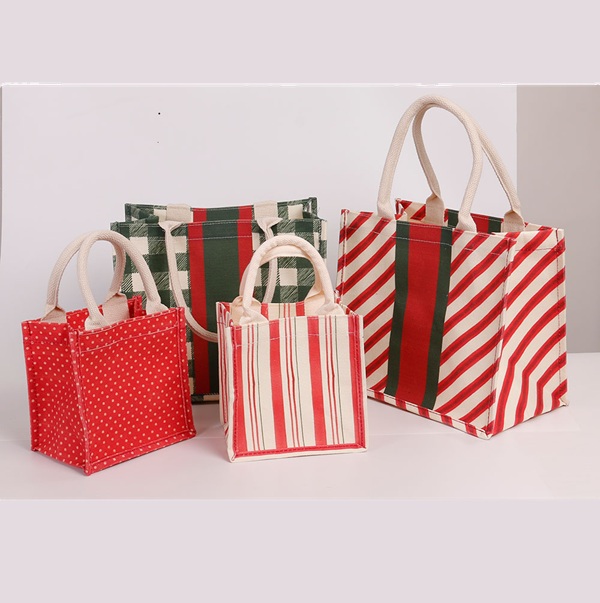
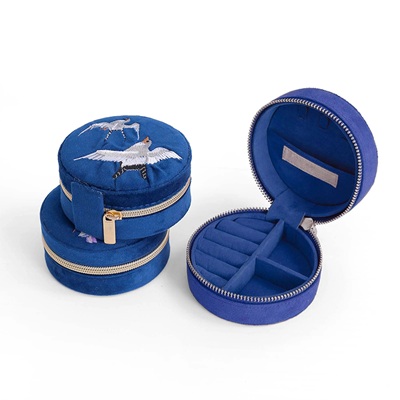
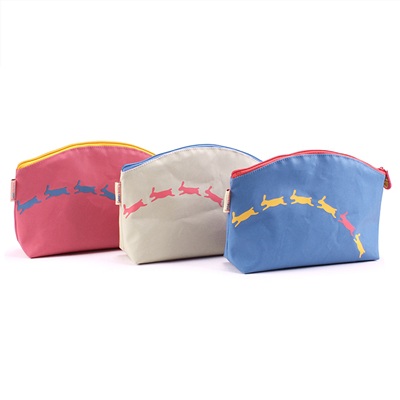
In most professional situations, relinquishing control of your product manufacturing to an unverified third-party broker is a recipe for margin erosion and brand damage. We strongly recommend that serious B2B buyers establish a direct relationship with a verified, specialized manufacturer to ensure long-term stability.
PrinteMbroideryBag – Printed & Embroidered Cosmetic Bag Manufacturer
We do not broker goods; we build them. If you want to learn more about our facility and direct-to-brand philosophy, read About PrinteMbroideryBag. We offer tailored solutions for every stage of your business growth:
For completely bespoke products, explore our Full OEM Development service, where our in-house engineers design your bags from the ground up, selecting the exact zippers, pullers, fabrics, and Packaging Solutions for Cosmetic Bags.
If you are concerned about high minimums, launch faster with Custom Cosmetic Bags OEM100. This is our flexible low MOQ program built on proven bestselling collections. Order as shown with mix-and-match flexibility, or customize with your own artwork, branding, or selected design options from just 100 pcs. Stop paying middleman markups and start building your brand directly with the source.
Frequently Asked Questions (FAQ)
How can I tell if a supplier is a Cosmetic Bag Manufacturer vs Trading Company?
You can request a live video tour of their facility to see the cutting and sewing floors. Furthermore, cross-reference their business license; a manufacturer’s license will specifically list ‘production’ or ‘manufacturing’ in its approved business scope, whereas a trading company’s license will only list ‘sales’ or ‘trading’.
Do trading companies always have higher prices than direct manufacturers?
In almost every scenario, yes. Trading companies apply a 15% to 40% markup to the factory’s base price to cover their operational costs and profit margins. While they might occasionally offer lower minimum order quantities, the per-unit cost will inevitably be higher than going direct to the source.
Is it possible to get low MOQs directly from a cosmetic bag manufacturer?
Yes. While traditional manufacturers demand thousands of units per order, modern agile facilities have adapted. Programs like the OEM100 from PrinteMbroideryBag allow B2B buyers to order customized, high-quality cosmetic bags starting at just 100 pieces.
Authoritative Industry References
To ensure your international sourcing practices align with global manufacturing standards and legal compliance, we recommend consulting the following authoritative bodies:
- International Organization for Standardization (ISO) – Provides critical standards for quality management systems (ISO 9001) that verified manufacturers must adhere to.
- U.S. Customs and Border Protection (CBP) – Official guidelines on commercial importing, tariff classifications for textiles, and intellectual property rights enforcement.
- ASTM International – The leading authority on standardized testing for textile strength, zipper durability, and fabric seam integrity.