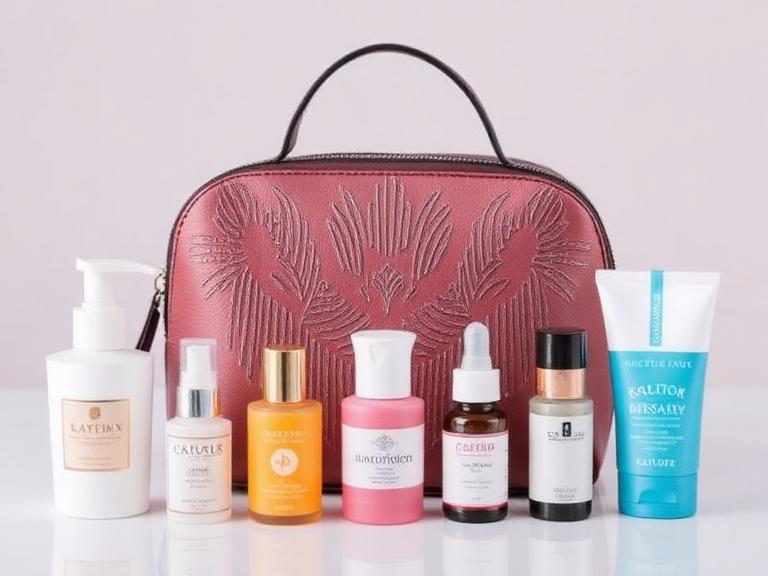
Launching a cosmetic bag brand does not require ordering thousands of units before you know whether customers will buy. For startups and emerging beauty brands, Low MOQ Cosmetic Bag Manufacturing offers a more practical way to develop custom products, test market demand, establish a recognizable brand identity, and manage inventory risk without committing excessive capital to the first production run.
However, choosing a manufacturer based on the lowest advertised minimum order quantity is a mistake. A supplier may accept a small order but charge substantially more per unit, restrict material choices, offer limited customization, or struggle to maintain consistent quality across repeat orders.
At Printembroiderybags, we believe the right approach is to treat low MOQ production as a product-development strategy rather than simply a small purchasing arrangement. The goal is to create a commercially viable cosmetic bag collection that can be tested, improved, and scaled as your business grows.
Quick Answer: What Is Low MOQ Cosmetic Bag Manufacturing?
Low MOQ Cosmetic Bag Manufacturing allows startups and smaller brands to order custom cosmetic bags in smaller quantities than traditional high-volume manufacturing arrangements. Depending on the factory, product structure, material availability, printing method, embroidery requirements, and customization level, minimum order quantities can vary considerably.
Our recommendation: Start with one or two well-developed cosmetic bag designs, use available materials where possible, limit unnecessary hardware variations, and invest in a professionally approved sample before bulk production. This approach generally offers a better balance between customization, unit cost, and inventory risk than launching a large collection immediately.
| Decision Factor | Our Recommendation |
|---|---|
| Best for | Startups, indie beauty brands, emerging retailers and online sellers |
| Initial product range | One to three focused cosmetic bag designs |
| Best starting materials | Readily available polyester, cotton, canvas or other suitable stock fabrics |
| Customization | Logo printing, embroidery, labels, colors and selected structural details |
| Production strategy | Sample first, approve specifications, then place a controlled production order |
| Main cost concern | Development costs, material sourcing, setup fees and unit price |
| Biggest risk | Choosing a supplier that cannot reproduce the approved sample consistently |
| Best long-term strategy | Validate demand first and increase order quantities as sales become predictable |
Table of Contents
- What Is Low MOQ Cosmetic Bag Manufacturing?
- How Low MOQ Cosmetic Bag Production Works
- Why Startups Should Consider Low MOQ Manufacturing
- Best Cosmetic Bag Products for Small-Batch Launches
- Customization Options and Manufacturing Techniques
- Low MOQ vs Traditional High-Volume Manufacturing
- Understanding Costs and Profitability
- How to Choose the Right Cosmetic Bag Manufacturer
- Quality Control, Materials and Compliance
- Common Low MOQ Manufacturing Mistakes
- When to Upgrade to Full OEM Development
- Expert Recommendations
- Frequently Asked Questions
- References
1. What Is Low MOQ Cosmetic Bag Manufacturing?
MOQ stands for Minimum Order Quantity. It is the smallest number of units a manufacturer is willing to produce or supply in one order under agreed commercial conditions.
Low MOQ Cosmetic Bag Manufacturing refers to a production arrangement designed to accommodate smaller orders, making customized cosmetic bags more accessible to businesses that do not yet have the purchasing volume of established retailers or international brands.
Traditional manufacturing arrangements often favor larger production runs because factories need to cover material preparation, labor allocation, machine setup, printing preparation, cutting, sewing and quality inspection. Smaller orders can involve many of the same preparation activities but distribute those costs across fewer products.
This is why low MOQ production should not be understood as simply producing a large order in smaller quantities. It requires a manufacturing approach that manages setup costs, material availability and customization requirements efficiently.
What makes a cosmetic bag suitable for low MOQ production?
Some cosmetic bag designs are naturally easier to manufacture in smaller batches than others.
- Simple pouch structures: Flat zipper pouches and basic cosmetic organizers usually involve fewer construction steps.
- Available fabrics: Standard polyester, canvas and cotton fabrics can reduce the need for special material procurement.
- Standard hardware: Existing zipper colors, sliders and accessories are generally easier to source than custom-developed components.
- Simple branding: A single-color logo print or straightforward embroidery design can be more economical than complicated decorative work.
- Standard dimensions: Using an established size can reduce development complexity and unnecessary pattern adjustments.
For beginners, we recommend starting with a relatively simple structure and investing customization in the areas customers notice most: fabric quality, logo presentation, zipper performance, internal organization and packaging.
Read more about our approach to cosmetic bag manufacturing philosophy and how product development decisions influence the final result.
2. How Low MOQ Cosmetic Bag Production Works
Low MOQ manufacturing still requires a structured production process. Reducing the order quantity does not eliminate the need for design confirmation, sampling, material inspection or production quality control.
From our experience, startups achieve better results when they treat the first order as a controlled product launch rather than an informal trial purchase.
Step 1: Define the product concept
Start by deciding what the cosmetic bag needs to accomplish. Is it intended for everyday makeup storage, travel, skincare gift sets, promotional campaigns or premium beauty retail?
The application determines the appropriate size, material, lining, compartments, zipper construction and decorative techniques.
Step 2: Prepare artwork and product specifications
Provide your manufacturer with logo files, reference images, approximate dimensions, preferred materials, colors and construction requirements.
For more complex designs, a technical drawing is preferable to a collection of inspirational photographs. It reduces misunderstandings about proportions, pockets, seams, handles and internal construction.
Step 3: Select materials and manufacturing methods
Discuss available fabric options, lining, zipper types, pullers, labels, printing methods and embroidery requirements.
For a first collection, we generally recommend selecting materials that are already available through the factory’s established supply chain. Custom-developed materials can be introduced after the product has demonstrated commercial potential.
Step 4: Develop and approve a sample
A sample gives you the opportunity to inspect actual dimensions, construction, color, logo positioning, zipper operation and overall appearance.
Do not approve production based solely on a digital mockup. A design can look excellent on a screen while presenting practical problems once converted into a sewn product.
Step 5: Confirm the production quotation
Ask for an itemized quotation covering product cost, customization, sampling, tooling or setup fees, packaging, inspection and shipping arrangements.
Confirm whether the MOQ applies to the complete order, each design, each color, each size or each material. This distinction can significantly affect the actual purchase commitment.
Step 6: Begin production and quality inspection
Once the sample and specifications are approved, production can proceed according to the confirmed order requirements.
Quality inspection should check dimensions, fabric defects, stitching, zipper operation, print or embroidery alignment, labeling and packaging consistency.
Step 7: Evaluate sales before reordering
After receiving the first batch, track sell-through, customer feedback, return reasons and product performance.
Use this information to improve the next production run. A successful low MOQ strategy is not about permanently ordering small quantities; it is about making larger commitments only when commercial evidence supports them.
3. Why Startups Should Consider Low MOQ Cosmetic Bag Manufacturing
For a new beauty accessories brand, inventory is one of the most important financial decisions. A large first order can tie up capital before the business has established reliable demand.
Low MOQ Cosmetic Bag Manufacturing provides a way to test product-market fit while retaining more flexibility over product development and cash flow.
3.1 Lower initial inventory commitment
Imagine launching a new cosmetic bag collection through Shopify. You have a brand identity, a product concept and a marketing plan, but no reliable sales history.
Ordering a large quantity of one design creates a risk: if customers prefer a different size, color or material, unsold inventory can become expensive.
A smaller initial production run allows you to evaluate real customer preferences before expanding the range.
3.2 Faster product-market validation
Market research and customer surveys are useful, but they cannot fully replace actual purchase behavior.
By launching a limited cosmetic pouch collection, you can measure which products attract attention, which price points convert and which features customers value most.
For example, a beauty brand might initially offer:
- One compact everyday makeup pouch.
- One larger travel cosmetic bag.
- One premium embroidered pouch for gift buyers.
After the launch, the brand can prioritize the best-performing design rather than continuing to invest equally in every product.
3.3 More opportunities to build a distinctive brand
Low MOQ production does not have to mean generic products. Branding can be introduced through embroidery, custom labels, printed fabrics, zipper pullers, lining colors and packaging.
The key is selecting customization options that create recognizable value without introducing unnecessary development costs.
We recommend choosing one or two strong visual identifiers. A distinctive embroidered logo, recognizable color palette or signature pouch shape can be more commercially effective than adding multiple decorative features.
3.4 More manageable cash flow
Startups need capital for more than inventory. Marketing, product photography, website development, customer acquisition, warehousing and fulfillment all require investment.
Smaller production commitments can preserve funds for these activities. However, this benefit must be evaluated against the higher unit price and possible repeat-order costs.
3.5 More flexible collection development
Emerging brands frequently change their designs after receiving customer feedback. Small-batch production makes it easier to experiment with different dimensions, prints and product configurations.
For commercial users, this flexibility can be particularly valuable during seasonal launches, influencer collaborations and limited-edition collections.
4. Best Cosmetic Bag Products for Small-Batch Brand Launches
Not every cosmetic bag is equally suitable for an initial low MOQ order. The best starting product is usually one that combines clear customer demand with manageable construction and customization requirements.
4.1 Flat cosmetic zipper pouches
Flat cosmetic pouches are among the most practical starting products. They have relatively straightforward structures and can be used for makeup, skincare samples, travel accessories and personal-care products.
They are suitable for brands that want to introduce a logo, printed pattern or embroidered design without developing an elaborate internal structure.
Our recommendation: Choose this product when budget control and a simple first launch are more important than offering advanced storage features.
4.2 Box-shaped cosmetic bags
Box-shaped cosmetic bags offer more internal space and a structured appearance. They are useful for makeup collections, skincare sets and travel organizers.
Their construction generally requires more attention to panel dimensions, internal support, corner seams and zipper placement.
They are worth considering when the product needs to stand upright or provide a more substantial retail presentation.
4.3 Travel cosmetic organizers
Travel organizers are designed for customers who carry multiple beauty products. Common features include internal pockets, elastic holders, dividers and water-resistant lining options.
They can command a higher retail price when the additional functionality is genuinely useful. However, extra compartments and construction details increase development complexity.
For beginners, we recommend developing one practical organizer rather than adding too many compartments to the first version.
4.4 Embroidered cosmetic pouches
Embroidery is particularly effective for brands that want a more premium appearance. It creates a textured logo or decorative pattern that can make a relatively simple pouch look more distinctive.
However, embroidery requires digitized artwork and appropriate stitch settings. Fine lettering, small details and complex color transitions need to be evaluated carefully.
For inspiration, explore our red embroidered cosmetic pouch.
4.5 Printed cosmetic bags
Printed cosmetic bags are useful for seasonal collections, promotional campaigns and brands with strong visual identities.
Depending on the fabric and artwork, manufacturers may use screen printing, heat transfer, sublimation or other suitable processes.
For low MOQ projects, the best printing method depends on artwork complexity, material compatibility, setup requirements and order quantity. We recommend evaluating the finished sample rather than selecting a printing method based only on its quoted price.
4.6 Private-label makeup bags
Private-label cosmetic bags allow emerging brands to sell products under their own identity while working with an established manufacturing partner.
Depending on the agreement, customization can include logos, labels, packaging, colors and product specifications.
If private labeling is your main objective, review our guide to choosing private label cosmetic bag manufacturers.
5. Customization Options for Low MOQ Cosmetic Bag Manufacturing
Customization is where many emerging brands can create genuine product differentiation. However, every additional customized component may introduce development time, material sourcing requirements or production setup costs.
Our advice is straightforward: prioritize visible and functional improvements rather than customizing every component immediately.
Material selection
| Material | Typical Characteristics | Suitable Applications | Low MOQ Considerations |
|---|---|---|---|
| Polyester | Versatile, lightweight and available in different finishes | Everyday cosmetic bags and printed pouches | Stock colors and fabrics can simplify sourcing |
| Cotton | Natural textile appearance and versatile printing options | Beauty gifts and lifestyle collections | Standard fabric weights are easier to coordinate |
| Canvas | Structured feel and distinctive texture | Premium casual cosmetic pouches | Custom fabric colors may affect minimums |
| PU Leather | Smooth surface and leather-like appearance | Fashion-oriented and premium cosmetic bags | Color, texture and material availability matter |
| Nylon | Lightweight and suitable for functional products | Travel and everyday organizers | Existing material specifications can simplify production |
| Velvet | Soft texture and decorative appearance | Gift sets and luxury-inspired collections | Color matching and surface consistency require attention |
Logo customization
There are several ways to apply branding to cosmetic bags:
- Embroidery: Adds texture and a premium appearance, especially for simple logos and decorative artwork.
- Screen printing: Suitable for relatively straightforward graphics and repeatable logo applications.
- Heat transfer printing: Useful for certain detailed graphics and multi-color designs, depending on the material.
- Woven labels: Provide a subtle, professional brand identifier.
- Metal logo plates: Can create a premium visual effect but may require additional hardware sourcing and setup.
Structural customization
Structural features can have a greater impact on customer satisfaction than decorative details.
Consider whether your target customers need internal pockets, elastic brush holders, removable dividers, waterproof lining, reinforced handles, double zippers or hanging hooks.
For a first collection, we recommend selecting only the features that directly support the intended application.
Packaging customization
Packaging is part of the product experience, particularly for cosmetic bags sold as gifts or premium beauty accessories.
Options may include printed paper cards, branded polybags, custom hangtags, tissue paper and retail-ready packaging.
However, custom packaging can have a separate MOQ. Before finalizing the product, ask whether the packaging quantity must match the bag quantity or can be purchased independently.
Explore our custom packaging solutions to understand how product presentation can be incorporated into a complete brand-development project.
6. Low MOQ vs Traditional High-Volume Cosmetic Bag Manufacturing
The decision between low MOQ and high-volume production is not simply about how many products you can purchase. It is about how much financial and operational flexibility your business needs.
| Comparison Factor | Low MOQ Manufacturing | High-Volume Manufacturing |
|---|---|---|
| Initial inventory commitment | Lower relative commitment | Higher commitment |
| Unit manufacturing cost | Often higher | Often lower after scale efficiencies |
| Market testing | More suitable for early validation | Less flexible if demand is uncertain |
| Product development | Suitable for controlled experimentation | Best when specifications are established |
| Material sourcing | Stock materials often preferred | More scope for dedicated sourcing |
| Customization economics | Setup costs have greater impact per unit | Setup costs can be distributed across more units |
| Inventory risk | Generally easier to manage | Greater exposure to unsold inventory |
| Repeat-order strategy | Useful for gradual scaling | Suitable for established sales volume |
| Best customer | Startups and emerging brands | Established retailers and high-volume sellers |
Which manufacturing model should you choose?
Choose low MOQ when your product is new, demand is uncertain, or you are still refining your product specifications.
Choose high-volume production when you have reliable sales data, stable product specifications, predictable demand and sufficient working capital.
There is also a third approach: phased production. Start with a smaller batch, analyze sales and reorder in larger quantities once the best-performing product is identified.
From a commercial perspective, this is often the most sensible strategy for emerging cosmetic bag brands.
Pros and cons of low MOQ manufacturing
| Pros | Cons |
|---|---|
| Lower initial inventory exposure | Higher unit cost in many cases |
| More manageable startup cash flow | Setup fees have a greater per-unit impact |
| Opportunity to test different product concepts | Some materials may not be available in small quantities |
| More flexibility for early product improvements | Highly customized structures can still require substantial minimums |
| Less risk of holding large quantities of unsold products | Repeat orders may require new sourcing or production arrangements |
| Suitable for limited editions and seasonal launches | Small production batches still require proper quality control |
Our position: Low MOQ is usually worth paying a reasonable unit-price premium for when the alternative is committing too much capital to an untested design. It becomes less attractive when your sales volume is already predictable and the additional small-batch cost is reducing your margins unnecessarily.
7. Understanding Low MOQ Cosmetic Bag Manufacturing Costs
One of the biggest misunderstandings among first-time buyers is assuming that a lower MOQ automatically means a low total project cost.
In reality, small-batch manufacturing has a different cost structure. Some expenses remain relatively similar regardless of whether you produce a small or large batch.
Main cost components
- Fabric and materials: Main fabric, lining, padding, zippers, sliders, thread, labels and accessories.
- Cutting and sewing: Labor, pattern preparation, cutting, stitching and assembly.
- Logo application: Embroidery digitization, printing setup, screen preparation or other decoration costs.
- Sampling: Prototype development, revisions and sample delivery.
- Hardware and special components: Custom zipper pullers, metal plates, handles and other accessories.
- Packaging: Branded bags, tags, inserts and retail packaging.
- Logistics: Freight, customs clearance, duties and destination handling where applicable.
Example: Why unit price changes with order quantity
The following is a hypothetical cost illustration, not a supplier quotation. It shows why a smaller order may have a higher unit cost even when the same basic cosmetic bag design is used.
| Cost Item | 100 Units | 500 Units | 1,000 Units |
|---|---|---|---|
| Manufacturing cost per unit | $6.80 | $5.20 | $4.60 |
| Production subtotal | $680 | $2,600 | $4,600 |
| Illustrative fixed setup cost | $150 | $150 | $150 |
| Total before shipping and tax | $830 | $2,750 | $4,750 |
| Effective cost per unit | $8.30 | $5.50 | $4.75 |
In this illustration, increasing the quantity from 100 to 500 units reduces the effective cost per unit because the fixed setup expense is distributed across more products and production becomes more efficient.
However, the 1,000-unit order requires a significantly larger upfront commitment. If the product has not been validated, the lower unit cost may not compensate for the additional inventory risk.
How to improve cost efficiency without sacrificing quality
- Use existing fabric colors and standard material specifications.
- Keep the first product dimensions relatively simple.
- Use one main logo application instead of several decorative processes.
- Standardize zipper and hardware selections where possible.
- Reduce unnecessary design variations.
- Ask whether sampling and setup costs can be credited against a future order.
- Compare total landed cost rather than factory unit price alone.
How should startups calculate the real cost per saleable unit?
We recommend using a complete cost model rather than relying on the factory’s product quotation.
Effective landed unit cost = (Product cost + Sampling allocation + Setup costs + Packaging + Freight + Duties and applicable import charges + Other order expenses) / Saleable units received.
For example, if you receive 100 units but some fail inspection, the actual cost per saleable unit will be higher than the original factory quotation suggests.
For e-commerce brands, the calculation should also account for payment processing, fulfillment, returns, advertising and customer acquisition before determining the final retail price.
8. How to Choose the Right Low MOQ Cosmetic Bag Manufacturer
Finding a manufacturer willing to accept a small order is only the first step. You also need a supplier capable of understanding your design, sourcing appropriate materials, controlling production quality and supporting repeat orders.
We recommend evaluating manufacturers based on their actual product-development capabilities rather than their advertised MOQ alone.
8.1 Check whether the supplier is an actual manufacturer
Ask about production facilities, sewing capabilities, sampling arrangements, embroidery equipment, printing processes and quality inspection procedures.
A trading company may be able to coordinate production, but its control over materials, scheduling and quality can differ from that of a factory with direct manufacturing capabilities.
Neither model is automatically unsuitable. What matters is knowing who is responsible for each production stage and who handles quality issues.
8.2 Evaluate product-development experience
A cosmetic bag manufacturer should understand more than basic sewing. It should be able to discuss structural requirements, fabric behavior, lining, zipper construction, logo placement and retail presentation.
For brands with complex creative concepts, the supplier should ideally be capable of converting artwork into production-ready specifications.
At Printembroiderybags, our focus includes customized cosmetic bags, embroidery, printing, material combinations, sampling and product-development support. This is particularly relevant when a brand needs more than a standard stock pouch with a logo attached.
8.3 Confirm the actual MOQ conditions
Never accept a general MOQ statement without asking how it applies to the individual components of your order.
For example, a factory may accept a small total order but require a separate minimum for each color, fabric or logo design.
Ask these questions:
- Does the MOQ apply per style or per order?
- Can different colors share the same production quantity?
- Can multiple designs use the same fabric?
- Are standard materials available for smaller batches?
- Is there a separate MOQ for custom zippers or hardware?
- Does custom packaging have its own minimum?
- Can the same specifications be reproduced for repeat orders?
8.4 Assess communication and technical support
For international buyers, communication is part of manufacturing quality. Your supplier should be able to explain technical limitations, confirm specifications and identify potential production problems before they become expensive mistakes.
We strongly recommend working with manufacturers that provide written quotations, sample confirmation, production specifications and clear approval procedures.
8.5 Review the sampling process
Ask whether the factory produces samples internally, how many revisions are included, whether sample costs are refundable against production and how sample approval is documented.
For complex cosmetic bags, a professional sample process is not an optional expense. It is a way to reduce uncertainty before committing to bulk production.
8.6 Check quality management and material documentation
Ask about incoming material inspection, in-process checks, final inspection and corrective actions when defects are discovered.
Certifications should be evaluated carefully. An ISO certificate, for example, should be checked for the issuing certification body, validity, scope and the actual company or facility covered.
Read our guide on 10 questions to ask a cosmetic bag manufacturer before placing an order before making a sourcing decision.
8.7 Evaluate long-term production capacity
A supplier may be suitable for your first small order but unable to support future growth. Ask how the factory manages repeat orders, material availability, production scheduling and increased quantities.
For emerging brands, the ideal supplier is not necessarily the largest factory. It is the manufacturer that can support your current requirements while offering a realistic path to higher-volume production.
Learn more about our cosmetic bag manufacturer profile and manufacturing approach.
9. Quality Control, Materials and Compliance Considerations
Small production quantities should never mean lower quality standards. In fact, a startup may have less room to absorb customer complaints, returns or negative product reviews than an established retailer.
We recommend establishing clear quality requirements before production starts.
Fabric quality
Check fabric weight, thickness, color consistency, surface appearance and suitability for the intended application.
If a bag is marketed as water-resistant, clarify the expected level of resistance and the test method or evidence supporting the claim. Do not assume that every coated or synthetic fabric is waterproof.
Stitching and construction
Inspect seam alignment, loose threads, skipped stitches, seam strength and the consistency of finished dimensions.
Pay particular attention to handles, zipper ends, corners and areas exposed to repeated pulling or movement.
Zippers and hardware
Open and close each zipper several times during inspection. Check for snagging, misalignment, uneven movement and loose pullers.
For products intended for frequent travel, zipper performance can have a direct influence on customer satisfaction.
Embroidery and printing
Check logo dimensions, placement, color matching, stitch density, registration and surface consistency.
Small lettering and intricate artwork should be evaluated carefully because some designs do not translate well into embroidery or certain printing processes.
Sampling and quality management
A documented quality process is more valuable than an unsupported promise that every product will be perfect.
International Organization for Standardization guidance on ISO 9001 provides a framework for quality management systems, including process control, customer focus and continual improvement. However, ISO 9001 certification does not automatically certify an individual cosmetic bag or guarantee that every product meets your specific requirements.
We recommend discussing the manufacturer’s quality-control process and requesting relevant documentation rather than treating certification as a substitute for product inspection.
Material safety and certification
For products intended for close personal use, material safety should be considered alongside appearance and durability.
Where relevant, ask whether fabrics, dyes, coatings and other components have been tested against the requirements of your target market. OEKO-TEX STANDARD 100 is one recognized textile testing and certification program covering harmful substances. Confirm that any certificate presented applies to the relevant materials or finished product, rather than assuming that a supplier’s general claim covers everything.
Labeling and market requirements
Before selling internationally, check the applicable requirements for your destination market. Product composition, country-of-origin claims, packaging statements and advertising claims should be reviewed according to the actual product and jurisdiction.
One important distinction for US buyers: the FTC’s guidance on textile labeling identifies cosmetic bags among product categories excluded from the Textile Fiber Products Identification Act’s coverage. This does not mean every other import, customs, consumer-protection or product-specific requirement is automatically waived. Confirm the applicable rules for your product and market before printing labels or making compliance claims.
10. Common Mistakes When Ordering Low MOQ Cosmetic Bags
Mistake 1: Choosing the manufacturer based only on MOQ
A very low minimum order may appear attractive, but it does not tell you whether the supplier can manufacture the product consistently.
Evaluate sample quality, technical communication, production capabilities and repeat-order arrangements before committing.
Mistake 2: Customizing too many components
New brands sometimes request special fabrics, custom zippers, custom hardware, unique linings, complex embroidery and premium packaging in the first order.
Each additional requirement can increase cost and sourcing complexity.
Our recommendation is to select a strong core design and add customization selectively.
Mistake 3: Skipping sample approval
A photograph or digital rendering cannot confirm stitching quality, fabric hand feel, actual dimensions or zipper performance.
Approve a physical sample whenever the product involves custom construction, special materials or detailed branding.
Mistake 4: Not documenting specifications
Verbal instructions are not enough for repeat manufacturing.
Maintain a written specification sheet covering dimensions, material, color references, lining, zipper, logo position, stitching, packaging and acceptable tolerances.
Mistake 5: Ignoring the landed cost
A low factory price can become an expensive purchase after sampling, freight, import charges, packaging and fulfillment are included.
Compare suppliers using the same product specifications and delivery terms.
Mistake 6: Ordering too many colors and designs
Offering a large collection may look attractive, but it divides limited inventory across too many product variations.
Start with a focused range. Expand only after customer behavior identifies which designs deserve further investment.
Mistake 7: Failing to plan repeat orders
A successful launch can create a different problem: the product sells faster than expected, but the supplier cannot reproduce the same material or specifications.
Before your first order, ask how the manufacturer will manage material consistency, production records and repeat orders.
11. When Should Startups Upgrade to Full OEM Cosmetic Bag Development?
Low MOQ manufacturing is an effective starting point, but some brands eventually need more sophisticated product development.
When your business moves beyond simple logo customization, full OEM development becomes more valuable.
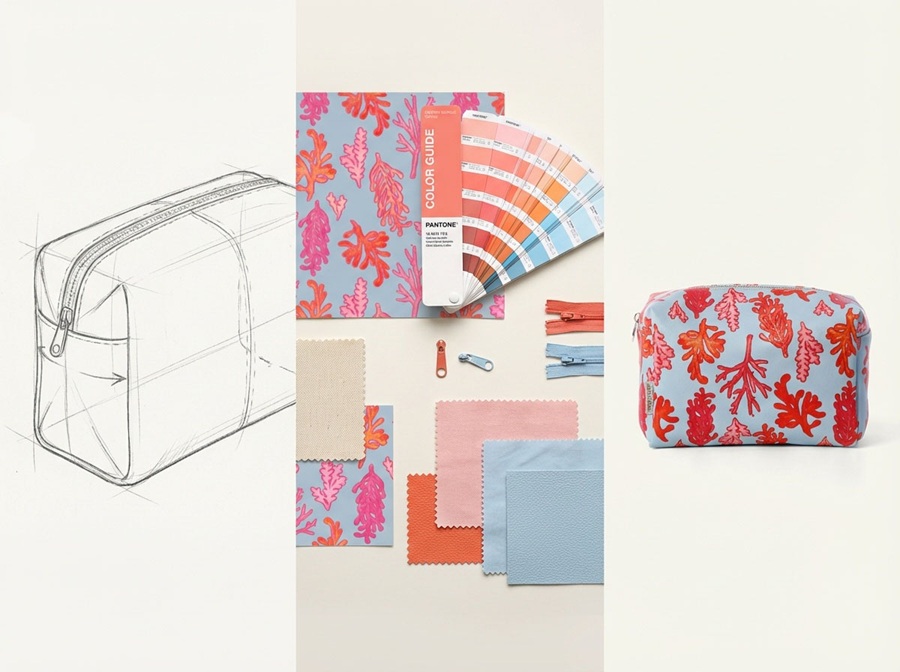
What is full OEM cosmetic bag development?
Full OEM development involves turning a brand’s original product concept into a manufacturing-ready cosmetic bag. Rather than selecting an existing product and adding a logo, the brand works with the manufacturer to develop the structure, materials, decorative details and final product specifications.
This is particularly useful for brands that want to create a distinctive collection rather than compete primarily on price.
What does the development process include?
- Concept development: Converting initial brand ideas and reference images into a workable product concept.
- Artwork preparation: Developing professional print layouts and embroidery files.
- Structural engineering: Preparing dimensions, patterns, panel specifications and construction details.
- Material selection: Coordinating fabrics, linings, hardware and mixed-material combinations.
- Decorative techniques: Integrating embroidery, appliqué, quilting and precision color matching.
- Sample refinement: Reviewing prototypes and making necessary adjustments before production.
- Retail presentation: Coordinating labels, inner linings, hardware and packaging for the finished collection.
Why full OEM development can be worth the investment
A standard cosmetic pouch is relatively easy for competitors to source. A distinctive product with a carefully developed structure, recognizable embroidery, unique material combinations and coordinated packaging is harder to reproduce consistently.
For commercial users, product differentiation can support stronger brand recognition and a more defensible retail position.
At Printembroiderybags, our Full OEM Development Cosmetic Cases manufacturing service supports design-led brands from artwork development to production. Our capabilities include:
- Complex product development for customized cosmetic bags and accessories.
- Artwork conversion into professional production layouts and technical specifications.
- Embroidery, appliqué, quilting and mixed-material craftsmanship.
- Sampling, design refinement and material selection.
- Integration of inner linings, hardware, labels and packaging.
We recommend considering full OEM development when your brand has a clear product concept, wants a differentiated retail collection or needs more control over the final appearance and construction.
It is not always necessary for a first launch. If your priority is simply testing demand for a branded cosmetic pouch, a simpler low MOQ project may be more financially sensible.
12. Low MOQ Cosmetic Bag Manufacturing for Different Business Models
The right production strategy depends on how your business sells products and how much customization your customers expect.
For independent beauty brands
Independent beauty brands can use cosmetic bags as complementary products alongside skincare, makeup and personal-care collections.
A coordinated pouch can increase perceived product value, support gift bundles and provide an additional retail product without requiring the development of a completely new beauty formulation.
We recommend starting with one signature pouch and using consistent brand colors, labels and packaging.
For Shopify and direct-to-consumer brands
Online stores can test cosmetic bag designs through product pages, email campaigns, social media and limited product launches.
Rather than producing a large collection immediately, introduce a small number of designs and compare conversion rates, customer feedback and repeat purchases.
Use real product photography and clearly communicate dimensions, internal capacity, materials and care instructions.
For Amazon and marketplace sellers
Marketplace sellers need to balance product differentiation with landed cost and competitive pricing.
A branded logo alone may not be sufficient to distinguish a product in a crowded category. Consider functional improvements such as better internal organization, more practical dimensions or a distinctive fabric finish.
Before increasing order quantities, evaluate the complete margin after marketplace fees, fulfillment, advertising and potential returns.
For promotional and corporate gift suppliers
Cosmetic bags are also useful for beauty events, product launches, employee gifts and promotional campaigns.
In these situations, branding consistency, delivery schedules and packaging requirements may matter more than complex structural customization.
Standard shapes with custom printing or embroidery can be a practical approach when the campaign has a defined budget and deadline.
For established retailers launching private-label products
Retailers with existing customers can use low MOQ production to test a new cosmetic bag category before expanding into a larger range.
For these buyers, we recommend agreeing on repeat-order specifications and packaging requirements at the beginning of the supplier relationship.
Explore our cosmetic bag industry solutions for different product applications and business requirements.
13. How to Prepare a Cosmetic Bag Manufacturing RFQ
A complete Request for Quotation (RFQ) helps manufacturers understand your requirements and provide more accurate pricing.
Instead of sending a message asking only for the lowest MOQ and unit price, prepare a brief specification covering the following details.
| RFQ Information | What to Provide | Why It Matters |
|---|---|---|
| Product type | Flat pouch, box bag, travel organizer or custom design | Determines construction complexity |
| Dimensions | Length, width, depth and handle dimensions | Influences materials and patterns |
| Main material | Polyester, cotton, canvas, PU or other specification | Determines sourcing and manufacturing cost |
| Lining | Material, color and any functional coating | Affects appearance and performance |
| Logo | Artwork file, dimensions, colors and placement | Determines decoration process |
| Hardware | Zipper, puller, handle and metal components | Affects sourcing and construction |
| Order quantity | Target quantity per design and color | Allows accurate MOQ assessment |
| Packaging | Individual packaging, hangtags and retail boxes | Affects final order cost |
| Destination | Country and delivery location | Required for shipping estimates |
| Target delivery date | Required arrival date and launch schedule | Helps determine production feasibility |
Questions to include in your RFQ
- What is your MOQ for this specific cosmetic bag design?
- Can you manufacture different colors within one order?
- Which materials are available without additional sourcing requirements?
- What are the sample cost and sample development time?
- Can you provide embroidery and custom printing?
- Are there separate setup fees for logos or special hardware?
- What quality inspection process do you follow?
- Can you reproduce the same specifications for repeat orders?
- What are the estimated production and shipping arrangements?
- Can you support full OEM development if the collection expands?
For a more structured sourcing process, use our cosmetic bag quote list to organize the information needed for a manufacturing inquiry.
14. Expert Recommendation: The Best Low MOQ Strategy for Emerging Brands
After considering product development, customization, manufacturing costs and inventory risk, our recommendation is to build a small but commercially focused collection rather than trying to launch an entire cosmetic bag range at once.
Our recommended three-stage strategy
Stage 1: Validate one core product
Choose a cosmetic bag with a clear target customer and practical application. Use existing fabric options, standard hardware and one recognizable branding feature.
Approve a physical sample and define the specifications before ordering.
Stage 2: Expand the winning design
Once customer feedback and sales results are available, consider additional colors, sizes or functional variations.
At this point, you can also improve the product based on real customer feedback rather than assumptions made during the initial design stage.
Stage 3: Invest in differentiated OEM products
When your business has a clearer understanding of its customers, move toward more advanced product development.
Consider custom shapes, specialized embroidery, mixed materials, coordinated packaging and a consistent collection identity.
Our final verdict
Low MOQ Cosmetic Bag Manufacturing is worth considering when your brand needs to reduce initial inventory exposure, validate a new product and establish a customized retail offering without immediately committing to high-volume production.
However, the lowest MOQ is not automatically the best deal. A supplier that offers reliable sampling, clear specifications, consistent quality and a realistic repeat-order plan can create significantly more long-term value than a manufacturer competing only on minimum quantity.
For startups, we recommend starting simple, customizing strategically and scaling based on sales evidence. For established brands, full OEM development can provide the additional design control and product differentiation needed to build a stronger cosmetic bag collection.
15. Frequently Asked Questions About Low MOQ Cosmetic Bag Manufacturing
1. What is the MOQ for custom cosmetic bag manufacturing?
The MOQ depends on the manufacturer, product structure, material, color, logo application and customization requirements. Simple designs using available fabrics are generally easier to produce in smaller quantities than complex OEM products requiring custom materials or hardware. Always request the MOQ for each specific design and color.
2. Can startups order custom cosmetic bags with their own logo?
Yes. Many cosmetic bag manufacturers offer logo customization through embroidery, screen printing, heat transfer and woven labels. The available methods and minimum quantities depend on the material, artwork and factory setup requirements.
3. Is low MOQ cosmetic bag manufacturing more expensive?
The unit price is often higher because material purchasing, setup, sampling and production preparation costs are distributed across fewer products. However, smaller orders can reduce inventory exposure and preserve cash for marketing and business development.
4. What is the best cosmetic bag material for startups?
Polyester, cotton, canvas and nylon are common starting options. The best material depends on the target customer, product application, appearance, durability and available fabric specifications. Using existing materials can simplify small-batch sourcing.
5. Can I order different cosmetic bag designs in one order?
Some manufacturers allow multiple designs in one order, but MOQ conditions may apply separately to each style, material, color or logo. Ask the supplier whether quantities can be combined and which components require separate minimum purchases.
6. Do I need a sample before placing a bulk order?
We strongly recommend approving a physical sample before production, especially for custom cosmetic bags. A sample allows you to check material, dimensions, stitching, zipper operation, lining, logo placement and overall construction.
7. How long does custom cosmetic bag production take?
Production time varies according to design complexity, material availability, sampling revisions, order quantity and factory scheduling. Custom materials, embroidery and special hardware can add time. Request separate estimates for sampling, bulk production and shipping rather than relying on a single delivery estimate.
8. What is the difference between OEM and private-label cosmetic bags?
Private-label manufacturing often involves branding an existing or established product design with your own logo and labels. OEM manufacturing can involve developing a product according to your original design, materials, dimensions and construction requirements. The exact service scope should be confirmed with the manufacturer.
9. Can a low MOQ manufacturer support large orders later?
Some manufacturers can support both small initial orders and larger repeat production. Before choosing a supplier, confirm production capacity, material availability, quality-control procedures and whether the approved product specifications can be maintained as quantities increase.
10. What should I send a cosmetic bag manufacturer to get a quotation?
Provide product reference images or technical drawings, dimensions, material preferences, lining, logo artwork, colors, hardware details, order quantity, packaging requirements and delivery destination. The more complete your specifications, the easier it is for the manufacturer to prepare an accurate quotation.
11. Is low MOQ suitable for Amazon and Shopify sellers?
Yes. It can help e-commerce sellers test new cosmetic bag designs before committing to larger inventory quantities. Sellers should still calculate landed costs, platform fees, advertising expenses, fulfillment costs and potential returns when evaluating profitability.
12. How do I find a reliable custom cosmetic bag manufacturer?
Evaluate the manufacturer’s product-development capabilities, sampling process, material sourcing, customization options, quality inspection, communication and repeat-order support. Request relevant samples and written specifications before placing a production order.
16. Industry References and Manufacturing Resources
When developing custom cosmetic bags for international markets, we recommend consulting recognized quality and material-safety organizations as well as official guidance on product labeling.
- International Organization for Standardization (ISO) – ISO 9001 Quality Management Systems. An authoritative reference for quality management principles, process control and continual improvement in manufacturing organizations.
- OEKO-TEX – STANDARD 100. Information about textile testing for harmful substances and the certification of relevant textile components and finished articles.
- US Federal Trade Commission – Threading Your Way Through the Labeling Requirements Under the Textile and Wool Acts. Official guidance on textile labeling, including the scope and exclusions applicable to different product categories.
Ready to Develop Your Custom Cosmetic Bag Collection?
Whether you are launching your first beauty accessories product or expanding an established private-label collection, Printembroiderybags can help you turn your ideas into customized cosmetic bags.
From artwork development and material selection to embroidery, sampling, production and retail packaging, our OEM development capabilities are designed to support brands with different product requirements.
Explore Full OEM Cosmetic Bag Development
Browse Custom Cosmetic Bag Products
Submit Your Cosmetic Bag Manufacturing Requirements
Printembroiderybags – Custom Cosmetic Bag Manufacturing for Growing Brands.
Start with a practical design, develop a reliable sample and build your collection around products your customers genuinely want to buy.