The beauty industry supply chain is fraught with trading companies masquerading as direct manufacturers. When you launch a new cosmetic line, the packaging and accessories are just as critical to the consumer experience as the makeup itself. If the zipper on your branded makeup bag breaks after three uses, or the inner lining bleeds dye onto expensive brushes, your brand equity suffers immediate, irreversible damage. You cannot rely on glossy Alibaba catalogs to guarantee quality. You must actively evaluate your manufacturing partners.

From our experience, the failure to execute a rigorous Cosmetic Bag Supplier Audit Checklist is the single biggest reason emerging beauty brands experience delayed launches, unacceptable defect rates, and blown budgets. We do not believe in passive sourcing. We believe in interrogating the supply chain. In this guide, we are delivering the exact evaluation protocols we use as an industry-leading Custom Cosmetic Bags Manufacturer, helping you separate the genuine manufacturing partners from the liability-inducing middlemen.
Quick Answer: What is a Cosmetic Bag Supplier Audit Checklist?
A Cosmetic Bag Supplier Audit Checklist is a systematic, criteria-based evaluation tool used by beauty brands to verify a factory’s true production capabilities, quality control protocols (IQC/OQC), material sourcing transparency, and financial stability before signing a contract. Executing this checklist ensures you are partnering with a direct manufacturer capable of scaling your designs, rather than a middleman who will outsource your project to unvetted subcontractors, leading to poor quality and missed deadlines.
Table of Contents
- What It Is and How It Works
- The Benefits: Why You Must Audit
- The Limitations: What an Audit Cannot Fix
- Pros and Cons Table of Supplier Auditing
- Who Should Use It (And Who Does Not Need It)
- Common Mistakes in Supplier Evaluation
- Quick Summary Table: Core Audit Metrics
- Buying Considerations and Manufacturer Analysis
- Comparison Table: Factory vs. Trading Company
- Expert Recommendation: Partnering with Printembroiderybags
- Frequently Asked Questions
- Authoritative References
What It Is and How It Works
A comprehensive Cosmetic Bag Supplier Audit Checklist is more than a list of questions; it is an investigative framework. In most professional situations, this checklist is divided into three distinct phases: the desk audit, the technical capabilities review, and the physical (or live-video) factory inspection. You are looking for concrete evidence that the supplier can consistently execute complex designs, handle varied textiles (like vegan leather, rPET, or canvas), and adhere to strict international compliance standards.
How it works in practice requires diligence. First, you request their business licenses, ISO certifications, and export records. Second, you evaluate their machinery. Do they have automated cutting machines? Do they outsource their embroidery, or do they have in-house multi-head embroidery machines? If you are planning a line of Custom Embroidery Cosmetic Bags, the manufacturer must have direct control over the needle pitch and thread tension. Finally, you audit their Quality Control (QC) department. A genuine factory will have documented Incoming Quality Control (IQC) for raw materials, In-Process Quality Control (IPQC) for the sewing lines, and Outgoing Quality Control (OQC) before final packaging.
The Benefits: Why You Must Audit Before You Buy
The primary benefit of utilizing a Cosmetic Bag Supplier Audit Checklist is the drastic reduction of commercial risk. When you audit properly, you eliminate the catastrophic scenario of receiving ten thousand units of unsellable inventory. You verify that the supplier uses high-grade, non-toxic hardware (lead-free zippers and pullers) that complies with global retail standards.
Furthermore, an audit protects your production timeline. By confirming a factory’s actual monthly capacity and current production schedule, you avoid the common trap of suppliers taking your deposit and then pushing your order to the back of the queue because they lack the manpower to fulfill it. An audited supplier guarantees predictability, which is the foundation of a successful retail launch.
The Limitations: What an Audit Cannot Fix
While an audit is mandatory, it is crucial to understand its limitations. A Cosmetic Bag Supplier Audit Checklist cannot compensate for poor product design or vague specifications provided by the buyer. If you fail to specify the exact denier of the nylon, the required stitching density (e.g., 4 stitches per centimeter), or the specific Pantone colors for your branding, the factory will default to their standard (often cheaper) options. The audit confirms they have the capability, but your tech pack dictates the execution.
Additionally, an audit is a snapshot in time. A factory passing an audit today does not guarantee they won’t cut corners on your third or fourth restock order. This phenomenon, known as “quality fade,” requires ongoing vigilance, routine third-party inspections, and strong relationship management.
Pros and Cons of Conducting Supplier Audits
| Pros of Auditing | Cons / Challenges of Auditing |
|---|---|
| Exposes trading companies claiming to be direct factories. | Requires significant time and industry knowledge to execute properly. |
| Verifies ethical labor practices and ISO compliance. | Language barriers can complicate deep technical inquiries. |
| Confirms in-house QC procedures (IQC, IPQC, OQC). | Cannot predict sudden raw material shortages in the broader market. |
| Establishes leverage for negotiating terms and pricing. | Requires periodic re-auditing to prevent long-term quality fade. |
Who Should Use This Checklist (And Who Does Not Need It)
For commercial users, brand owners, and procurement managers sourcing inventory for national retail, e-commerce empires, or subscription beauty boxes, executing this checklist is absolutely non-negotiable. If you are ordering Cosmetic Bags wholesale in volumes exceeding 1,000 units, the financial exposure demands a rigorous audit.
Conversely, who does not need an exhaustive audit? For beginners who are simply buying 50 blank, unbranded stock bags from a domestic wholesaler for a weekend pop-up shop, a full factory audit is overkill. In those scenarios, requesting a single sample and evaluating it manually is sufficient. However, the moment you transition to Full OEM Custom Cosmetic Bags, where you dictate the fabric, sizing, and hardware, you must implement the full checklist.
Common Mistakes When Evaluating Suppliers
In our testing and industry observation, the most common mistake beauty brands make is trusting the photographs on a supplier’s B2B profile. Trading companies frequently steal images of advanced factory floors and claim them as their own. Never accept static images; always demand a live video walkthrough of the facility.
Another critical error is failing to audit the supplier’s supply chain. A bag manufacturer is only as good as their raw material vendors. If they cannot prove where they source their PU leather, zippers, and interior linings, you run the risk of receiving products with toxic residues that fail import testing. Furthermore, brands often overlook Packaging Solutions for Cosmetic Bags during the audit. If the factory randomly stuffs premium cosmetic cases into cheap polybags, the bags will arrive crushed and permanently creased. You must audit their final packing protocols.
Quick Summary Table: Core Audit Metrics
| Audit Category | What to Look For | Red Flags |
|---|---|---|
| Facility & Capacity | Actual square footage, number of active sewing lines, specialized machinery. | Refusal to do a live video call; vague answers about monthly output limits. |
| Quality Control (QC) | Documented IQC, IPQC, and OQC processes. Dedicated inspection lighting areas. | Workers inspecting their own work; no dedicated QA/QC staff. |
| Hardware Sourcing | Relationships with YKK, SBS, or certified alloy manufacturers. | Using unmarked zippers; inability to provide lead/phthalate test reports. |
| Customization Tech | In-house printing (silk screen, heat transfer) and embroidery equipment. | Outsourcing all branding; high minimums just to add a simple logo. |
Buying Considerations: Identifying True Manufacturing Capabilities
When you are ready to issue a purchase order, your Cosmetic Bag Supplier Audit Checklist should guide your buying considerations. You must evaluate the supplier’s Minimum Order Quantity (MOQ) flexibility. A rigid, massive MOQ often indicates a trading company that needs to hit a subcontractor’s volume threshold. A true factory has the agility to accommodate scaled growth. For instance, our Custom Cosmetic Bags OEM100 program allows emerging brands to start with manageable volumes while retaining full customization rights.
For heavy-duty applications—such as professional makeup artist train cases or heavy canvas travel totes—you must assess the factory’s structural reinforcement techniques. Do they use cross-stitching on load-bearing handles? Do they insert EVA foam or hard plastic boards for structural integrity? Understanding a facility’s true Cosmetic Bags Manufacturing Capabilities dictates whether they are capable of producing a high-end luxury item or just cheap promotional giveaways.
Comparison Table: Direct Manufacturer vs. Trading Company
| Feature | Direct Custom Cosmetic Bag Manufacturer | Trading Company / Middleman |
|---|---|---|
| Pricing | Transparent, factory-direct pricing. Better margins for bulk. | Marked up 20% – 40% to cover their commission. |
| Communication | Direct access to technical engineers and sample masters. | Acts as a relay; delays in technical answers and modifications. |
| Quality Control | Direct oversight on the sewing lines; immediate corrections. | Relies on third-party factories; reactive rather than proactive. |
| Customization | Limitless options for hardware, linings, and material sourcing. | Pushes you toward pre-existing catalog templates to save hassle. |
Expert Recommendation: Partnering with Printembroiderybags
We recommend entirely bypassing the guesswork of unvetted overseas marketplaces. Your brand deserves a manufacturing partner who acts as an extension of your own business. At Printembroiderybags, we invite total transparency. We welcome audits, provide live factory tours, and document our stringent QC protocols because we know that our infrastructure is built to support the most demanding beauty brands in the world.
Whether you require intricate custom embroidery, eco-friendly textiles, or complex multi-compartment travel cases, our team executes with precision. We specialize in bringing high-end designs to life without the bloated minimums that stifle emerging brands.
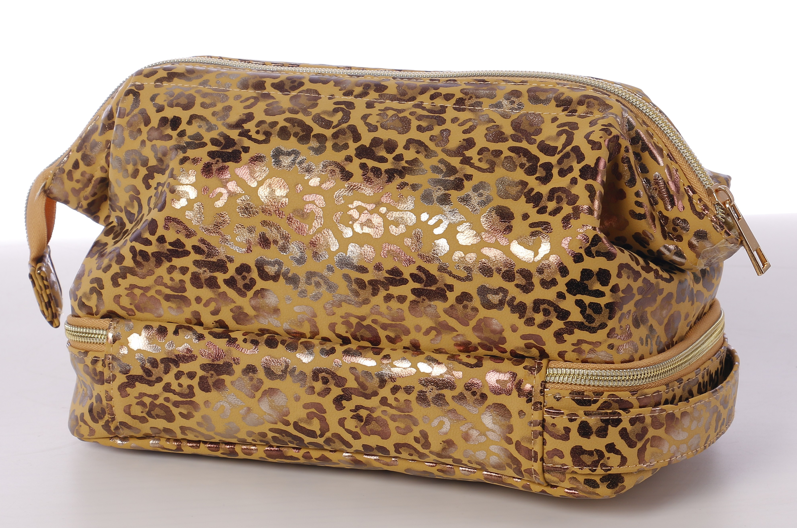
Printembroiderybags Signature Beauty Case
- Item: A2226
- Size: 9 x 13 cm
- Design: Floral Embroidery Pattern
- Material: Secure Metal Button Closure
- MOQ: 100 Pieces
- Packing: Cash, Credit Cards, IDs, Coins, Small Accessories
Experience our flawless embroidery and structural integrity firsthand with our signature pieces, designed to reflect premium brand positioning.
Cosmetic Bag Supplier Audit Checklist FAQs
How do I verify if a cosmetic bag supplier is a real factory or a trading company?
To verify a supplier, you must demand a live video tour of their facility. Ask them to walk from the office directly to the cutting and sewing floors while on camera. Review their business license specifically for terms related to “manufacturing” rather than just “import/export.” Additionally, a true factory will have deep technical knowledge of materials and sewing techniques that trading company sales reps lack.
What quality control documents should I request during a supplier audit?
You should request their ISO 9001 certification, standard operating procedures for Incoming Quality Control (IQC) for textiles and hardware, In-Process Quality Control (IPQC) defect logs, and their final Outgoing Quality Control (OQC) checklists. If they cannot produce these documents, they likely do not have a formal quality management system in place.
Why is zipper quality so important in cosmetic bags?
The zipper is the most frequently interacted mechanical component of a cosmetic bag. If a supplier uses cheap, unbranded zinc zippers, the teeth will misalign or the puller will snap off after minimal use, rendering the entire bag useless. During your audit, always verify that the supplier uses reputable zipper brands (like YKK or SBS) or high-grade custom alloys.
Should I hire a third-party inspection agency to audit my supplier?
In most professional situations, yes. If you are placing a high-value order and cannot visit the factory in person, hiring a certified third-party inspection agency to perform a factory audit (FA) and a pre-shipment inspection (PSI) is the most effective way to secure your investment and guarantee objective reporting on the facility’s capabilities.
What is the standard acceptable defect rate in cosmetic bag manufacturing?
For high-quality cosmetic bags, an Acceptable Quality Limit (AQL) is typically set at 0 for critical defects (e.g., toxic materials, broken zippers), 1.5 for major defects (e.g., severe stitching errors, incorrect logos), and 4.0 for minor defects (e.g., easily removable untrimmed threads). Your audit must confirm the factory understands and adheres to standard AQL parameters.
Authoritative References
To further support your supply chain evaluation process, we rely on established international standards and authoritative guidelines regarding quality management and textile imports: